3 Fantastic Insider Wardrobe Considerations For ServSafe Trained Employees

Hair restraint demo for ServSafe work wardrobe

Whether your uniform accessories are there to add style, provide convenience or a celebrity TV chef makes it look cool, there are several uniform quirks that every ServSafe MN trained employee should avoid. The list of uniform components that pose as food safety hazards can be quite extensive. However, we would like to focus on three components that ServSafe-approved kitchen attire should never include.

Three ServSafe Wardrobe Components to Kick Out of the Kitchen

Anything that you add to your work dress instantly becomes susceptible to the same contamination risks as the rest of your uniform. We believe that a ServSafe based uniform policy should not allow the following three things:

  • Dry towels attached to uniform
  • Arm and hand jewelry
  • Baseball caps as head coverings

Many food workers feel that it’s convenient to loop a dry towel around apron strings or sling it over a shoulder. It keeps your towel handy and readily available when a plate or cutting board needs a quick wipe. Unfortunately, the apron is a common collector of dirt, grease, and debris in the kitchen. The shoulder of your uniform can become contaminated with sweat and other bacteria. Keep your dry towels stored in a clean place that will allow them to be easily accessible when needed.

The regulations concerning jewelry in food preparation facilities are often overlooked. The food code prohibits wearing anything other than simple wedding bands and plain rings. Arm and wrist bands, rings, and other accessories can often go unnoticed, particularly by front-of-the-house staff in restaurants. If an employee requires a medical alert bracelet, they can replace it with a necklace or anklet. Management should also be informed about employees wearing such jewelry. It can be quickly located in the event of a medical emergency.
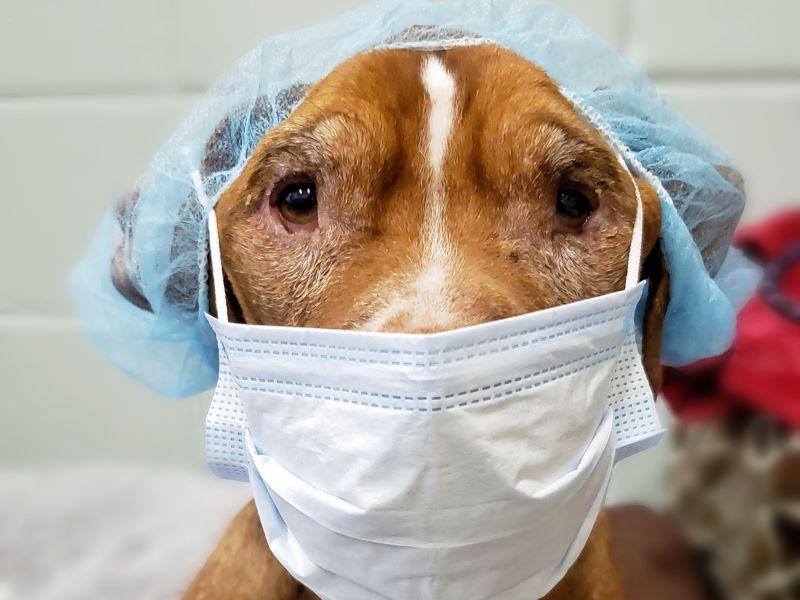
A shelter dog demonstrating hair and beard restraint approved by ServSafe kitchen dress code
ServSafe approved kitchen wardrobe. Image credit: Babylon Animal Shelter

Baseball Cap Safety Issues

While the Minnesota Food Code concerning head coverings doesn’t disallow baseball caps, we feel that there may be a few ServSafe based contamination concerns with incorporating them into your dress code. Most ball caps are crafted from absorbent cloth, and the bills are generally constructed from cardboard lined with soft material. Over time this cloth and cardboard can become saturated with sweat, steam and other substances. This creates a potential breeding ground for bacteria. We recommend keeping paper head coverings or hair nets as they are ideal. However, we understand that baseball caps are more comfortable and familiar, so if they are part of your dress code, please keep them clean and replace them regularly.

These three items seem like they are simply providing style, comfort and convenience in the work place, but unfortunately they also create contamination dangers. By making it policy to eliminate them, you can make the cleanest kitchen even safer.

Safe Food Training provides ServSafe MN training and exams, but we source our regularly scheduled courses from NRFSP. We rely on their expertise to ensure the highest quality training for our clients. Minnesota Department of Health, Environmental Services accepts both ServSafe and NRFSP exams for Food Protection Manager Certification in MN. Click this link for more information on ServSafe MN.

WHY MN FOOD CODE REQUIRES RAW EGGS TO BE REFRIGERATED?

Why MN Food Code Requires Raw Eggs to be Refrigerated

In every restaurant and nearly every home in the United States, raw eggs are stored under refrigeration at 40 degrees Fahrenheit or lower. According to the MN food code and food safety training courses, refrigerating raw eggs prevents Salmonella. Salmonella is a food-borne gastrointestinal illness that affects a reported 42,000 Americans each year. This number is certainly higher due to many mild cases which go unreported. Businesses that sell or cook eggs for public consumption must refrigerate them in an effort to prevent outbreaks of this type of foodborne illness.

Why MN Food Code Requires Raw Eggs to be Refrigerated
Image credit: enginakyurt via 123rf

Why The United Kingdom Does Not Refrigerate Raw Eggs

Many travelers to the United Kingdom, and many other parts of the world, often notice that people do not refrigerate raw eggs and store them at room temperature most often. This has puzzled many individuals who were taught that eggs should always be refrigerated. The answer to this question lies in a brief explanation of the differences in egg production and distribution between the United States and Great Britain.

The different philosophy of egg storage between the two countries is due to the difference in production standards. In the United States, farmers wash and sanitize eggs post-harvest. Correspondingly, Great Britain’s regulations dictate that eggs must remain dry throughout production and distribution. Rinsing eggs destroys the thin natural protective layer, known as the cuticle, which can prevent contaminants from entering the egg.

In the United Kingdom, a majority of egg producers vaccinate their egg-laying hens in an effort to prevent disease. Here in the United States, we use this process minimally.

According to an article written for www.foodsafetynews.com, these practices have “reduced the incidence of Salmonella illnesses in Britain from 14,771 reported cases in 1997 to 581 cases in 2009.” The entire foodsafeteynews.com article can be found here.

MN Food Code Approach To Serving Raw Eggs

In order to complete food manager certification in MN, knowledge of preventing food-borne illness is a must. Salmonella is a common food-borne illness that can potentially be deadly but is also easily preventable. There are a few MN food code statutes to keep in mind when dealing with raw eggs that can prevent the spread of this illness.

  • Refrigerate eggs using temperatures below 40 degrees Fahrenheit,
  • Throw away broken eggs to avoid contamination easily
  • Clean dirty eggs before use
  • When you need a large quantity, use pasteurized liquid eggs instead of raw shell eggs

The two MN food code statutes that pertain to eggs appear:

ServSafe MN Standards For Authentic Smoked Meat And Cheese

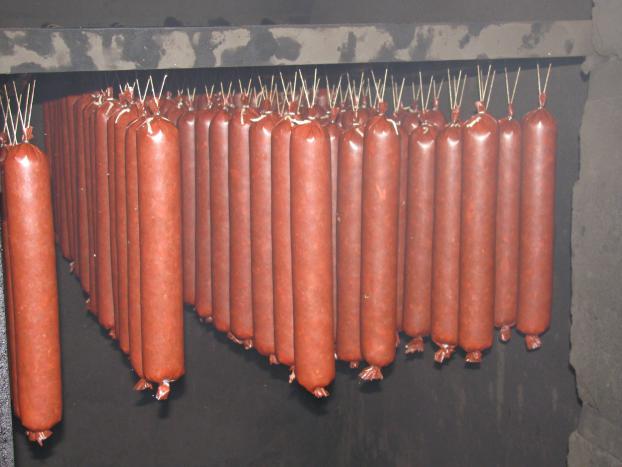
Smoking meats by ServSafe MN Standards

Smoked meats and cheeses are delicious on their own and can add flavor to any menu item your facility prepares. If you smoke your own product in-house, there are some precautions that you should take to ensure that it will be safe for your customers to enjoy. This week, we’ll share a few tips that will help you smoke your meats and cheeses according to ServSafe MN safety standards.

Smoking meats by ServSafe MN Standards
Photo credit: en.wikipedia.org

Keeping Smoked Product Pathogen Free Using ServSafe MN Standards

Smoking adds flavor and cures foods at relatively low temperature. This means that you must be aware of the temperature of your process throughout the smoking process. The Minnesota Food Code states that foods cannot be in the danger zone for more than two hours. Which means your product should be smoked at over 140 degrees or be in your smoker for a short amount of time.

Since there is the potential for bacteria to grow while you are smoking meat. We have a few tips to ensure that your product will not become a breeding ground for food-borne pathogens.

  • Never smoke partially cooked or partially frozen product
  • Never baste your product in the same brine your raw product marinated in
  • Always smoke reasonable sized portions

Placing partially thawed or cooked product in your smoker will almost always guarantee that its internal temperature will be in the danger zone during all steps of the smoking process. This will increase bacteria growth and pose a health risk to anyone who consumes the final result. Make sure that you always allow adequate time for thawing should you desire to smoke previously frozen product.

It is also a good idea to assess the size of the portions of food you are placing in your smokers. Small smokers may not be able to safely cure large chunks of meat. This will leave a raw interior that has been in the danger zone far too long and increase the chances of spreading food-borne illness.

Consider Cold Smoking Fish and Cheese

If you are smoking fish or cheese, heating your smoker to over 140 may produce unsatisfactory results. There is a solution, however, that can allow you to obtain flavorful product without sacrificing food safety. If your smoker has multiple racks, your best option may be to utilize a cold smoking method. This method involves placing a metal container full of ice above and below your cheese or fish product. It will circulate smoke as well as cold air inside of your smoker. Hopefully keeping the temperature as low as possible. This method may take some troubleshooting since many smokers operate differently. However, once you have mastered cold smoking, your product will not only be safe to eat by ServSafe MN standards. It will also be able to produce more consistent results.

When Can ServSafe Managers Expect the Surprise Health Inspector

When Can ServSafe Managers Expect the Surprise Health Inspector

Every so often, we get asked by prospective ServSafe food managers if they’ll receive a warning before the health inspector shows up at their food business. Well, if you’re doing everything right, reinforce a proper food safety culture in your establishment; does it really matter when the health inspector walks into your door? While there are no flashing lights, alarms or signs from above for Servsafe managers, there is an expected frequency for when your establishment requires a visit from a health department inspector.

When Can ServSafe Managers Expect the Surprise Health Inspector

How Often Can ServSafe Food Managers Expect a Health Department Inspection?

Your local health department commissioner schedules inspections during specific intervals depending on the risk category of your food establishment. The food code breaks down the food establishment inspection frequency into three categories:

  • High-Risk: Once at Least Every 12 Months
  • Medium-Risk: Once at Least Every 18 Months
  • Low-Risk: Once at Least Every 24 Months

While you won’t know exactly when they’ll show up, you can expect a visit within a regular time frame, but how do you know which type of food business you operate? Most restaurants, resorts, hotels with pools, catering companies and other establishments that prepare products in advance and cool and reheat products will be considered high-risk. A majority of food establishments fall into this category.

Medium-risk food establishments serve some potentially hazardous foods but with little time between preparation and service. These businesses usually only serve items such as pizza, fryer foods and sandwiches that are prepared and served immediately with minimal holding and limited time between preparation and service.

A low-risk food establishment offers food with very limited preparation. These can be coffee stands with prepackaged pastries, hotels with minimal food offerings or certain grab-and-go food services. These businesses will only see the inspector every two years and most may not require a ServSafe food manager for operation.

Regardless of what type of business you operate, your ServSafe food manager or designated person in charge in their absence should make themselves available when the inspector shows up. You don’t necessarily need to guide them throughout the facility, but it’s a good idea to be around them. Never make an attempt to stall the process, misdirect inspectors from certain areas of your facility or hinder the inspection in any way. This will help speed the process and allow them to ensure your food is being served in a safe manner. Remember, these inspectors aren’t there to find fault with your establishment or punish food business owners, they are there to ensure the safety of your product. Don’t be offended if issues arise, rather ask questions and find solutions to any violation before the inspector leaves your business.