Online Food Safety Course to Beating the Summer Heat

Food Safety Course to Beating the Summer Heat

The summer months can be brutal in the food production industry with hot, muggy air combining with the high temperatures of ovens and other cooking implements. Your kitchen staff will do anything necessary to maintain a remotely comfortable work environment, but there are a few things you have to look out for to make sure that your cooling techniques are not causing a food safety hazard. This week, we’d like to provide a brief online food safety course to keeping cool and keeping your food safe.

Food Safety Course to Beating the Summer Heat
Image Credit: PXhere

Food Safety Course on Cooling Guide for the Hot Summer Months

When temperatures rise, food service worked head immediately to storage and dig out whatever fans they can get their hands on and begin to strategically place them around the kitchen for maximum effect. While fans will circulate the air in your facility, they also circulate dust and other contaminates in the direction of your food. If you utilize fans to keep the air moving, take extra precautions that they are kept below the level where food is stored or prepared. Pointing a fan down onto your production line may pull in dust from the tops of equipment, areas that have not been cleaned properly and other locations where dust tends to build.

Propping open doors to the outside and using a fan to blow air in may also cause a food-borne illness hazard. Opening doors leads to the potential for flies and other contaminate-spreading insects to enter your facility, especially if the open door leads to an area where garbage is stored. It may be wise to look into cooling techniques that do not require an open exterior door

Cleaning your ventilation system regularly will help suck the hot air coming from your equipment out of your facility. Airborne grease and dust caked in ventilation filters greatly reduce efficiency and increase the temperature in your kitchen.

Do you have any sure-fire ways to keep your kitchen cool and prevent fans and ventilation from circulating contaminates around your facility?
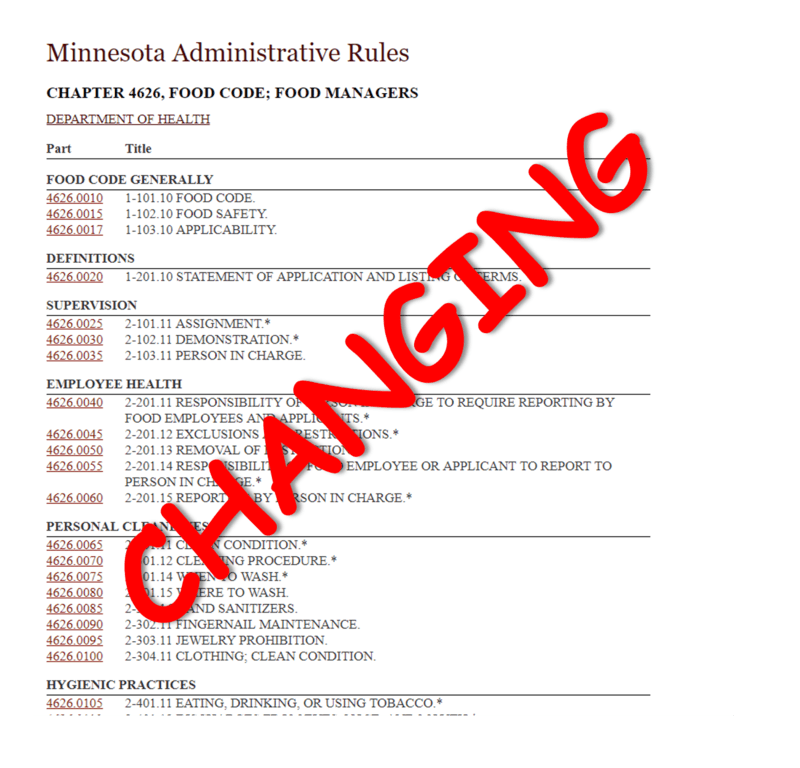

Proposed Changes to the Minnesota Food Code and the Certified Food Manager

Changes to the Minnesota Food Code

For the first time since 1998, the Minnesota Department of Health is proposing changes to the state’s food code. While some of these changes to the Minnesota food Code are merely an altering of the terminology used throughout, there are a few proposed changes that certified food managers need to pay attention to.

Changes to the Minnesota Food Code


Proposed Changes to the Minnesota Food Code

The Department of Health published a list of 20 proposed major changes to the Minnesota food code. Right off the bat, they explain that there will be many changes concerning the language of the actual text. For example, two of the biggest changes include altering the title of Certified Food Manager to Certified Food Production Manager and changing “potentially hazardous foods” to “time/temperature control for safety foods.” They are also removing “critical” and “non-critical” categories with different levels of priorities for food-safety risks.

This list of 20 items includes some procedures that change the way certified food managers handle day-to-day operations. We will go into more depth on specific items in future articles once these changes come closer to implementation, but some of the highlights that stand out to us include:

  • The addition and clarification of rules for serving a “highly-susceptible” population such as children and the elderly
  • Hot-holding temperatures lower to 135 degrees and the time certain foods can held under 70 degrees increases to 6 hours
  • Changes will establish a non-continuous cooking procedure (with approval) for raw foods that have been cooking for under 60 minutes
  • Fingernail brushes will no longer be required at employee hand-washing stations
  • Several hygiene procedures are addressed, such as creating vomit cleanup protocols, requiring handwashing procedure signage and restrictions concerning working with wounds

These are just a few changes that stood out to us, and we are currently awaiting word from the Department of Health to clarify many of the other changes in the code. We will be sure to cover anything we learn as soon as the information becomes available.

After reading the brief synopsis from the Department of Health, do you see any issues you’d like us to delve deeper into in the future?

Food Safety Class Tips for Ice Bin Sanitation

Every restaurant has its sanitation challenges, but one of the most consistently overlooked areas is the front-of-house service station ice bin. For certified food safety managers in Minnesota, ensuring proper ice bin sanitation is a critical, yet often neglected, responsibility. While back-of-house procedures receive intense scrutiny, these smaller, customer-facing ice bins can become hotspots for contamination if not given the daily attention they require. This guide provides the essential tips you need to train your staff and maintain impeccable standards.

The Core Misconception: Why Ice Bins Are Ignored

Ice bin sanitation
Ice bin sanitation: Keep it safe.

A fundamental misunderstanding leads to service station ice bins being overlooked: many staff members don’t view ice as a food item. The thought process is that since ice is just frozen water, it can’t harbor pathogens. This is a dangerous assumption. 

The FDA classifies ice as a food, meaning it is subject to the same strict handling and sanitation requirements as any other ready-to-eat product. When staff members fail to treat an ice bin as a food container, they are more likely to engage in unsafe practices that lead to contamination.

  • False Sense of Security: Because ice is frozen, employees may wrongly believe that bacteria cannot grow, leading to lax cleaning schedules and improper handling.


  • Out of Sight, Out of Mind: Unlike a steam table or a walk-in cooler, a service station ice bin is often a secondary piece of equipment, making it easy to forget during routine cleaning and closing duties.


  • High-Traffic Area Risks: These bins are typically located in busy service alleys or bar tops, exposing them to a much higher risk of accidental contamination from various sources throughout a shift.

Mastering Ice Bin Safety in a Busy Environment

True ice bin safety involves being vigilant about what goes on around the bin as much as what goes in it. During a busy service, it’s easy for foreign objects and liquids to enter the ice supply, compromising the entire container. A single contaminated piece of ice can contaminate the entire bin as it melts and circulates.

  • Preventing Foreign Objects Contamination: Garnishments like lemons or cherries, napkins, straws, and even serving utensils can accidentally fall into the ice. These items introduce bacteria from hands, counters, and other surfaces. Keeping the lid closed whenever possible is a simple but effective preventative measure.

  • Managing Spills and Drips: In a bar or beverage station, splashes from juice, soda, or alcohol are inevitable. If these liquids enter the ice bin, they introduce sugars and other substances that can accelerate bacterial growth.

  • The “When in Doubt, Throw it Out” Rule: If you notice a foreign object or a significant spill has occurred, simply removing the object is not enough. The only safe procedure is to burn the ice—meaning, empty the entire bin, properly clean and sanitize the container according to health codes, and refill it with fresh, clean ice.

Implementing a Strict Sanitation Protocol

Ice bin sanitation
Tips for ice bin sanitation.

To ensure consistent ice bin sanitation, you must establish a clear, non-negotiable cleaning protocol that your service staff understands and follows. Simply allowing the ice to melt and drain overnight is not a substitute for proper cleaning; this practice leaves behind a damp environment that allows bacteria and biofilm to flourish.

  • Use a Properly Mixed Sanitizer: Your sanitizer solution must be mixed to the correct concentration. A solution that is too weak will not be effective, while one that is too strong can leave behind chemical residues that could sicken a customer. Use test strips to verify the concentration at every time.


  • Sanitize Every Time You Empty: It is essential to make cleaning and sanitizing the ice bin a mandatory procedure each time. It’s emptied ‌before refilling. This should be a key part of your closing checklist for every service station.


  • Train, Reinforce, and Document: Ongoing training is key. Regularly review these procedures with your waitstaff and bartenders to ensure they are familiar with them. Document your cleaning schedule in a log to ensure accountability and create a record of compliance for health inspections.

Safe Food Training acknowledges the dedication of certified food safety managers in Minnesota to protecting public health. Our goal is to provide practical training that addresses the real-world, often-overlooked challenges you face daily.

Don’t let a contaminated service station ice bin tarnish your reputation. If you and your team are looking to enhance your understanding of Minnesota’s food safety standards, our expert-led, instructor-led options provide the convenient and comprehensive training you need. 

Click on the link and head to Safe Food Training today to schedule your next session!

Food Safe Training for Summer Hires

Food Safe Training Classes for Summer Hires

Summer is coming, and that usually means that local businesses become flooded with high-school and college student applicants looking for temporary employment to earn some extra spending money before Fall drags them back into the classroom. For the most part, the added staff helps food service and hospitality businesses that cater to a summer crowd survive the busy season and gives food service managers the opportunity to bring in temporary staff that do not have the expectation of continued full-time employment once business slows down in the off season. The issue of properly training and getting these part-time employees prepared to follow food safe training procedures brings up a dilemma.

Food Safe Training Classes for Summer Hires
Copyright: auremar / 123RF Stock Photo

Food Safe Training Temporary Employees

There are a few possible solutions to get all of your temporary hires properly trained:

  • Let your new employees complete their training on their own time
  • Allocate time for new staff to complete online food handling education at work
  • Schedule a group food safe training session led by your certified food manager of food safety industry professional

Leaving your new hires up to their own devices when it comes to obtaining food handlers education takes the responsibility away from your food supervisors but comes with risks. New employees may stall, procrastinate or simply forgo the training with the expectation that they will be allowed to work regardless. They may get the idea that completing food handling training is not worth their time for a part-time or temporary position. This could leave you shorthanded or forced to take time you do not have to hire a replacement for a hire who fails to complete any required training. It could also pose a health risk to your guests by being served by an employee who does not understand basic food handling procedures.

Giving new team members an opportunity to complete their training online at a computer in your facility is one way to guarantee they will be ready to fill the position. This could, however, lock up a manager’s computer that may be put to better use. If your facility requires many seasonal hires, it could also take significant time to fully train new staff one at a time.

A group course led by your certified food manager or private instructor is the most efficient way to fully train your summer staff to keep food safe.

If you’re a hospitality business that requires added summer help, how do you deal with food safe training?