Beyond the Heat Lamp: A Certified Food Protection Manager’s Guide to Safe Hot Holding Temperatures

heat lamp

Maintaining safe hot holding temperatures is a critical responsibility for any Minnesota food professional. This guide outlines essential protocols for keeping food out of the “Temperature Danger Zone,” the importance of equipment monitoring, and the corrective actions required to protect public health. It emphasizes that a certified food protection manager must lead by example to ensure compliance and safety in every meal served.

Safe food handling in Minnesota
Are you hitting all the critical points in safe food handling?


In the bustle of a Minnesota kitchen, the steam table is often an afterthought. After cooking and placing the food in the warmer, people frequently assume it’s safe until it’s served. However, as any certified food protection manager knows, maintaining proper hot holding temperatures is not a passive activity—it’s an active defense against foodborne illness.

Upholding Minnesota’s food safety standards is critical for protecting public health and ensuring your business remains compliant with state law. While a heat lamp or steam table aids in this process, the equipment alone cannot guarantee safety. It requires vigilance, knowledge, and a commitment to “proper time and temperature controls” to ensure that the food you serve is as safe as it is delicious.

1. Mastering the Mechanics of Temperature Control

The primary goal of hot holding is to prevent the rapid growth of pathogens that thrive when food temperatures drop. Safe Food Training emphasizes that understanding these controls is essential to preventing foodborne illness.

When managing hot holding stations, you’re essentially fighting against the “Temperature Danger Zone” (41°F and 135°F). To win this battle, you must move beyond guesswork and rely on precision:

  • Internal Temperature Checks: Never rely on the holding unit’s temperature gauge. These gauges typically measure air or water temperature, not food temperature. Use a calibrated thermometer to check the product’s internal temperature.

  • Stirring is Safety: Heat does not always distribute evenly, especially in thick soups or casseroles. By stirring frequently, you ensure the heat distributes throughout the pan, preventing cool spots where bacteria could survive.

  • Cover and Protect: Using lids and covers helps retain heat and protect food from external contaminants, reducing the risk of cross-contamination.

2. Why Every Certified Food Protection Manager Prioritizes Equipment Validation

The primary goal of hot holding is to prevent the rapid growth of pathogens that thrive when food temperatures drop. Safe Food Training emphasizes that understanding these controls is essential to preventing foodborne illness.

When managing hot holding stations, you’re essentially fighting against the “Temperature Danger Zone” (41°F and 135°F). To win this battle, you must move beyond guesswork and rely on precision:

  • Internal Temperature Checks: Never rely on the holding unit’s temperature gauge. These gauges typically measure air or water temperature, not food temperature. Use a calibrated thermometer to check the product’s internal temperature.

  • Stirring is Safety: Heat does not always distribute evenly, especially in thick soups or casseroles. By stirring frequently, you ensure the heat distributes throughout the pan, preventing cool spots where bacteria could survive.

  • Cover and Protect: Using lids and covers helps retain heat and protect food from external contaminants, helping prevent cross-contamination.

2. Why Every Certified Food Protection Manager Prioritizes Equipment Validation

Even the most expensive holding equipment can fail or drift out of calibration. A critical part of your role involves verifying that your tools are working correctly. Our training courses help you and your business effectively meet Minnesota’s essential food safety standards, including equipment requirements.

If your equipment is not maintaining the necessary 135°F (or higher) threshold, you’re putting your customers and your reputation at risk.

  • Preheating is Non-Negotiable: Never use hot holding equipment to reheat food. These units are designed to maintain temperature, not to raise it. Always reheat food to 165°F rapidly before placing it in the warmer.

  • Routine Maintenance: Schedules should be in place to check heating elements and water levels in steam tables. A proactive approach helps prevent equipment failure during peak periods.

  • Validation Logs: Keep a log of equipment checks. This documentation shows that you’re actively managing safety, which is vital to maintaining a trusted reputation with your customers.

Strengthening Your Credentials in Minnesota

Managing hot holding temperatures is just one aspect of a complex job. Whether you’re running a school cafeteria, a restaurant, or a catering business, staying current with your training is essential. At Safe Food Training, we specialize in personalized, 8-hour courses tailored for food professionals across Minnesota.

heat lamp hot holding temperatures
Are you handling food properly?

If your certification is nearing expiration, remember that in Minnesota, you must renew your Certified Food Protection Manager license every three years. We provide timely reminders for this renewal cycle to help you stay compliant.
Ready to refresh your knowledge or certify your team?

You can easily register for an upcoming course by visiting our website. We offer both in-person and online learning opportunities, as well as private training sessions for your entire staff. Let us help you keep your food safe and your business compliant.

Fall Food Safety: Beyond the Pumpkin Spice

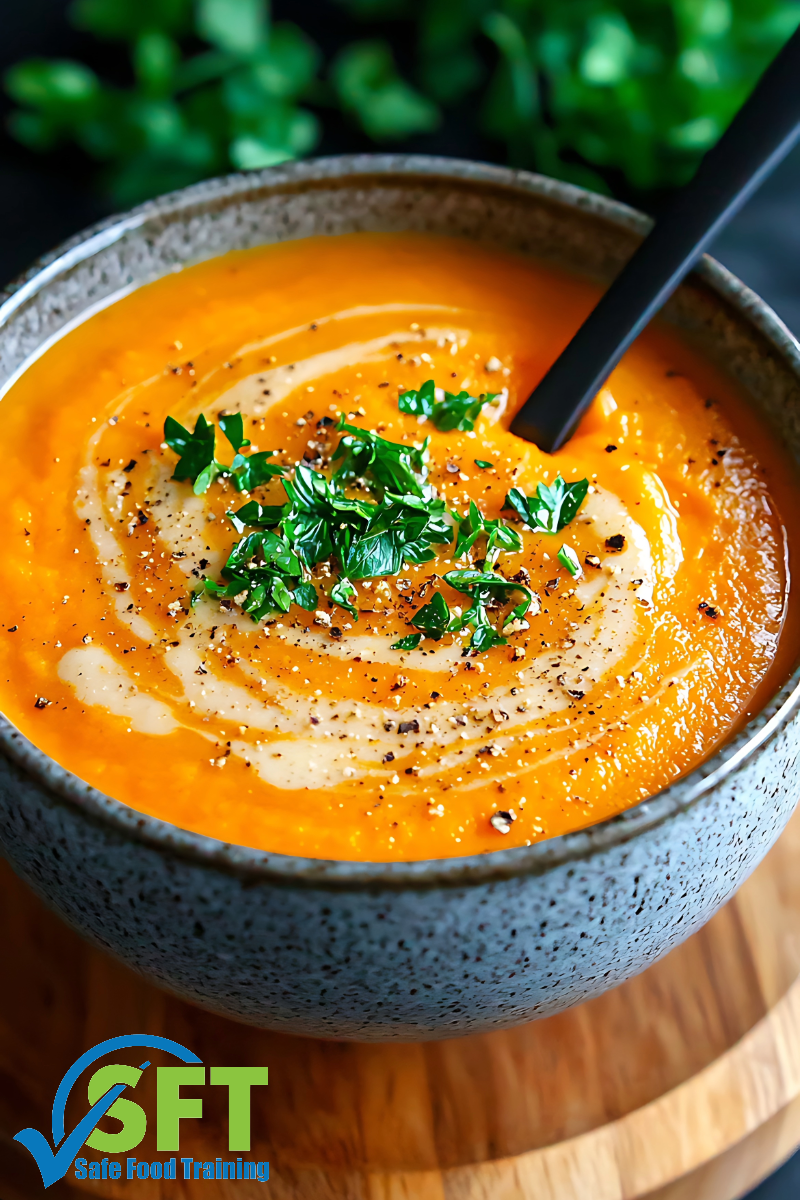
Fall Food Safety-soup
fall food safety for all ingredients.
From washing to temperature, use this guide for fall food safety to stay ahead!

As a Minnesota food professional, you know autumn brings a welcome change to our menus, featuring hearty squashes, crisp apples, and rich pumpkins. But let’s be honest, autumn’s culinary delights extend far beyond pumpkin spice lattes! While these ingredients are crowd-pleasers, they also introduce unique food safety challenges. Ensuring proper seasonal food safety from the moment ingredients arrive to the final dish is critical for protecting your customers and your reputation.

Proper Handling Starts at the Door

The first step in ensuring fall menu safety is to manage your seasonal produce deliveries with a critical eye. Fresh ingredients, such as pumpkins and squash, often arrive with soil and other debris from the field, which can carry harmful bacteria like Listeria and E. coli. A rushed receiving process that fails to catch these issues can introduce dangerous contaminants directly into your kitchen’s clean environment.

  • Inspect every delivery: Your Certified Food Protection Manager (CFPM) training emphasizes that the flow of food begins at the point of receiving. You must thoroughly inspect seasonal produce for signs of spoilage, mold, or physical damage. A bruised apple or soft-skinned squash can harbor bacteria that will spread quickly, and you have the right and responsibility to reject any products that don’t meet your standards.

  • Prioritize storage: Root vegetables and hard squashes have different storage needs than delicate greens. They thrive in a cool, dry, and well-ventilated area, away from direct sunlight. It’s equally important to store them away from ready-to-eat foods to prevent cross-contamination. Storing raw squash below uncovered salads, for example, could allow field contaminants to fall onto food that will receive no further cooking.

  • Implement first-in, first-out (FIFO): It’s a basic but crucial rule that prevents waste and mitigates risk. Your team should properly date and rotate stock so they use older seasonal ingredients before new deliveries arrive. This simple process minimizes the risk of spoilage and mold growth, which can produce harmful mycotoxins even after cooking.

The Science of Washing and Preparation

Make sure to properly wash all produce!

Once inside, the beautiful harvest produce requires careful handling. The CFPM course covers the science of microbial growth, teaching us that a simple rinse is one of the most effective ways of removing physical and biological contaminants. Many people mistakenly believe that produce with a thick rind, such as butternut squash, which they plan to peel, doesn’t need washing. In reality, skipping this step allows a knife to transfer pathogens from the skin of a squash to the cutting board and interior flesh.

  • Wash Before You Cut: Always wash produce thoroughly under running water before peeling or cutting it. This crucial step prevents surface contaminants from being transferred by the knife to the edible portions of the food. It’s a simple action that breaks a primary chain of contamination.


  • Scrub Firm Surfaces: For firm-skinned produce like butternut squash or pumpkins, use a clean and sanitized vegetable brush to scrub the surface. This physical action dislodges stubborn, caked-on dirt and significantly reduces the microbial load, a key concept in preventing foodborne illness.


  • Sanitize Your Surfaces: After prepping raw produce, always follow the two-step process of cleaning and then sanitizing the cutting boards, knives, and prep areas. Cleaning removes food debris, but only a proper sanitizer will reduce pathogens to a safe level. This practice, stressed heavily in certification training, is essential to prevent cross-contamination.

Ready to renew? Check out our upcoming courses or sign up for online recertification today!

Mastering Hot Soups and Beverages

Nothing says autumn like a steaming bowl of butternut squash soup or a cup of hot apple cider. However, these popular items are often TCS foods (Time/Temperature Control for Safety foods) and require strict temperature management to prevent the growth of dangerous bacteria. Understanding the “why” behind these rules is a cornerstone of effective management.

  • Maintain the Hot Zone: The “danger zone” for food is between 41°F and 135°F, the ideal range where bacteria can double in as little as 20 minutes. Training teaches you to keep hot TCS foods at 135°F or higher. Use calibrated food thermometers and monitor your holding equipment frequently, as a malfunctioning steam table can pose a serious food safety risk.
  • Reheat Correctly: Bring a batch of soup to 165°F and maintain it at this temperature for 15 seconds within a two-hour period when reheating it for hot holding. Simply warming it up is not sufficient and creates a hazardous situation.
  • Cool Foods Rapidly: One of the biggest risks in a professional kitchen is improper cooling. Cool leftover soup or cider from 135°F to 70°F within two hours, and then from 70°F to 41°F or lower in the next four hours. Use approved methods, such as ice baths, ice paddles, or dividing hot liquids into shallow metal pans, to facilitate rapid cooling.
  • Document Your Process: A key part of a food safety management system is documentation. Keep temperature logs for both your hot-held items and your cooling procedures. This not only ensures that you are consistently practicing safe seasonal food handling practices but also provides critical evidence of your diligence during a health inspection.

Protect Your Customers and Your Business

Vigilant handling of fall ingredients is a non-negotiable part of your professional responsibility. Applying these principles shows a commitment to excellence and public health. Ensure you and your team are fully prepared to handle seasonal challenges by maintaining your food safety credentials.

Sign up for the next available Certified Food Protection Manager course near you.

.

Shocking Shigella Alert: Facts Every Food Protection Manager Must Know Now

Shigella

Shigella Alert: What Every Certified Food Protection Manager Must Know

Shigella
How to prevent Shigella.

In the complex world of food safety, certain pathogens demand our utmost attention. Shigella is one of them. As a certified food protection manager, recognize the threat Shigella poses to build strong defenses in your establishment. Shigella’s high infectivity and severe health consequences demand rigorous control beyond other contaminants.

This isn’t about fear—it’s about empowerment. Understanding the science behind Shigella, including how it spreads and the precise actions to prevent it, enables you to lead your team with confidence. Additionally, it helps you protect every customer who walks through your doors.

Why Shigella is a “Big 6” Pathogen

Shigella is a group of bacteria that causes an infection known as shigellosis. The U.S. Centers for Disease Control and Prevention (CDC) estimates it is responsible for approximately 450,000 infections in the United States each year. Fever, stomach pain, and diarrhea that is often bloody characterize the illness.

However, what truly sets Shigella apart is its designation by the FDA as one of the “Big 6” foodborne pathogens, alongside Norovirus, Hepatitis A, Salmonella Typhi, Nontyphoidal Salmonella, and E. coli. The FDA designates highly infectious pathogens that cause severe illness and are frequently transmitted by food employees as having this special status.

  • Extremely Low Infectious Dose: Shigella is notoriously easy to contract. It takes as few as 10 to 100 bacterial cells to cause an infection. This microscopic amount easily transfers from contaminated surfaces or unwashed hands to food.
  • Severity of Illness: While many cases resolve in 5-7 days, some can lead to severe complications, including post-infectious arthritis and bloodstream infections.
  • Emerging Drug Resistance: The CDC has issued alerts regarding extensive drug-resistant (XDR) strains of Shigella. These “superbug” versions are resistant to all commonly recommended antibiotics, making prevention, not treatment, the only reliable strategy.

How Shigella Spreads in a Food Service Environment

The primary mode of transmission for Shigella is the fecal-oral route. This means an infected person’s stool passes the bacteria to the mouth of another person. In a food service setting, this happens almost exclusively through the hands of an infected food employee. If an employee uses the restroom and fails to wash their hands properly, they can contaminate everything they touch afterward, including food, equipment, door handles, and utensils.

  • Direct Food Contamination: This is the most common risk in a kitchen. An infected employee preparing salads, slicing fruit, or making sandwiches can directly transfer the bacteria to ready-to-eat foods.
  • Contaminated Water: Produce irrigated or washed with contaminated water can carry Shigella into your kitchen.
  • Person-to-Person Spread: Because the infectious dose is so low, the bacteria can spread rapidly among staff members if hygiene protocols are not strictly followed, increasing the risk of a widespread outbreak.

Your Action Plan: A Certified Food Protection Manager’s Prevention Strategy

As a Certified Food Protection Manager, your role is to move from awareness to action. Preventing a Shigella outbreak depends on implementing, monitoring, and enforcing a multi-layered defense system. Your leadership in these areas is non-negotiable.

  • Mandate Impeccable Hand Hygiene: This is your single most effective tool. Go beyond simply having sinks available.
  • Action: Implement a policy requiring hand washing for at least 20 seconds with soap and water. Ensure it is done after using the restroom, before starting work, between tasks, and any time hands may have become contaminated.
  • Verification: Directly observe staff during shifts and make handwashing a key part of your daily walk-throughs.
  • Enforce a Strict Employee Health Policy: An employee with diarrhea cannot work.
  • Action: The FDA Food Code requires that any employee diagnosed with an illness from Shigella spp. be excluded from work. Your policy must be even more direct: any employee experiencing vomiting or diarrhea, regardless of the cause, must report it and stay home.
  • Support: Create a work environment where employees feel safe reporting symptoms without fear of penalty.
  • Implement Rigorous Cleaning and Sanitizing: Treat every surface as a potential point of cross-contamination.
  • Action: Develop a clear schedule for cleaning and sanitizing all food-contact surfaces, equipment, and high-touch areas (such as cooler handles and POS screens) with approved sanitizers.
  • Training: Ensure staff understand the difference between cleaning (removing soil) and sanitizing (reducing pathogens to safe levels), as well as the correct procedures for both.
handwashing
The key to preventing shigella is handwashing!

A well-trained team led by a knowledgeable certified food protection manager is the ultimate defense against pathogens like Shigella. Your expertise is critical to public health and the success of your business.

Is your team fully ready to handle threats like Shigella? Safe Food Training offers expert, instructor-led options for 8-hour food manager certification and continuing education, all right here in Minnesota. Ensure that you and your team have the knowledge and tools to protect both customers and employees. 

Register for an upcoming course today!

Safe Food for Thought – A Major Change for MN Food Safety Community

Introduction of Safe Food for Thought Blog

After publishing almost 70 information packed blog posts in the last two years Safe Food Training has become a go to destination for Minnesota food safety regulations. Our target audience of MN chef’s, certified food managers and restaurant owners can find information on everything from safely preparing wild game dinners to preventing wild animals in your dumpsters. We’ve provided our readers tips on buffet service, shellfish storage and proper freezer sanitation. We’ve also occasionally discussed management, marketing and HR issues of interest to our audience. We’re proud of the body of knowledge we’ve assembled for Minnesotans in the food service industry.

Introducing the new Safe Food for Thought blog

However, it’s about time to move on to something new… we’d like to introduce you to Safe Food Training’s new Safe Food for Thought blog. We’ve just begun to scratch the surface of food safety and related issues for the food service industry in MN. We have plans to discuss more food management nuances/challenges as well as provide updates on food safety legislation, and review new equipment for your kitchen and much more!

Make Minnesota the Safest Place in the World to Go Out to Eat

It’s Safe Food Training’s objective to help MN to become the safest place in the world for people to enjoy going out for a meal! We start by providing the state’s best class room training for food service workers who want to become a new certified food manager. Over 90% of our students pass the exam on their first try. We continuously monitor that indicator of our success and survey our students to find ways to update and improve the courses.

We also provide both on-line and regularly scheduled instructor lead re-certification courses to refresh current CFM’s. But a four hour class every three years is just the minimum.

Safe Food for Thought a Continuous Supply of Food Safety Information

Our weekly blog is intended to continually challenge our readers, remind them of the food safety standards and make them aware of changes in the code.  We also encourage our readers to pass our tips and tricks on to others in their organization so the whole staff is sensitive to the importance of food safety and aware of proper food handling procedures.

Our team designed this new site to make it easier for food service workers to find information relevant to their everyday challenges. If you have a question about a topic we haven’t already covered, let us know. We’ll get an answer and publish it as a blog so everyone benefits.

Safe Food for Thought New 24/7 FDA Recall Alert

FDA-Recall-Alert

Another unique addition to the new site is an alert feature that food managers can use to check for the most up to date food recall information. This new feature provides 24/7 streaming data from the FDA regarding all US food recalls. You no longer have to lose sleep worrying about serving contaminated food supplied from a manufacturer. Just quickly check the blog once a day to make sure your supplies are safe.

Can you tell we’re fired up about our new blog?!? You’ve already told us you love the old blog and you read it regularly. The new Safe Food for Thought blog will make it even easier to stay informed about your career and help you to keep your customers safe. We know that a better informed workforce can make Minnesota’s hospitality industry a safer place to eat out. Safe Food Training is ready to make a difference!

Subscribe to the Safe Food for Thought Newsletter right here.