The Problem with the Hard-Boiled Egg Recall for ServSafe Managers

Hard-Boiled-Egg-Recall

Recently, a listeria outbreak lead to a major recall of hard-boiled eggs produced by a company that supplies their product to restaurants, food processors and retailers. We’ve looked into this recall, and it appears that while some of these precooked hard-boiled eggs did make their way to grocery store shelves, most of them were shipped to food service establishments, and in some cases food preparers that have used these eggs as ingredients in other prepackaged ready-to-eat products. These kinds of recalls send up a red flag for us since ready-to-eat food recalls tend to escape the notice of ServSafe managers.

Hard-Boiled Egg Recall

Image credit: Wikimedia Commons

ServSafe Managers and the Hard-Boiled Egg Recall

One of the biggest issues with the recall of a product such as pre-cooked hard-boiled eggs is awareness. Most of the recalls that draw the attention of ServSafe food managers involve raw product such as romaine lettuce, ground meats and other items used as ingredients. These outbreaks are usually wider spread and grab national headlines.

As stated in the FDA report, one major component of this recall included eggs shipped in five-pound containers for use in foodservice. Many operations bring in already cooked hard-boiled eggs as a time saver if they include whole eggs as part of breakfast service or prepare menu items made from hard-boiled eggs. The extent of this recall should be a wakeup call that foodservice professionals must be more vigilant with all ready-to-eat product they bring in to serve to guests and use as ingredients for certain recipes.

If you use precooked product in your establishment, you should frequently take a look at the FDA’s recall list. While many recalls of ready-to-eat food involve products shipped directly to grocery stores and consumers rather than food service businesses, there are times when contaminated prepared product ends up in industrial kitchens. Awareness and keeping alert for any recall will help prevent the spread of foodborne illness outbreaks.

Do you use already prepared product in your business?
Alfalfa Sprouts and the MN Certified Food Manager

Alfalfa Sprouts and the MN Certified Food Manager

Alfalfa Sprouts and the MN Certified Food Manager
Photo credit: commons.wikimedia.org

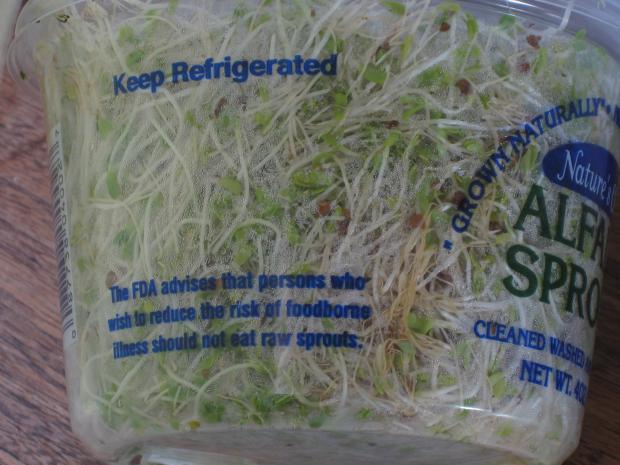
In the month of February, an E. coli outbreak linked to fresh sprouts struck the states of Minnesota and Wisconsin. Fresh alfalfa sprouts have been linked to several food-borne illness cases over the past several years, so we’d like to take the time to review how MN certified food managers can keep their customers from consuming tainted sprouts and other sensitive raw produce items.

Sensitive Produce Items and the MN Certified Food Manager

The recent E. coli outbreak in our state wasn’t merely an isolated incident. In a completely unrelated outbreak this year, sprouts grown in Kansas have been found to be the cause of illnesses as far away as Pennsylvania. When something like this happens, we like to take the time to have a discussion on how food service professionals can prevent these types of incidents from affecting their guests.

It is never safe to assume that raw sprouts, or any other raw produce items, are safe to consume right out of its packaging. All produce should be thoroughly rinsed and dried before it is made available to your customers.

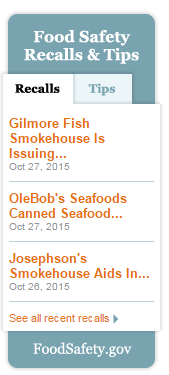
Secondly, you should always throw away or return recalled produce items to your supplier. In this most recent case, the health department has warned that there may still be recalled alfalfa sprouts on retail store shelves or in food preparation facilities. On our blog page, we’ve incorporated a widget that will help you stay current on any recall information, and we suggest you check it regularly to make sure that you do not have recalled items in your inventory.

Finally, you should never serve raw sprouts of any kind if your regular customer base includes individuals that are susceptible to food-borne illness. The FDA recommends that alfalfa sprouts never be served to the elderly, children or those who have depleted immune systems. If you are in charge of food service for a school, assisted living home or medical facility, we strongly urge you to keep raw sprouts off of the menu.

At Safe Food Training, we like to hear how our readers deal with these types of situations. Do you serve raw alfalfa sprouts in your facility, or would you rather not take the risk and keep them off of your menu entirely?

Safe Food for Thought – A Major Change for MN Food Safety Community

Introduction of Safe Food for Thought Blog

After publishing almost 70 information packed blog posts in the last two years Safe Food Training has become a go to destination for Minnesota food safety regulations. Our target audience of MN chef’s, certified food managers and restaurant owners can find information on everything from safely preparing wild game dinners to preventing wild animals in your dumpsters. We’ve provided our readers tips on buffet service, shellfish storage and proper freezer sanitation. We’ve also occasionally discussed management, marketing and HR issues of interest to our audience. We’re proud of the body of knowledge we’ve assembled for Minnesotans in the food service industry.

Introducing the new Safe Food for Thought blog

However, it’s about time to move on to something new… we’d like to introduce you to Safe Food Training’s new Safe Food for Thought blog. We’ve just begun to scratch the surface of food safety and related issues for the food service industry in MN. We have plans to discuss more food management nuances/challenges as well as provide updates on food safety legislation, and review new equipment for your kitchen and much more!

Make Minnesota the Safest Place in the World to Go Out to Eat

It’s Safe Food Training’s objective to help MN to become the safest place in the world for people to enjoy going out for a meal! We start by providing the state’s best class room training for food service workers who want to become a new certified food manager. Over 90% of our students pass the exam on their first try. We continuously monitor that indicator of our success and survey our students to find ways to update and improve the courses.

We also provide both on-line and regularly scheduled instructor lead re-certification courses to refresh current CFM’s. But a four hour class every three years is just the minimum.

Safe Food for Thought a Continuous Supply of Food Safety Information

Our weekly blog is intended to continually challenge our readers, remind them of the food safety standards and make them aware of changes in the code.  We also encourage our readers to pass our tips and tricks on to others in their organization so the whole staff is sensitive to the importance of food safety and aware of proper food handling procedures.

Our team designed this new site to make it easier for food service workers to find information relevant to their everyday challenges. If you have a question about a topic we haven’t already covered, let us know. We’ll get an answer and publish it as a blog so everyone benefits.

Safe Food for Thought New 24/7 FDA Recall Alert

FDA-Recall-Alert

Another unique addition to the new site is an alert feature that food managers can use to check for the most up to date food recall information. This new feature provides 24/7 streaming data from the FDA regarding all US food recalls. You no longer have to lose sleep worrying about serving contaminated food supplied from a manufacturer. Just quickly check the blog once a day to make sure your supplies are safe.

Can you tell we’re fired up about our new blog?!? You’ve already told us you love the old blog and you read it regularly. The new Safe Food for Thought blog will make it even easier to stay informed about your career and help you to keep your customers safe. We know that a better informed workforce can make Minnesota’s hospitality industry a safer place to eat out. Safe Food Training is ready to make a difference!

Subscribe to the Safe Food for Thought Newsletter right here.