ServSafe Training and Wooden Plank Serving Utensils

ServSafe and Wooden Serving Utensils

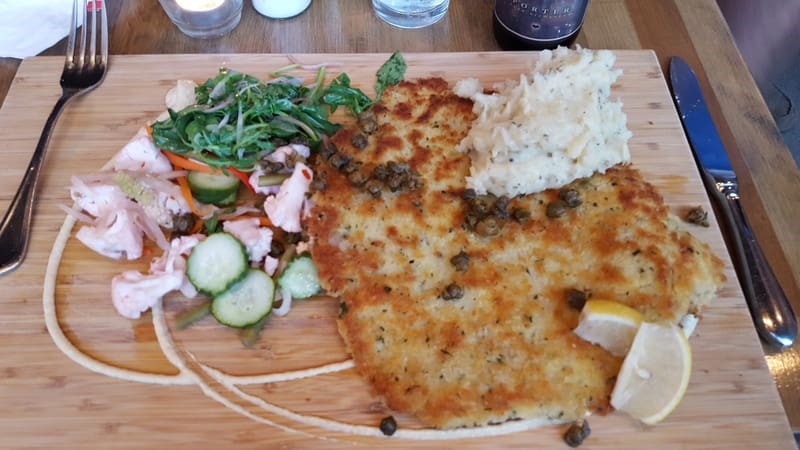
While dining out recently, we came across a restaurant which served us a delicious meal with a gorgeous presentation on a wooden plank rather than typical plateware. This got us thinking, about ServSafe training and wooden plank serving utensils. Do we need special steps to prevent food-borne illnesses from food served on wood planks and other alternative serving items?

ServSafe and Wooden Serving Utensils

ServSafe Training and Wooden Plank -Sanitation

ServSafe training tells us that all flatware must be sanitized between uses. Normally, this is done in a mechanical dishwashing machine or hand washed in a triple sink system. Can wooden serving boards be sanitized in the same way?

Wood is tricky to sanitize. Over time and repeated uses, small cuts from knives and other utensils form. Bacteria can hide and multiply in these cuts and dishwashing chemicals can seep in and potentially contaminate food. Extra care must be taken to ensure proper sanitation. We recommend using a triple sink and air drying method to clean wooden serving boards, and to do so immediately after use.

We’ve seen these large wooden boards featured on buffet lines as well. Many of these are crafted in a manner where a heat lamp is permanently attached. These are especially tricky to sanitize. Take care to wash and sanitize these by hand as soon as possible after every use.

A key to keeping food served on these boards is to make sure that you are using food-service-grade serving ware. These boards are harder and more resistant to wear and tear, and should be available from your local supplier. When investing in wooden serving materials, remember that these will not last forever and over time will need to be replaced.

What if you’re interested in wooden serving boards, but would rather not invest in costly materials that will need to be replaced on a regular basis? We’ve done some digging, and laminated wood boards and faux-wood plates look like a great alternative. Food-grade laminated wooden planks and fake wood can be easier to wash, many times in your standard dishwashing machine, and have a much longer life than expensive real wooden planks. While it is possible to spot the difference between real and fake wood, we see this as a safer and more cost effective investment into alternative serving ware.

Do you use wooden serving planks or any other type of serving ware other than standard plates in your restaurant?

The MN ServSafe Certified Food Manager and Contaminated Product

The MN ServSafe Certified Food Manager and Contaminated Product

As a MN ServSafe certified food manager, you take care to ensure the food you serve is safe for your customers, but there may be occasions when certain things beyond your control could potentially endanger your customers. Your shipment of fresh spinach may look clean or your case of micro greens may be labeled ready to serve, but microscopic particles of E.coli and fertilizer from the soil may be hiding on the surface. Ground beef shows no signs if it has been handled by an infected production worker during packaging, and farm fresh eggs do not come with a warning flag that their surface has come into contact with salmonella. This week, we’d like to offer a few tips to help you keep items commonly contaminated during production safe for your guests.

The MN ServSafe Certified Food Manager and Contaminated Product
Image credit: Altus Air Force Base

MN ServSafe Certified Food Manager and Product Unknowingly Contaminated During Production

There are many cases where contaminated product is only discovered after an outbreak of food-borne illness has begun. A lot of outbreaks trace back to a certain ingredient’s origin rather than the food service provider who prepared the final product. So if the initial contamination comes from outside of your facility, is there anything a MN ServSafe certified food manager can do to prevent a guest from consuming contaminated product?

Even if a raw product contains undetectable pathogens, there are steps you can take to keep it safe, even if the contamination has not come to light. Here are a few pointers for commonly infected items:

  • Wash all fresh produce, even if the label reads “ready to eat”
  • Keep an eye on refrigerated storage temperatures to ensure product is always out of the danger zone
  • Always cook product to the appropriate cooking temperatures
  • Avoid loose storage of eggs

While a fresh vegetable product may be labeled as “ready to eat,” we have seen incidents where these pre-washed products have caused food-borne illnesses. A few seconds of prevention will always be worth the effort.

We’ve also seen facilities that unpack whole eggs and store them loose in the same bin. While this may not be a health violation, it does increase the risk that salmonella on the shells or from broken egg can be passed from one egg to another and multiply. With recent outbreaks of salmonella from shell eggs, we feel that taking steps to prevent eggs from coming into contact with each other could help prevent the spread of illness in the event your eggs have arrived unknowingly contaminated.

Do you take extra precautions with ingredients that are commonly recalled, or do you take extra precautions with every ingredient you bring in?