The Latest Food Safety Training On Hair Coverings

The Latest Food Safety Training On Hair Coverings

Kitchens and food production facility managers perform an essential role in monitoring employee health and hygiene. Making sure staff stay home when they’re sick, wash their hands regularly and adhere to all personal health rules are important, but oftentimes the rules behind hair coverings can be lax, overlooked or misunderstood. In order to properly provide food safety training in your establishment concerning hair coverings, we’d like to provide a precise breakdown of the Minnesota food code regulations on the subject.

The Latest Food Safety Training On Hair Coverings
Image credit: nvxier via Pixabay

Proper Food Safety Training for Wearing Hair Coverings in the Kitchen

According to the food code, any employee working in a food production establishment must wear a hair restraint that prevents hair from coming into contact with food product. Allowed hair restraints include:

  • Hair nets
  • Hats
  • Beard and moustache nets
  • Clothing that covers body hair

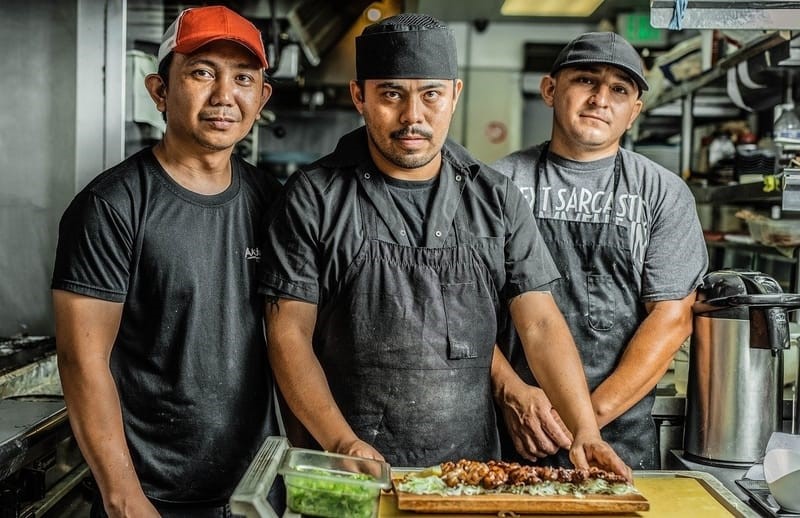
While hair nets are acceptable, hats have become a very popular head covering in the food industry. Paper chef hats, linen baker’s hats and baseball caps are all acceptable types of head coverings to restrain hair. Chef and baker’s caps can add a touch of class or professionalism if members of your kitchen staff can be seen by guests, and baseball caps can be comfortable and embroidered with your business’s logo to give some uniformity to your team. In your establishment’s food safety training, make sure that you note that employees with longer hair should style their hair in a way to be completely restrained by their hair covering. Sometimes simply wearing a hat is not quite enough to prevent hair from touching food product or preparation surfaces.

As you can see by our list, food safety training for hair restraints includes much more than just the top of the head. If you have employees who sport facial hair, they should wear a specially designed hair net that restrains facial hair. You should also ensure that employees wear appropriate clothing to cover body hair. Make sure that there are no open shirts or tank tops worn in the kitchen that could expose body hair.

There are a few situations in which hair coverings are not required. Many service staff are exempt from this rule. Waitstaff, hosts and hostesses, bussers and counter attendants who only serve beverages or prepackaged items do not have to don head coverings.

Finally, we’ve been asked from time to time whether bald kitchen workers require a head covering. For consistancy in your food safety training policy, we recommend that all personnel in the kitchen abide by the head covering rule even those who shave their head.

Does your establishment’s food safety training have a uniform head covering rule in place at your business?
How To Focus On Food Safety Management Training During COVID-19 Restriction

How To Focus On Food Safety Management Training During COVID-19 Restriction

Estimated reading time: 3 minutes

COVID-19 has dominated the news since the beginning of 2020, and many food businesses have struggled to find a way to keep their businesses open and continue serving their guests. While much of the food industry has focused on the balance between keeping their guests safe from the coronavirus and making a profit, it’s important not to let food safety management training take a back seat. Relaxing food safety management during these times can result in overlooking risks that could result in foodborne illness.

How To Focus On Food Safety Management Training During COVID-19 Restriction
Image credit: izikmd via 123rf

Keeping Food Safety Management Training a Priority

We understand that it takes a lot of effort to abide by StaySafeMN guidance for restaurants, and it should be a priority, but that can’t be an excuse to relax on other food safety management procedures.

Food safety managers are responsible for making sure staff understand and follow proper food handling procedures and times of reduced service are a great opportunity to monitor and provide a little extra on-the-job training. Since you’re taking the time to make sure employees understand mask rules, social distancing in dining areas and enforcing COVID-19 reservation-only regulations, you should also incorporate food safety training as well.

It’s quite easy to monitor and guide your staff on a few key issues as you go about monitoring coronavirus prevention protocols. Here’s a brief list of items that can be observed at the same time as StaySafeMN procedures:

  • Proper sanitation
  • Handwashing between tasks
  • Employee health
  • Hair coverings

Some of these things may look like items your staff should already understand, but during the course of your day, it’s easy to make sure. Food safety managers can enforce and provide training for sanitation procedures since it’s necessary for both coronavirus prevention and food safety. Handwashing can also be reviewed as it can be brought up easily given current circumstances.

When it comes to employee health, sick is sick regardless of whether it’s COVID or not. Daily employee health screenings implant the idea that fever, cough, runny nose, nausea and other symptoms disqualify a food worker from taking their shift. Train your employees to take their temperature before work if not done on-site, be aware of symptoms and call out sick if necessary.

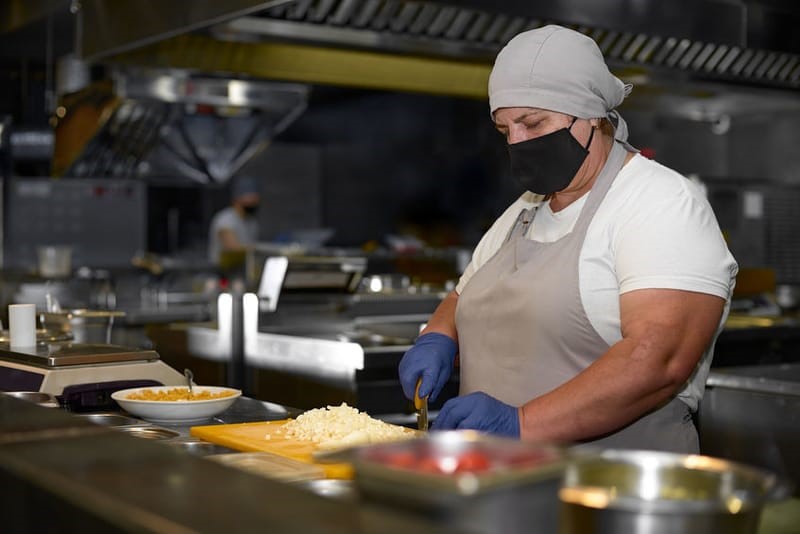
Now that masks are required, kitchen workers must wear two important pieces of protection: a head covering and a mask. When training employees on how to properly wear a mask, you can also teach them the importance of wearing a proper head covering when working with food.