
Wardrobe Advice For ServSafe Managers

ServSafe approved wardrobe

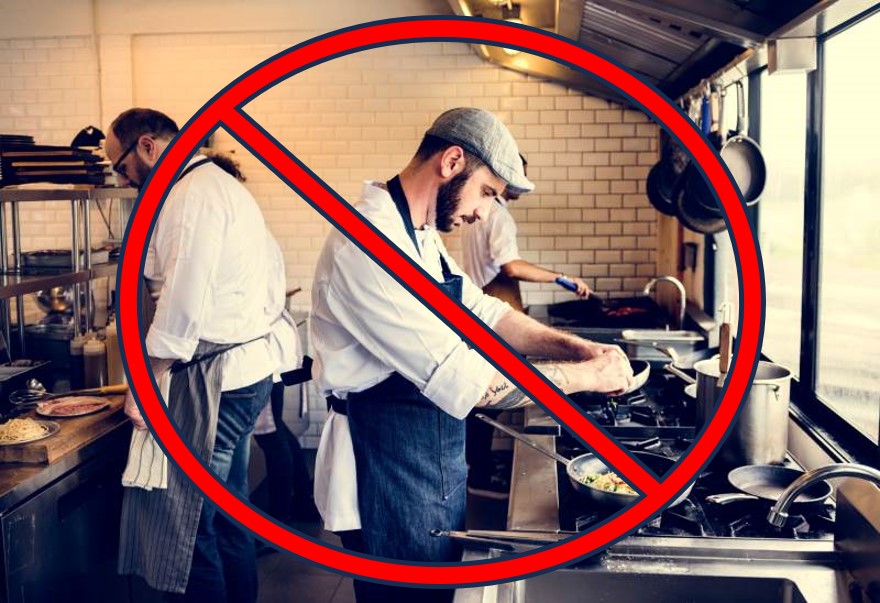
Whether their uniform accessories are for style or convenience, or if a celebrity TV chef makes it appear fashionable, there are several wardrobe quirks that ServSafe MN managers should avoid. While the possible list of uniform components that are food safety hazards can be extensive, we’d like to focus on three that we feel should never be part of your work attire.
Wardrobe Advice for ServSafe Managers
Image credit: 123rf

Three Uniform Components to Kick Out of the Kitchen

Anything you add to your work dress instantly becomes susceptible to the same contamination risks as the rest of your uniform. The following are three things that we feel should not be allowed in your uniform policy.

  • Dry towels attached to the uniform
  • Arm and hand jewelry
  • Baseball caps as head coverings

Many food workers feel looping a dry towel around apron strings or slinging it over a shoulder is convenient. It keeps your towel handy and readily available when a plate or cutting board needs a quick wipe. Unfortunately, the apron is a common collector of dirt, grease, and debris in the kitchen, and the shoulder of your uniform can become contaminated with sweat and other bacteria. Keep your dry towels stored in a clean place that will allow them to be easily accessible when needed.

The regulations concerning jewelry in food preparation facilities are often overlooked. The food code states that only simple wedding bands and plain rings can be worn. Arm and wrist bands, rings, and other accessories can often go unnoticed, especially with the front-of-the-house staff in restaurants. Consider a necklace or anklet as an alternative for an employee wearing a medical alert bracelet. Management should also be advised for each employee who is wearing such jewelry so that it can be quickly located in the event of a medical emergency.

Ball Caps: A Wardrobe Dilemma For ServSafe Managers

While the Minnesota Food Code concerning head coverings doesn’t disallow baseball caps, we feel there may be a few concerns with incorporating them into your dress code. Most ball caps are crafted from absorbent cloth, and the bills are generally constructed from cardboard lined with soft material. Over time, this cloth and cardboard can become saturated with sweat, steam, and other substances. This creates a potential breeding ground for bacteria. While paper head coverings or hair nets are ideal, we understand that baseball caps are comfortable and familiar. Alternatively, if they’re part of your dress code, keep them clean and replace them regularly.

These three items seem to provide style, comfort, and convenience in the workplace, but unfortunately, they also create contamination dangers. By making it a policy to eliminate them, you can make the cleanest kitchen even safer.

The Latest Food Safety Training On Hair Coverings

The Latest Food Safety Training On Hair Coverings

Kitchens and food production facility managers perform an essential role in monitoring employee health and hygiene. Making sure staff stay home when they’re sick, wash their hands regularly and adhere to all personal health rules are important, but oftentimes the rules behind hair coverings can be lax, overlooked or misunderstood. In order to properly provide food safety training in your establishment concerning hair coverings, we’d like to provide a precise breakdown of the Minnesota food code regulations on the subject.

The Latest Food Safety Training On Hair Coverings
Image credit: nvxier via Pixabay

Proper Food Safety Training for Wearing Hair Coverings in the Kitchen

According to the food code, any employee working in a food production establishment must wear a hair restraint that prevents hair from coming into contact with food product. Allowed hair restraints include:

  • Hair nets
  • Hats
  • Beard and moustache nets
  • Clothing that covers body hair

While hair nets are acceptable, hats have become a very popular head covering in the food industry. Paper chef hats, linen baker’s hats and baseball caps are all acceptable types of head coverings to restrain hair. Chef and baker’s caps can add a touch of class or professionalism if members of your kitchen staff can be seen by guests, and baseball caps can be comfortable and embroidered with your business’s logo to give some uniformity to your team. In your establishment’s food safety training, make sure that you note that employees with longer hair should style their hair in a way to be completely restrained by their hair covering. Sometimes simply wearing a hat is not quite enough to prevent hair from touching food product or preparation surfaces.

As you can see by our list, food safety training for hair restraints includes much more than just the top of the head. If you have employees who sport facial hair, they should wear a specially designed hair net that restrains facial hair. You should also ensure that employees wear appropriate clothing to cover body hair. Make sure that there are no open shirts or tank tops worn in the kitchen that could expose body hair.

There are a few situations in which hair coverings are not required. Many service staff are exempt from this rule. Waitstaff, hosts and hostesses, bussers and counter attendants who only serve beverages or prepackaged items do not have to don head coverings.

Finally, we’ve been asked from time to time whether bald kitchen workers require a head covering. For consistancy in your food safety training policy, we recommend that all personnel in the kitchen abide by the head covering rule even those who shave their head.

Does your establishment’s food safety training have a uniform head covering rule in place at your business?