
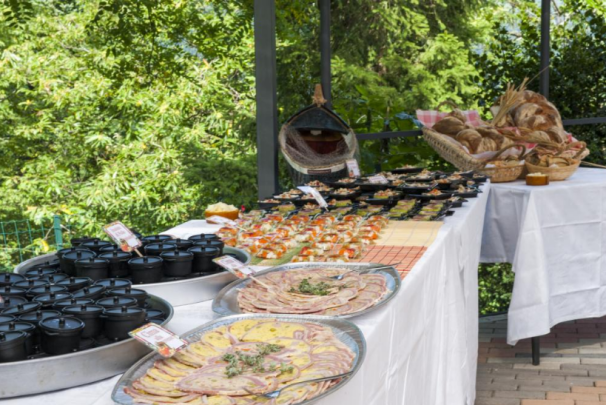
With summer upon us, many restaurants and other facilities offer outdoor food services at events such as BBQs, picnics, and other live station productions away from the indoor kitchen. While these events can be a lot of fun for both guests and food-service workers alike, it is important to follow ServSafe advice for safe outdoor food service and take extra precautions to keep the food you serve your customers as safe as possible.
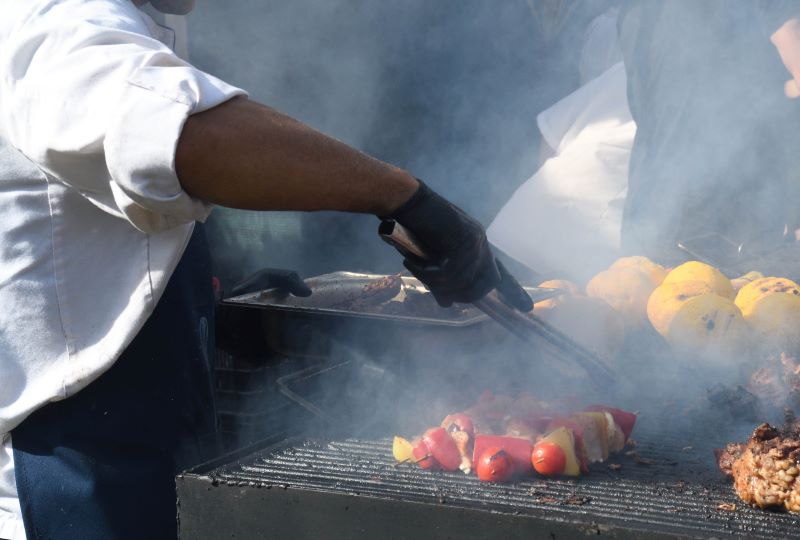
Outdoor Events Advice for ServSafe Managers
There are three significant challenges when offering outdoor food service to your guests.
- Sanitation
- Hand washing
- Proper overhead covering
Keeping your cooking and serving utensils clean and free from the bacteria that can cause food-borne illnesses can be challenging at any outdoor location. In most cases, your dishwasher will be back in your indoor kitchen, or, in the case of an off-site catering event, you may not have access to a dishwasher on-site. It is vital that you have enough serving utensils on hand if the ones in use become soiled or contaminated in any way. A properly mixed and stored sanitizer solution is essential to keep your preparation surfaces, tongs, knives, and other utensils free from harmful bacteria.
Another major challenge when conducting any outdoor food preparation is ensuring a hand washing station is available where food is being prepared. Health department hand washing rules still apply, and you must have a hand washing station on-site. Our ServSafe advice is to take some time planning and make the financial investment on your part. Portable hand washing stations meet current health code rules and can store hot or heated water on demand when attached to an approved water source. Your local health department office should be able to direct you to the appropriate portable hand washing station if you consider cooking outdoors for any special event.
Consider Overhead Coverings
In most jurisdictions, any outdoor cooking station and food-storage areas should have the proper overhead coverings. Depending on your needs, a portable awning may meet your local health department’s regulations. However, if outdoor service is part of your regular plans, you may wish to invest in a more attractive and permanent solution. Rules for overhead coverings vary from jurisdiction to jurisdiction, so you may want to consult with your health inspector to develop a game plan to ensure that you have covered your bases and provide a clean environment to prepare food for your guests.
At Safe Food Training, we love going to BBQs and other outdoor locations to enjoy summer cuisine. Does your facility offer outdoor dining options that may require unique ServSafe advice?
