A Safe Food Training Alert: For Restaurant Fire Hazards

A Safe Food Training Alert: For Restaurant Fire Hazards

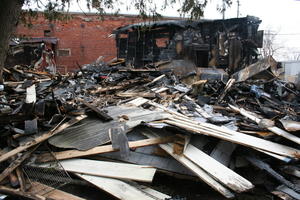
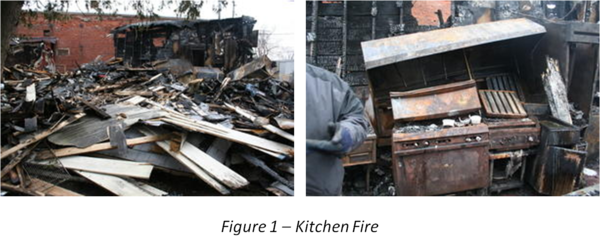
During a break in a recent Safe Food Training class a side discussion on kitchen fire safety “spontaneously ignited”. We decided it would be a good topic to have our friend and nationally recognized fire safety expert, Scott Futrell, blog about. This is the final in a series of blogs that will summarize fire prevention. Don’t let your kitchen, restaurant, and livelihood end up like the one in Figure 1 did, practice fire prevention!
A Safe Food Training Alert: For Restaurant Fire Hazards
All Image credits: Futrell Fire Consult & Design, Inc

Fire safety in your kitchen and your restaurant.

The Minnesota State Fire Code provides the minimum requirements for the fire prevention and fire protection in eating and drinking establishments.  It is up to you to reduce the odds of a fire impacting your business by routinely doing several things.


It is very important that you monitor the work done by contractors hired to clean hoods, ducts, and fans as well as contractors hired to inspect, test, and maintain the fire suppression systems.  The services they sell you may not match the objectives required to maintain your systems in a fire safe manner.


What do you need to do to protect your investment or your facility?


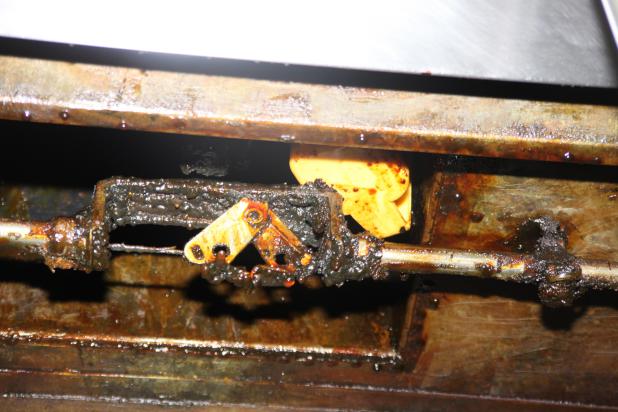
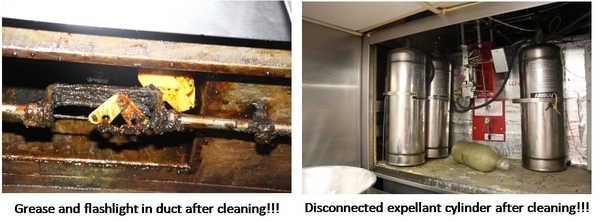
Look behind the filters and into the exhaust ductwork and monitor the grease build up prior to scheduled cleaning as well as immediately after cleaning to ensure it is cleaner than shown in Figure 2 where grease and the cleaner’s flashlight remained the day after the professional cleaning.  Keep in mind that solid-fuel burning appliances leave creosote and it is harder to clean, but easier to ignite.
Minnesota Food Safety Managers Watch for Grease in Plenum
Grease in Plenum
Figure 2

Get any redesign of appliance floor plans approved


A consultant knowledgeable in the:

  • Minnesota State Fire Code,
  • International Mechanical Code
  • National Fire Protection Association: NFPA 96, Standard for Ventilation Control and Fire Protection of Commercial Cooking Operations

should approve planned changes before any appliances are moved or replaced from under existing nozzles or existing hoods.


Be vigilant about fire suppression nozzle caps


Grease gets into the fire suppression nozzles if the caps are off and then when the system needs to operate it can’t flow agent out of the grease plugged nozzles, so a policy that includes ensuring the nozzle caps are always in place protects your investment.  See Figure 3 for a nozzle with the cap off and for a nozzle with grease caked inside of it.

Minnesota Certified Food Managers Fire Suppression Monitor Nozzels
Nozzle Missing Cap and Grease in Nozzle
Figure 3

Fire prevention and protection training


Establish as a part of your training program the fire prevention and protection requirements for all kitchen employees highlighting such topics as:

  • Manual pull station use (always the first thing in a fire if the system hasn’t operated automatically),
  • Always operate the exhaust system when there is activity in the kitchen
  • Define cleaning schedule and procedures
  • Check that nozzle caps are in place daily
  • Proper fire extinguisher use
  • And more.

Then have weekly or monthly staff meetings to reinforce the fire prevention, fire protection, and cleaning requirements associated with grease-laden cooking.


If you have any questions about fire safety in the food preparation environment that you would like to discuss contact Scott directly at (763) 425-1001 or scottf@ffcdi.com.

ABOUT THE AUTHOR: Scott A. Futrell, PE, FSFPE, CFPS, SET, CFEI, is a fire protection consultant with Futrell Fire Consult & Design, Inc., in Osseo, Minnesota and has over 40 years’ experience designing, specifying, and investigating fire protection system related losses and can be reached by e-mail at: scottf@ffcdi.com, or visit www.ffcdi.com.

Note from Tim Niles, Safe Food Training, Trainer and Editor-in-Chief, we truly appreciate the knowledge and hints Scott has provided for us in this series of blogs. He has a wealth of experience in fire prevention/protection and he’s regarded as a national expert. We’ve just scratched the surface of his knowledge in these blogs. It’s our hope that this information will stimulate our readers to take steps to make their facility a safer place for customers and employees. Thanks Scott!
Minnesota Certified Food Managers Alert: For Restaurant Fire Hazards

Minnesota Certified Food Managers Alert Regarding Restaurant Fire Hazards

As Minnesota certified food managers we are trained to create a safe eating experience for our guests. But owners and food service managers must bear in mind more than just food safety to protect employees and customers. This is the fourth in a series of blogs that look specifically at the hazards that Scott Futrell, a local fire protection consultant, has provided to assist you in protecting your customers, business and employees.

What can Owners and Minnesota Certified Food Managers do to protect your investment or your facility?

The Minnesota State Fire Code requires you to maintain your fire protection equipment in working condition.  There are procedures you should establish for you and your staff in addition to hiring competent contractors to clean and inspect and test your systems and equipment.

Basically the Codes and Standards require you to inspect, test, and maintain your kitchen hood, duct, fan, and suppression systems in accordance with the manufacturer’s requirements.  Thus it is essential you obtain from the contractor the minimum requirements for inspection, testing, and maintenance and then understand your responsibilities and the very limited, or minimal, portions of these requirements that the contractor will actually perform.

Checklist for Kitchen Fire Safety

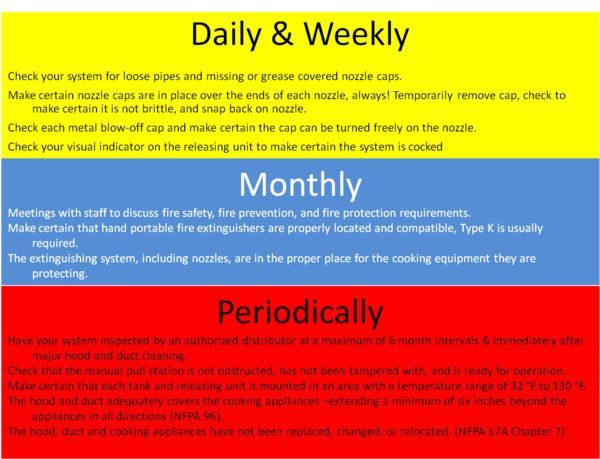
The owner’s responsibility for inspection and maintenance of wet chemical systems on a daily, weekly, and monthly basis should include the following at a minimum:

Minnesota Certified Food Managers Alert Regarding Restaurant Fire Hazards

It is very important to note that often the fusible links are wired shut during the cleaning process to prevent accidental activation preventing the system from operating automatically. It’s also possible that your system might have been disconnected, damaged, or has accumulated excessive deposits of grease causing your system to become inoperative, see Figure 1.


Minnesota Certified Food Managers Alert: For Restaurant Fire Hazards
Figure 1 – Post Grease
All Image credits: Futrell Fire Consult & Design, Inc

Both of these pictures were taken post-fire, where the suppression system did not operate because the expellant was disconnected.  Note that the grease cleaning was not performed thoroughly. The fire occurred the day after the cleaning!

The bottom line is this:

  • Contractors that you hire for inspection, testing and maintenance do not perform all of the safety checks that need to be done on your systems on a daily, weekly, or periodic basis;
  • your responsibilities include staff education as well as performing daily, weekly, and periodic inspections;
  • your responsibilities include observing the hoods, ducts, and fire protection devices after the contractor’s complete their work; and
  • schedule the fire suppression six-month inspection, test, and maintenance immediately after the hood, duct, and fan cleaning.

If you want more information or have any questions about fire safety in the food preparation environment that you would like Scott to discuss leave a comment.

ABOUT THE AUTHOR: Scott A. Futrell, PE, FSFPE, CFPS, SET, CFEI, is a fire protection consultant with Futrell Fire Consult & Design, Inc., in Osseo, Minnesota and has over 40 years’ experience designing, specifying, and investigating fire protection system related losses and can be reached by e-mail at: scottf@ffcdi.com, or visit www.ffcdi.com.