Keep it Under Wraps: The Truth About Hair Restraints in MN

hair restraints
hair restraints
Are you meeting the hair requirements for your kitchen?

If you’re managing a busy kitchen in Minneapolis or anywhere across MN, you’ve likely heard the term “properly restrained” hair, but do you know what the state actually requires? It’s not just about looking tidy. In Minnesota, “properly restrained” effectively means fully covered. It isn’t enough to just pull it back in a ponytail; if there are loose strands peeking out from under a ball cap or visor, or if a long braid is swinging free, you aren’t following the state’s safety rules.

The Long and Short of It: The "Tie & Tuck" Method

We know you don’t have time for fluff when you’re on a shift, and neither do your line cooks. But when the health inspector walks in, or worse, a customer finds a hair in their hot dish, it becomes a major problem.

For anyone with long hair, simply throwing on a hat will not cut it. You’ve got to follow two simple steps to stay compliant:

  1. Tie it back securely: Use a hair tie to keep it in place while you’re working. This is the foundation.

  2. Tuck it in: This is the step most people miss. Make sure you completely tuck the ponytail, bun, or braid into your hair covering.

Pro Tip: If you’re using a visor, you’re likely not compliant unless you’re wearing a hairnet underneath it. Visors leave the crown of the head exposed, and they rarely keep long hair in place.

Why Does This Actually Matter? (Beyond the "Yuck" Factor)

Keep it wrapped and maintain a food safe kitchen in Minnesota.

Sure, finding a hair in your food is gross, and it’s the fastest way to kill a customer’s appetite and your restaurant’s reputation on Yelp. But as Certified Food Protection Managers, we know the risk goes deeper than optics.


Physical Contamination: Hair is a physical contaminant. It can choke an infant or cause a gag reflex in adults.

Biological Contamination: This is the big one. Human hair and scalps are prime real estate for Staphylococcus aureus (Staph). When staff members touch their hair to fix a loose strand and then touch food without washing their hands, they’re transferring bacteria directly to the plate.


By insisting on “fully covered,” you aren’t just being a stickler for the dress code; you’re breaking the chain of infection.

How to Enforce It Without Being a Nag

At Safe Food Training, Jeff Webster emphasizes that knowledge is useless if your team can’t use it. Enforcing hair restraints can feel awkward, but it doesn’t have to be.

  • Stock the Supply: Don’t make staff hunt for gear. Keep a box of high-quality hair ties and hairnets right by the time clock.

  • Lead by Example: If the manager walks into the kitchen with loose hair “just for a second,” the standard is gone.

  • Make it “Non-Negotiable”: Treat hair restraints like non-slip shoes. You wouldn’t let a cook work in flip-flops; don’t let them work with loose hair.

Comparison: Training Options for Your Team

We’re here to help you get certified in the way that fits your life. Whether you want to knock it out in one day or chip away at it online, we’ve got you covered.

Feature

In-Person Training

Online Training

Best For

Getting it done in one shot

Busy, unpredictable schedules

Pass Rates

Higher because of direct interaction

Self-paced, requires discipline

Feedback

Immediate from Jeff Webster

Automated through the platform

Focus

Distraction-free learning environment

Learn from your couch or office

Location

Local MN classrooms

Anywhere with an internet connection

Frequently Asked Questions

Certified food protection manager license application help from Safe Food Training!

We’ve rounded up some of the most common questions we get from Minnesota food pros to help you stay ahead of the curve.

What's the Main Goal of Your Training?

Our core mission is to help you and your business effectively meet Minnesota’s essential food safety standards through high-quality, convenient training. We don’t just read the codebook to you; we explain how to apply it.

Do You Offer Both Online and In-Person Training?

Yes. Safe Food Training provides both in-person and online learning opportunities. We offer personalized, private, on-site staff training, ideal for aligning your team on topics such as hair restraints.

What Happens if I Don't Pass the Exam on My First Attempt?

Don’t panic. We’re dedicated to your success. If you don’t pass the Certified Food Protection Manager exam on your first try, we offer a retake of the course and exam at one of our future regularly scheduled sessions. Our goal is to provide the support you need to pass.

How Often Must I Complete Continuing Education in Minnesota?

In Minnesota, you’ve got to renew your certified food protection manager license by completing continuing education every three years. We send out reminders so you never accidentally let it lapse.

Ready to Get Certified?

Register for an upcoming course at SafeFoodTraining.com

When Can a Sick Employee Return to Work? The MN Food Manager’s Guide to Illness Reporting

Sick employees illness reporting
Are you prepared?

In February, it feels like everyone in Minnesota is coming down with something. Whether it’s the common cold or the dreaded “stomach flu” (Norovirus), managing a sick crew is one of the toughest parts of being a kitchen leader.

But here is the reality: Poor personal hygiene and working while sick are the #1 causes of foodborne illness outbreaks in restaurants.

As a Minnesota Food Professional, you don’t just have a duty to keep your customers safe—you have a legal obligation under the Minnesota Food Code to exclude sick staff. Here is exactly how to handle illness in your kitchen and when it is safe to let your team back on the line.

The 24-Hour Rule: Vomiting and Diarrhea

In Minnesota, the rule is clear and non-negotiable. It requires immediate exclusion from the establishment if an employee vomits or has diarrhea.

When can they return?

They must be symptom free for at least 24 hours before returning to the kitchen.

  • Jeff’s Pro Tip: If an employee stops vomiting at 8:00 AM on Tuesday, they cannot work the breakfast shift on Wednesday. They aren’t eligible to return until 8:00 AM on Wednesday at the earliest.

The "Big 6" Pathogens and Mandatory Notification

While the 24-hour rule covers general stomach bugs, six specific pathogens require you to call the health department. These are highly contagious and can cause massive outbreaks even in small amounts.

The Big 6 are:

  1. Norovirus
  2. Salmonella (Nontyphoidal)
  3. Salmonella Typhi
  4. Shigella
  5. Hepatitis A
  6. Shiga toxin-producing E. coli (STEC)

Notify the Minnesota Department of Health (MDH) or your local health department upon diagnosing an employee with any of these conditions. In these cases, the 24-hour rule often doesn’t apply. Instead, the MDH will work with you to determine a safe return date.

Other Symptoms to Watch For

Not every illness requires sending someone home, but many require restricting their duties:

  • Jaundice (yellowing of skin/eyes): This is a major red flag for Hepatitis A. Exclude the employee and notify the MDH immediately.

  • Kitchen staff with a sore throat and fever must not handle food. If you serve a “Highly Susceptible Population” (like a nursing home or school), you must exclude them from the building entirely.

  • Infected Wounds: A staff member with a cut containing pus or an infection must cover it with an impermeable bandage and a single-use glove.

Why the CFPM Credential Matters

If you’re managing a busy kitchen, I know the pressure to “just get through the shift” is real. But an uncertified manager might not recognize the difference between a common cold and a reportable illness.

That’s where the Certified Food Protection Manager (CFPM) comes in. Our training ensures that you and your shift leads:

  • Maintain a proper Employee Illness Log (required by MN law).

  • Understand the difference between Excluding and Restricting staff.

  • Know exactly how to report an outbreak to the 1-877-FOOD-ILL hotline.

Is Your Kitchen Protected?

Don’t wait for a health inspector to find a sick employee on your line. Get the training you need to lead a safe, compliant kitchen.

illness reporting in MN
Do you know the rules?

Training Path

Best For

Benefit

In-Person

“Get it done in one shot.”

Live Q&A with Jeff to discuss your specific kitchen’s illness policy.

Online

“Learn on your timeline.”

Flexible modules you can complete between shifts.

Register for an upcoming CFPM course at SafeFoodTraining.com

The Mayonnaise Food Safety Myth: What Every Certified Food Protection Manager in Minnesota Needs to Know

Mayonnaise Food Safety

As a Certified Food Protection Manager (CFPM) in Minnesota, you have likely heard a classic food safety myth: mayonnaise causes most food poisoning in potato salad, sandwiches, and other common dishes. For years, people widely believed the condiment was highly perishable and blamed it for a host of foodborne illnesses. This enduring mayonnaise food safety myth is so pervasive, it’s often the first thing people think of when a summer picnic or buffet goes wrong. However, the science behind this belief reveals a more nuanced truth.

The real culprits are almost always other ingredients that people have not prepared or handled properly to food safety standards. The myth’s enduring power is rooted in a misunderstanding of how mayonnaise is made and the critical importance of avoiding cross-contamination.

The Science of the "Mayonnaise Myth"

Mayonnaise Food Safety
Do you know your mayonnaise food safety?

Commercially produced mayonnaise is a highly stable food product, primarily because of its ingredients. Manufacturers load it with acids, like vinegar and lemon juice, and preservatives that create a low pH environment. This acidic nature is hostile to the growth of most foodborne bacteria, including Salmonella.

  • Low pH as a preservative: The low pH of store-bought mayonnaise acts as a natural safeguard. While you should refrigerate it for optimal taste and quality, the product’s acidity makes it far less susceptible to spoilage than many other ingredients. Some sources even suggest that adding commercially produced mayonnaise to certain dressings and sauces can extend their shelf life because of this preserving effect.

Pasteurized ingredients: The raw eggs traditionally used in mayonnaise are a common source of Salmonella contamination. However, commercial mayonnaise manufacturers use pasteurized eggs, which eliminates this risk. This key difference makes store-bought mayonnaise a much safer ingredient to work with.

The Real Culprits: Time and Temperature Control

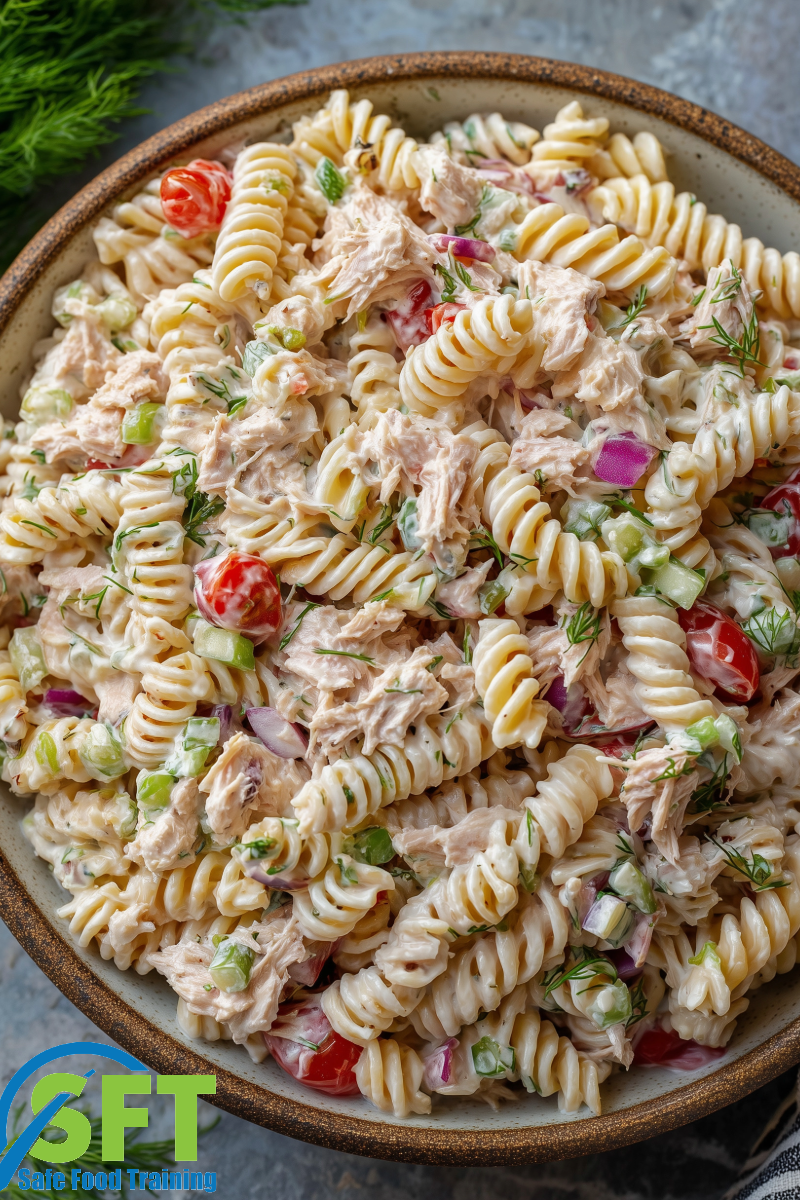
If mayonnaise doesn’t cause food poisoning, why do popular dishes that contain it make people ill? The answer lies in the other ingredients. Dishes like potato salad, pasta salad, and tuna salad become a potentially hazardous food (PHF)—now more commonly referred to as a time/temperature control for safety (TCS) food—once you combine them. These foods are a perfect breeding ground for bacteria if they remain in the temperature danger zone (TDZ) for an extended period.

A significant portion of foodborne illnesses, including those attributed to Salmonella, results from improper temperature control. The Minnesota Food Code requires that all TCS foods be kept at or below 41°F or above 135°F to prevent bacteria from multiplying to dangerous levels.

  • Susceptible ingredients: Cooked potatoes, pasta, cooked eggs, and meats are highly susceptible to bacterial growth once they are cooked and cooled. Leaving a potato or pasta salad out at room temperature for even a short time can create a significant health hazard.
  • Preventing cross-contamination: Many food safety incidents at events like buffets directly result from cross-contamination. This occurs when someone uses a utensil to serve one dish and then uses it in another, or when a spreader comes into contact with raw meat proteins and then returns to the mayonnaise container. In these cases, bacteria are highly likely to contaminate the mayonnaise.

Maintaining Food Safety Standards in Minnesota


Mayonnaise Food Safety
Mayonnaise food safety issues usually revolve around time and temperature.


For any food professional, a strong understanding of food safety principles is essential. Relying on myths can lead to dangerous oversights in your establishment. It is crucial to always avoid cross-contamination, practice excellent personal hygiene, and ensure you handle every ingredient correctly.

Staying up-to-date with your knowledge is also a requirement of the Minnesota Food Code, which mandates that most food establishments have a full-time certified food manager on staff. These regulations protect public health and ensure professionals like you have the expertise to operate safely.

This is why proper, in-depth food safety training is so vital. It’s not just about passing an exam—it’s about understanding the “why” behind the rules. You are responsible for the health of your customers, and a sound foundation in food safety principles is the best way to uphold that responsibility. You also need to renew your certification every three years by completing continuing education.

At Safe Food Training, we offer convenient and personalized Certified Food Protection Manager courses designed specifically to help you and your team effectively meet these standards in Minnesota. We provide everything you need to become certified in one simple session, including the exam itself. Book your continuing education training or register for a full certification course on our website today.

Serving All Guests: A Certified Minnesota Food Manager’s Guide to Service Animal Rules

Service animal or emotional support animal, which is okay in your establishment?
Service animal rules for Minnesota food managers-Picture of service animal, dog, with a man in a wheel chair. Feet only to the chest, no head showing.
Learn the service animal rules for Minnesota food managers.

With the Labor Day weekend approaching, restaurants across Minnesota are preparing for a welcome surge of customers looking to enjoy the last days of summer. As a certified Minnesota food manager, finding the right balance to ensure a smooth and positive experience for every guest is a top priority. One situation that can cause confusion for even the most seasoned staff is navigating the rules around animals in the dining room. Understanding the clear legal distinctions between service animals and other animals is not just excellent customer service—it’s a critical part of your compliance and hospitality strategy.

Knowing the correct way to welcome a guest with a service animal while confidently upholding your establishment’s policies is key. This guide will clarify the official service animal rules so you and your team can handle any situation with professionalism and respect.

Supporting All Guests: A Commitment to Hospitality

Before diving into specific rules, it’s important to frame this issue as one of hospitality and inclusion. According to the CDC, one in four adults in the United States lives with a disability. This means a significant portion of your customer base may rely on a service animal to navigate the world. For these individuals, dining out isn’t just a meal; it’s an exercise in trusting that establishments will be accessible and welcoming. By training your team to handle these situations correctly, you are not just following the law—you are showing a large and loyal segment of your community that they are valued and respected.

The Law Is Clear: Service Animals Are Welcome

Service animal rules
Learn the service animal rules to stay compliant with federal and state laws!

Under the Americans with Disabilities Act (ADA), a service animal is not a pet. Businesses serving the public must allow service animals, working animals considered medical equipment, to accompany their handlers in all areas open to customers. For a restaurant, this means the main dining room, waiting areas, and restrooms.

Understanding the legal definition of a service animal and permissible questions is crucial.

    • What is a service animal? The ADA defines a service animal as a dog that has been individually trained to do work or perform specific tasks for a person with a disability. In some cases, a miniature horse may also qualify. The animal’s task must directly relate to the person’s disability.


    • What can you ask? When it is not obvious what service an animal provides, you may only ask two questions:
        • “Is the dog a service animal required because of a disability?”
        •  “What work or task has the dog been trained to perform?”
  •  

What can you NOT ask? You cannot ask about the person’s disability, require them to show medical documentation, or demand a special ID card or training certificate for the animal. You also cannot charge a fee for the service animal.

Service Animals vs. Emotional Support Animals: A Crucial Distinction

Sometimes miniature horses can serve as legal service animals.

This is where most confusion arises. While often grouped together, emotional support animals do not have the same legal protections as service animals under the ADA. You and your staff must understand the difference.

  • Emotional Support Animals Are Not Service Animals: No one individually trains an emotional support, therapy, comfort, or companion animal to perform a specific job or task. Its presence provides a benefit, but it does not have the legal standing of a service animal. Therefore, the ADA does not grant them access to public places, such as restaurants.
  • Your Policy Matters: You may legally prohibit emotional support animals from your dining room. This holds true even if you have a pet-friendly patio. You can enforce a “no pets” policy for animals that do not meet the ADA’s definition of a service animal.

Clear Communication is Key: Having a clear, consistent policy and training your staff to communicate it politely is crucial. A customer may not be aware of the difference, and a respectful explanation can help prevent a difficult situation from escalating.

Maintaining a Safe and Welcoming Environment for Everyone

Service animal rules
What are the service animal rules for dining in Minnesota?

Accommodating a service animal does not mean sacrificing the safety and comfort of your other guests. The ADA outlines reasonable behavioral standards for service animals, and the handler is responsible for meeting them.

  • The Handler Must Be in Control: The service animal must be under the handler’s control at all times. This usually means being on a harness, leash, or tether. The animal should be well-behaved, not barking excessively or creating a disturbance.
  • When You Can Ask an Animal to Leave: You can legally ask for a service animal to be removed from the premises if it is out of control and the handler does not take effective action to control it, or if the animal is not housebroken.
  • Serve the Handler, Not the Animal: If you justifiably remove a service animal, you must still serve the person with the disability. The goal is to address the animal’s behavior, not to refuse service to the individual.

Navigating the rules for service animals is a vital part of being a certified food manager in Minnesota. By understanding the law, training your team on the two key questions, and knowing the difference between service animals and emotional support animals, you can ensure a safe, legal, and welcoming environment for all your guests this Labor Day and beyond.

Don’t wait for a challenging situation to test your team’s knowledge. Whether you are pursuing an initial certification or need to fulfill your three-year continuing education requirements, Safe Food Training offers personalized, instructor-led options in Minnesota to ensure you and your team are prepared. 

Protect your customers and your reputation by registering for a course today.