The Ulitmate Wild Game Feed Advice For Certified Food Managers

Wild Game Feed Advice For Certified Food Managers

If it’s hunting season, then the Minnesota tradition of wild game feeds cannot be far behind. Many nonprofit organizations use the events to raise money for their causes and activities. Here’s what certified food managers need to know about cooking at wild game feeds.

Wild Game Feed Advice For Certified Food Managers
Image Credit: Brothers Meat & Seafood in Maple Grove, MN

Certified Food Managers Running Wild Game Feeds For Non-Profits

In Minnesota, only nonprofit organizations can hold wild game dinners. These groups rely on donations from hunters. Meats may include deer, elk, bear, and wild boar. Wild game also includes pheasant, duck, goose, and wild turkey. Fishermen donate salmon and trout. To receive pure game, it is necessary that:

  • No sausage or ground venison is included
  • Only legally hunted or fished game is included
  • The hunter eviscerates the game within two hours of harvesting

Receipts


A receipt with the names and addresses of the donor and recipient must accompany the donated game. Other pertinent information includes the vehicle’s license plate used at the hunt and a description of the gift, including numbers and species.

Storing Wild Game


Planning for wild game feeds begins months ahead of time. It’s essential to store the meat safely until it’s cooked. Check how the hunter has stored the harvest before bringing it to the event organizers.

Food Preparation


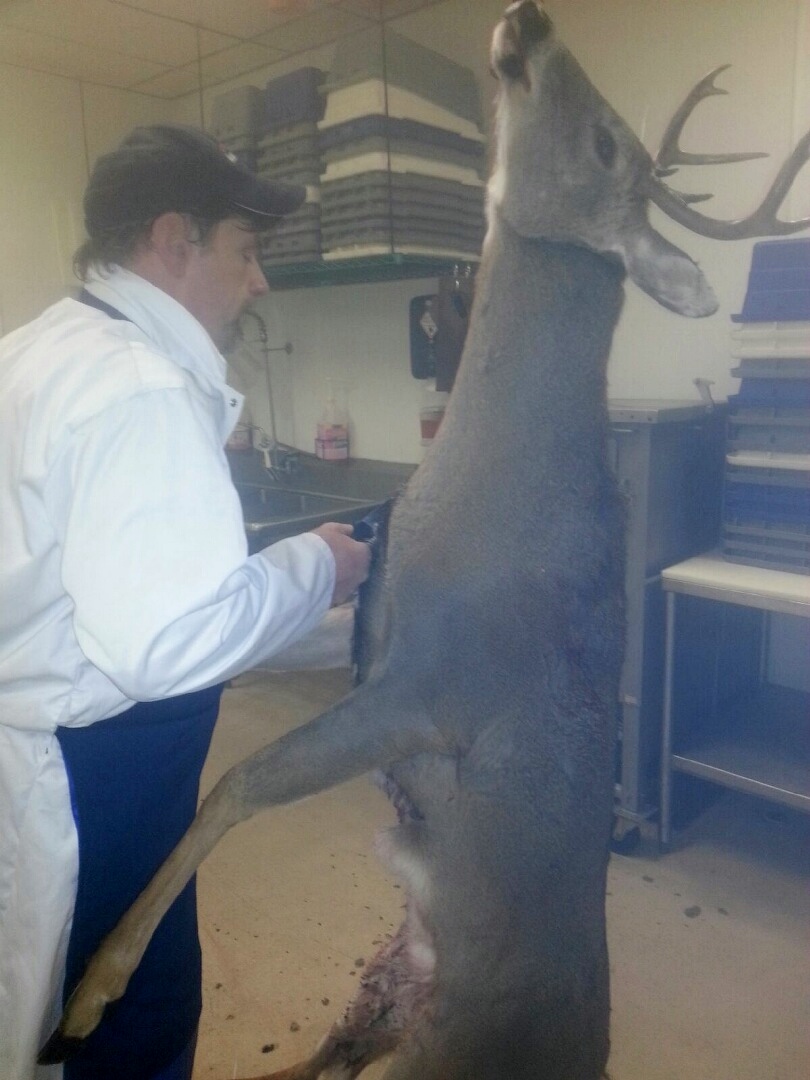
Often, volunteers will cook the donated wild game. They’ll use traditional family recipes, incorporate the game into a casserole or taco filling, or try various ways to create something new. All standard food safety requirements apply. Wild game must always be cooked to a temperature of at least 165 degrees.

Chronic Wasting Disease (CWD)


CWD is of particular concern when preparing deer or elk. CWD is a fatal disease affecting deer and elk’s brain and nervous system. Abnormally shaped proteins, called prions, are the cause. Prions have not been detected in muscle meat. There is no proof that humans can contract CWD. Nevertheless, the Minnesota Department of Health suggests that individuals should only prepare boneless cuts of venison. The backbone should never be split during venison processing.

Sanitation


Finally, keeping wild game separate from other foods during food preparation is important. The Minnesota Department of Health requires certified food managers to prepare a written statement of sanitation procedures used at every wild game feed event.

Food managers need to be knowledgeable of many different issues and topics to ensure the safety of their operations and qualify for food safety certification MN. Safe Food Training courses prepare you to pass the certification exam and run safe events like wild game feeds.

Expert Certified Food Manager Warning About Serving Raw Seafood

Expert Certified Food Manager Warning About Serving Raw Seafood

Earlier this month, we discussed the dangers of serving undercooked ground beef, even at customer request. This week, we’d like to look at a few issues that a certified food manager must know when they serve undercooked or raw seafood products.

Expert Certified Food Manager Warning About Serving Raw Seafood
Image credit: ralph via pixexid

Certified Food Manager Tips for Properly Handling Raw and Undercooked Seafood

Raw seafood can be a susceptible product. A food manager must be vigilant to keep it safe whether you plan to serve sushi or fully-cooked fish and chips. If your facility prepares or serves any seafood product, you must serve the freshest fish and shellfish possible. Once you have received your product, keep it out of the danger zone and as cold as possible. We recommend storing your raw seafood product under ice, even under refrigeration.

Suppose you plan on serving raw or raw-marinated seafood products such as sushi, ceviche, lox, or seafood tartare. In that case, you must follow specific guidelines in the Minnesota food code. Except for certain types of fresh tuna, you must freeze any seafood you plan to serve uncooked first. This will help eliminate parasites. If your product is kept at a low enough temperature for an extended period, common parasites in most seafood will be killed. Make sure that you freeze your product before preparation at:

  • -4 degrees Fahrenheit for 7 days in your freezer
  • -31 degrees Fahrenheit for 15 hours in a blast chiller

There is an exemption to the rule if a certified food manager is serving raw or raw marinated tuna. Despite this, we strongly suggest serving the freshest and coldest product possible.

As we discussed last week concerning burgers, some guests will request their seafood served undercooked. The seafood should be cooked to a temperature of 145 degrees and should be held at that temperature for 15 seconds. While you may still serve undercooked seafood at your customer’s request, we strongly advise you to adhere to the Minnesota food code when serving cooked seafood.

Menu Warning regarding Seafood

Finally, if a certified food protection manager plans to serve raw seafood, you must identify and inform your customers that your menu items are raw or undercooked. As with steaks and burgers, this can be quickly done by placing an asterisk next to the menu item, referring to a warning at the bottom of each menu page.

Certified Food Managers Get Remarkable Results From Daily Log

Certified Food Managers Get Remarkable Results From Daily Log

The operation logs in most food production outlets are typically reserved for management communications. However, we believe that regular written communication between certified food managers and staff, such as a daily log, can be highly effective in promoting food safety and increasing productivity.

Certified Food Managers Get Remarkable Results From Daily Log

Image Credit: lyashenko via 123rf

How Certified Food Managers Can Effectively Use a Daily Log

As a MN certified food manager, you are often busy and may not be able to address issues immediately. Sometimes, simply being informed that there is a problem is insufficient. It is important to keep a record of issues. Important concerns will not be overlooked or put on the back burner in this way. They will not be forgotten. There may also be times when an issue arises when you are not at work. A daily log provides the opportunity for your staff to let you know what is happening rather than leaving a problem unaddressed. The three categories that we think are important for your staff to document are:

  • Food safety issues
  • Equipment malfunctions
  • Health and safety hazards

It is essential for your staff to understand that they cannot ignore food safety concerns. Giving them the responsibility to alert a supervisor and record the problem will help them fully understand food safety procedures. It is essential for your staff to understand that they cannot ignore food safety concerns.

There are many times in this business when a refrigerator stops working. The fan in an oven quits or a deep fryer fails to hold a consistent temperature. There may be warning signs indicating that something is wrong with your equipment, but you might not receive notification until it is too late. If your staff could record abnormal equipment performance. You may be able to take care of the problem with an easy repair. This will save you money instead of spending it on replacing your expensive equipment.

Health and Safety Hazards

The last item is a vital one to monitor in your establishment. Your staff will feel comfortable and secure if they understand that you care about their working conditions. While employee safety should be addressed immediately, it is a good idea to give your employees an outlet to express their concerns when you are not on the clock.

There are many other uses for a daily log in the food industry. Many establishments use them as a communication tool. The opening and closing crews use the tool for communications. The outlets with multiple managers also use it to keep on the same page. At Safe Food Training, we would like to hear how you use your daily log to improve the way your business operates.

Fundamentals Of Bare Hand Contact Rules For A CFPM

Fundamentals Of Bare Hand Contact Rules For A CFPM

The current food code clearly states what is acceptable and what is not, but there are certain regulations where there may not be a clear definition of nuances. One such rule that a Certified Food Protection Manager- CFPM must be prepared to enforce is the no bare hand contact rule.

This rule came to the forefront of food safety news earlier this year when California restaurateurs fought to repeal the ban on bare hand contact with ready-to-eat foods. It is important to understand how to properly comply with this rule in our state.

Fundamentals Of Bare Hand Contact Rules For A CFPM

Image credit: Free Images on Pixabay

CFPMs Training for Bare Hand Contact Have Alternatives

Certified food protection managers can teach several alternatives to handling ready-to-eat food with bare hands.

  • Gloves
  • Tongs
  • Deli tissue
  • Spoons and other utensils

The most common of these options is to require food handlers to use gloves. The most commonly used types of gloves currently used are either latex or vinyl. Due to potential allergies, 5 states have passed legislation to ban the use of latex products in food service and other industries. Expect this trend to continue as other states are sure to follow suit. At present both latex and vinyl gloves are acceptable in MN. However, it is likely that health department inspectors will recommend vinyl at the next visit.

While gloves are preferred, deli tissue can be used at service counters or in situations where constant glove changing would be necessary. Hot foods require the use of utensils.

Since the implementation of the no bare hands rule, the health department has noticed a downward trend in proper hand-washing procedures. A  CFPM needs to provide their employees with proper education concerning no bare hand contact and hand washing. Here are a few points that should be monitored.

  • You must use soap during handwashing
  • Hand washing should take at least 20 seconds
  • Gloves cannot simply change after handling food, employees must wash their hands between glove changes.

These are three simple things that certified food production managers may overlook as glove use increases. Along with the current trend to ban latex, another potential increase in bare hand contact regulations may be to require that gloves be worn at all times whether with ready-to-eat foods, raw foods, or utensils that may come in contact with food products.