Special Conflict Management Best Practices For Certified Food Managers

Special Conflict Management Best Practices For Certified Food Managers

While you always strive for harmony in the workplace, every once in a while as a manager you will have to deal with employee conflict. This week we’d like to take a look at conflict management in the work place, and how certified food managers can deal with issues as they arise.

Special Conflict Management Best Practices For Certified Food Managers

Copyright: photosvit via 123rf

How a MN Certified Food Protection Manager Deals with Conflict

It’s impossible to completely eliminate employee conflict, especially in stressful environments such as the food industry, but with the right approach a certified food manager can build a staff that not only gets along but enjoys working together. Talking with human resource managers and food service supervisors, we’ve come up with a few common themes concerning conflict resolution.

  • Prevent conflict before it starts
  • Don’t let conflict fester
  • Involve your HR representative

Our first tip may be hard to do sometimes, but there are ways certified food managers can prevent conflicts from occurring. Many conflicts in the workplace arise from individuals’ dissatisfaction with their roles. If a role does not satisfy an employee, they may direct their frustrations towards their fellow employees. If you can identify individuals who are unhappy with their role, you may be able to give them an opportunity express their frustrations to you before they take it out on their coworkers.

The food industry is a stressful place by nature. Another way certified food managers can manage conflict is to keep morale high. This can vary from facility to facility, but there are ways to keep morale high under stressful circumstances. Some ways include social interactions, such as organizing company events that do not involve job duties, or making sure employees can take regular breaks.

Know When To Intervene

Even with the highest morale, it is inevitable that conflict will arise. These are times when a CFPM must decide whether to address the issue or let your employees work things out for themselves. It’s not necessary to intervene in every circumstance, but you must use your best discretion. If there is a conflict that you feel will be detrimental to your operation, you need to address it. Sometimes, letting your staff work things out for themselves will lead to further problems. If there are situations which you feel that you’re unable to handle, it may be necessary to bring in a representative from human resources that has been trained to resolve employee conflict.

We know that there is no cut and dry solution to resolving conflicts among your staff, so we’d like you to leave us a comment as to how you deal with these situations.

The Best Quick-Serve Product Tips For Certified Food Managers

The Best Quick-Serve Product Tips For Certified Food Managers

During summer, more people tend to grab food while on the go. This is especially true when they’re hitting the golf course, taking their families to parks or the swimming pool. Many certified food managers create quick-serve products such as sandwiches and other ready to eat food available to their customers for this exact situation.

Certified Food Manager’s Role in Keeping Prepackaged Foods Safe

Your food safety training course normally covers this topic. But, it’s essential for certified food managers to review it before any changes in operation. This is particularly relevant since numerous outlets only sell prepackaged, ready-to-eat items seasonally. We think you should take into consideration the following four points concerning this style of service:

  • Appropriate sealing is necessary for self-serve items.
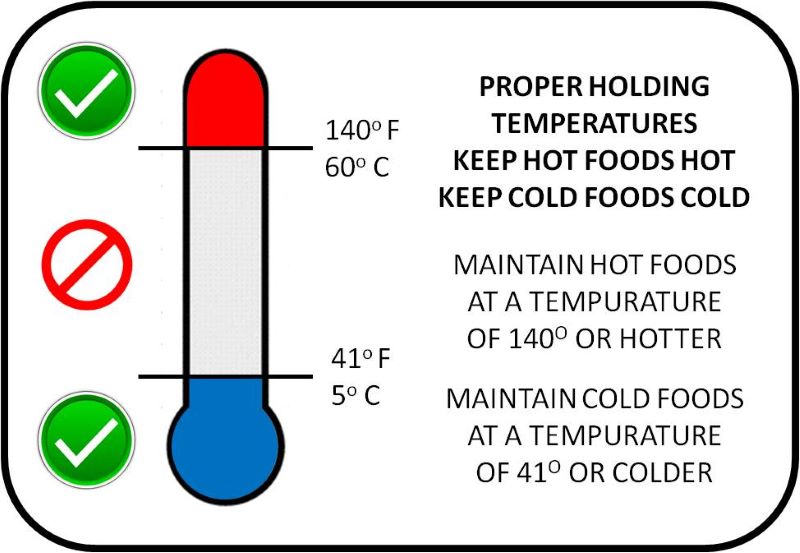
  • Always display hot & cold foods at safe temperatures
  • Displayed food must be fresh
  • Store unwrapped fruits and vegitables in a display case

The first item on our grab-and-go list may seem like common sense to most certified food managers. However, we have seen baskets of freshly made, unsealed cookies sitting on countertops for customers to grab. We have also seen unwrapped deli-style sandwiches in self-serve refrigerators. If you offer self-service for your ready-to-eat product, you must wrap it to prevent a customer who may not want to buy the item from touching it with bare hands. Products not for self-service could be left unwrapped in a display case if an employee will package them when sold. All food displayed outside a case or refrigerator should be covered to prevent contamination.

Hot and cold ready-to-eat items packaged for quick sale must follow all Minnesota Food Code temperature rules when displayed. Ensure that your employees know which products to keep hot and cold and which ones are stable at room temperature and do not require refrigeration.

Never have items in your case that are for display only. All items should be fresh and available for service to avoid accidentally serving a guest expired product.

A Case For Certain Grab and Go Items

Our final suggestion is that certified food protection managers are not necessarily required under current food handling regulations. However, it is prudent to store grab-and-go items, such as unwrapped fruits and vegetables, in a display case. Certain fruits, such as bananas, attract fruit flies and other insects. Keeping them in your display case rather than on a counter top can reduce the risk of attracting pests.

Certified food managers should consider both pros and cons when choosing between self-service and attended service for selling quick-serve products. We want to know which style your establishment uses and why it works to help you with this decision.

How MN Certified Food Managers Prepare For The Employee Turnover Challenge

How food managers prepare for employee turnover-now hiring sign

Employee turnover is inevitable in any business, but it is especially high in the hospitality, restaurant, and industrial food processing industries. How should the MN certified food managers prepare for employee turnover scenarios such as, surprise labor shortages, employees moving away, or vacancies due to promotions or transfers?

How MN Certified Food Managers Prepare For The Employee Turnover Challenge

Image credit: jackf via 123rf

Tips for Certified Food Managers Dealing with Employee Turnover

A business should not turn away resumes when they are not currently hiring. Current human resource practices tend to still collect unsolicited resumes from potential job seekers. Applicants can submit their resumes at any time, regardless of whether your business is currently hiring or not. This way, you’ll have a roster of potential candidates in case any unexpected vacancies arise. Rather, the MN certified food manager should look at an unsolicited resume as an opportunity to build a roster of candidates that would be qualified for future employment.

Recognizing Potential Employees

Not all submitted resumes need to be saved. A quick review can determine which ones to keep and which to discard.

It is not uncommon for a manager to contact an applicant, even if they are not hiring. Certified food managers should be on the look-out for stellar staff even when their employment roster is already full. If an applicant submits a resume with extensive industry experience, certified food protection manager, and unique skills, save and highlight their resume as having potential.

Even if there are no available positions, the company may offer an interview to a highly qualified candidate. During the interview, they can be informed that no job openings are available at the present, but the company is interested in considering them in the future. If the candidate is exceptionally good, the company may even create a position for them.

As a certified food manager keeping an open outlook on your staffing, even when there are no current needs, is a good preventative measure against labor shortages and will streamline the hiring process should you need to fill any vacant positions.

Hints For Food Managers Considering A Special Bar Menu

Hints For Food Managers Considering A Special Bar Menu

In our food manager certification courses, experienced restaurant pros often exchange ideas and discuss strategies. During a recent session, some students debated creating a bar or lounge menu for casual diners with low food costs. We decided to contribute our insights, which food managers might find useful for special menus in bar, lounge, or patio dining areas.

Hints For Food Managers Considering A Special Bar Menu
Image credit: sofiiashunkina via rf123

The Ideal Bar Menu for Food Mangers Considering Something Different

Visiting local restaurants, we often notice a mismatch between the bar menu and dining floor dishes. Crafting a bar menu for regular patrons with your establishment’s theme offers many benefits for food managers.

  • Ingredients should already be in your inventory
  • Eases the stress on the kitchen staff
  • Offers an alternative dining option for guests on busy nights

Food managers designing your bar menu with ingredients from your regular menu can cut food costs. This approach leads to less waste and a lower risk of food spoilage. However, don’t merely serve smaller portions of your dinner menu. For instance, a steak house can offer steak sliders made from steak trimmings or other casual dishes, using available ingredients. Be creative while maintaining the same ambiance for returning guests who dined in the main area previously.

This streamlined concept also aids production during service. Line cooks get frustrated when one or two menu items differ significantly from the rest. This issue slows down service and consumes valuable line storage space. Simplifying and maintaining familiarity helps the kitchen staff serve food to guests promptly.

Offer Options To Retain Customers

Finally, a well-designed bar menu attracts guests unwilling to wait for a full-tabled restaurant. Informing guests of unique lounge or patio options can save them from long waits or trying competitor venues.

What strategies do you use for bar menu planning? Is it necessary to offer special lounge selections, or are regular offerings enough?