Important New Research On Why Food Managers Need Efficient Gas Burners

Food Managers Need Efficient Gas Burners

In early January, several news organizations published articles about the hazards of household gas-burning stoves. Numerous studies indicate that gas stoves in our homes may be emitting several harmful pollutants that could affect the health of our families. Both state and federal agencies are now considering action to limit or ban gas stoves in new building projects. This news generated some lively discussion about gas burners during a break at one of our food protection manager certification classes.

The current news attention has focused on household stoves. But, should we be concerned about standing next to the huge gas-burning stoves in our commercial kitchens? The obvious answer is yes. Certified food protection managers should be concerned about all kitchen employee safety issues and should monitor gas burner studies to gather more information.

But a couple of information points should be highlighted before we start worrying about completely changing our kitchen operations:

  • The study results have not even mentioned commercial kitchens
  • Ventilation in our kitchens is much different than what is found in a household kitchen
  • As professionals we have the knowledge to properly clean and maintain our stoves to make them more efficient and reduce harmful pollutants

This week we’d like to share how a food protection manager can solve the problem of inefficient gas burners.
Keeping Your Gas Burners Clean and Efficient

A Food Protection Managers Guide To Keeping Your Gas Burners Clean and Efficient


If you’re noticing that the burners that you use most frequently aren’t as efficient as they once were, the problem may be easily resolved with a thorough cleaning. Three sure signs food protection managers can use to determine if gas burners may be in need of a little care include:

  • Uneven heat distribution
  • Flames at one or two burners aren’t as hot as they once were
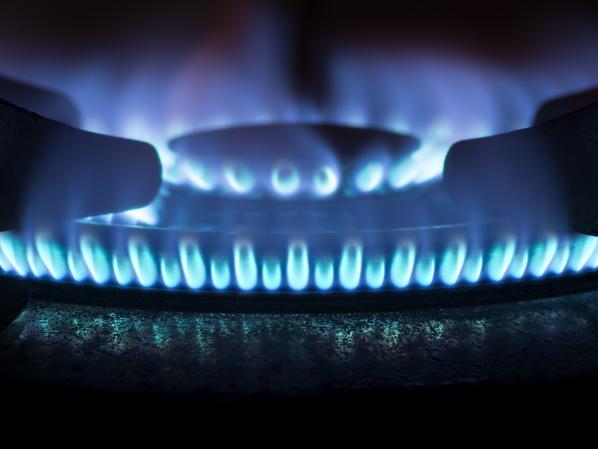
  • Yellow flames mixed with blue

All three of these signs indicate that your gas distribution is being interrupted somewhere in the cap and head of your gas burner assembly. Your gas burner head is the round portion where the gas meets the flame from the pilot light and ignites. If you take a close look at this assembly, you will notice small, pin-point holes circling the head. These holes are where the flame comes from. If they become clogged, the gas cannot escape as quickly. This altered flow causes a lose of heat and release of additional pollutants from your gas burner. This will cause weak yellow flames as spilled debris chars into carbon.

How To Clean Gas Burners

These assemblies are generally easy to remove and clean. Check for clogged burner holes. Often a simple toothpick can break free the debris that was interrupting the gas flow and producing a weak, yellow flame. Keeping burners in top shape may take a little more than clearing clogs occasionally. Food protection managers should schedule regular gas burner cleaning. The process should remove and thoroughly clean the entire burner head. This will remove grease, spilled food product, and dirt from your burner.

If you’re experiencing poor performance in your entire range, the issue may take more than a simple cleaning to resolve. We strongly recommend that you consult a professional rather than attempt to fix the problem yourself.

At Safe Food Training, we endeavor to help our customers with much more than food manager certification in MN. We’d like to know if you have any kitchen equipment topics that you’d like to see us cover in the future. We appreciate all of your comments, and would love to see them below.


Expert Ways Food Protection Managers Keep Fresh Baked Goods Safe

Food protection managers keep food safe

Bakeries and other food businesses that regularly make their bread, desserts, and other baked goods have a unique set of challenges when it comes to food safety. The certified food protection managers in these businesses need to take care to train their staff on safe handling procedures for baked goods throughout every aspect of the business.

Food Protection Managers Keep Fresh Baked Goods Safe
Image credit: stylephotographs via 123rf

Tips for Food Protection Managers Handling Fresh Baked Goods

In restaurants and other food businesses, products are made in the kitchen and delivered to a table for near-immediate service. Bakeries, however, prepare most of their treats ahead of time for display or delivery. Some of the challenges certified food protection managers need to overcome include:

  • Cleanliness of Preparation Equipment and Surfaces
  • Shelf-Stable Products vs Temperature Controlled Items
  • Display Cleanliness
  • Common Allergens

Just like in restaurants, all equipment and surfaces used in bakery production should be cleaned and sanitized, but some equipment in bakeries requires a little more attention due to the size of mixing bowls, implements, and other large bakery utensils. All of these should be thoroughly cleaned and dried before use. It takes just a small amount of bacteria growing on wet equipment to infect an entire batch of bread, cakes, cookies, and pastries. Make sure all surfaces are dry and free from sanitizer, water, and other contaminants.

Certain bread products do not require refrigeration after they have been made, however, some baked goods may have elements that must be kept cold. Certified food protection managers in bakeries must be very clear with their staff concerning which baked goods require temperature control.

Display cases must also be cleaned regularly, and not with just a quick spritz of glass cleaner so customers can see your product more clearly. Shelves, display racks, and plateware should all be cleaned and sanitized regularly. Make sure that all cleaning solutions used have had time to dry and do not come in contact with food.

Bakeries have a high risk of contamination from common allergens due to some of the ingredients used in some baked goods. Food protection managers should assure all baked goods with allergens such as peanuts, tree nuts, eggs, soy and dairy are clearly labeled. If possible, display, store and prepare these items away from other baked goods.

Have you taken the time to evaluate procedures in your bakery that are different from standard restaurant food handling routines?

Certified Food Protection Manager Approved Snow Removal Hack

Certified Food Protection Manager Approved Snow Removal Hack

As most Minnesotans are aware, it frequently snows in our state. Businesses need to take steps to clean the snow on their properties in order to allow guests to visit. While businesses that don’t serve food have numerous options. Food businesses need to be extra careful when cleaning the snow around their buildings. Let’s take a quick look at how a certified food protection manager can prevent foodborne illness hazards that might arise from snow cleanup.

Certified Food Protection Manager Approved Snow Removal Hack
Image credit: rilueda via 123rf

The Connection Between Snow Removal and a Certified Food Protection Manager

Food protection managers should recognize that the potential for contamination in their facility may not come from the snow itself. It comes from the methods used to remove it. Salt, sand, chemical deicers and other non-shovel methods have the potential to make their way back into your facility after use on sidewalks and parking lots. Shoes, pants, long coats and even on staffs’ hands after building a snowman on their lunch break track in these snow removal contaminants. So how can we keep these chemicals out? The answer is, we can’t, at least not 100 percent of the time, but we can reduce the risks associated with them when it comes to food.

Non-Mechanical Snow Removal Solutions

Most snow removal techniques leave a residue that sticks to the bottom of shoes. Food protection managers should focus on items that are stored near ground level. Food product, utensils, plates or production implements should be stored in racks off the floor. Even boxes of to-go containers should at least be on a bottom shelf.

Deliveries can be a problem, since many food service suppliers simply drop off their shipments in a loading area in the back of the kitchen. If this is the case with your supplier, designate a place away from foot traffic and store all items as soon as possible.

If you have the opportunity to designate an employee entrance that does not open into the kitchen itself, you may wish to ask kitchen staff to use a different entrance to prevent tracking in sand or salt.

Do not wait until the end of the night to sweep and mop up high-trafficked areas. After the snow removal product has been tracked in to take care of it all at once. Direct staff to mop frequently to prevent buildup, create safer walkways and keep food safe.

How to you clear your parking lot and sidewalks for your guests in the winter?

Food Protection Manager Fundamentals That Make Serving Wild Mushrooms Safe

food protection manager fundamentals make serving wild mushrooms safe

We are well into fall, and that means that wild mushroom season is in full swing. Many certified food protection managers love adding fresh, local ingredients to their menus, and mushrooms are no exception, but with wild mushrooms come some unique food poisoning risks. If you plan on serving wild mushrooms this fall, reviewing these food protection manager fundamentals could prevent serious illness.

Food Protection Manager Fundamentals Make Serving Wild Mushrooms Safe
Image credit: yuliadavidovich via 123rf

Food Protection Managers and Wild Mushrooms

For food protection managers to understand why wild mushrooms present such a high risk, we should look at the symptoms of mushroom poisoning. Unlike in cartoons, poisonous mushroom won’t just make you see funny shapes and colors for a few minutes, eating them poses a real threat to your health. Consuming poisonous mushrooms can result in:

  • Vomiting
  • Fever
  • Kidney failure
  • Irregular Heartbeat
  • Seizures
  • Death

As you can see, the consequences of eating poisonous mushrooms range from mild to the ultimate consequence. So how can certified food managers reduce the risk of accidentally serving bad mushrooms to guests?

The first, and probably most important, step is to only purchase wild mushrooms that have been harvested and inspected by a certified wild mushroom harvester. Certified harvesters receive the training necessary to understand the difference between good and bad wild mushrooms and help ensure that only the edible mushrooms make their way into your food business.

Secondly, food protection managers must make sure that wild mushrooms are washed just before use. Washing mushrooms will remove dirt and contaminants that could sicken guests. However, make sure that you wash them as close to use as possible. Being a fungus, wet mushrooms pose an enormous risk for mold, mildew and other bacteria when wet, so make sure the time between washing and cooking is kept as short as possible.

As with all questionable product, food protection managers must should use your best judgement when serving wild mushrooms. If your wild mushrooms don’t look, smell or feel right, don’t use them. It’s better to lose a little bit of product than sicken your guests.

Do you serve wild mushrooms in your business?