The MN ServSafe Certified Food Manager and Contaminated Product

The MN ServSafe Certified Food Manager and Contaminated Product

As a MN ServSafe certified food manager, you take care to ensure the food you serve is safe for your customers, but there may be occasions when certain things beyond your control could potentially endanger your customers. Your shipment of fresh spinach may look clean or your case of micro greens may be labeled ready to serve, but microscopic particles of E.coli and fertilizer from the soil may be hiding on the surface. Ground beef shows no signs if it has been handled by an infected production worker during packaging, and farm fresh eggs do not come with a warning flag that their surface has come into contact with salmonella. This week, we’d like to offer a few tips to help you keep items commonly contaminated during production safe for your guests.

The MN ServSafe Certified Food Manager and Contaminated Product
Image credit: Altus Air Force Base

MN ServSafe Certified Food Manager and Product Unknowingly Contaminated During Production

There are many cases where contaminated product is only discovered after an outbreak of food-borne illness has begun. A lot of outbreaks trace back to a certain ingredient’s origin rather than the food service provider who prepared the final product. So if the initial contamination comes from outside of your facility, is there anything a MN ServSafe certified food manager can do to prevent a guest from consuming contaminated product?

Even if a raw product contains undetectable pathogens, there are steps you can take to keep it safe, even if the contamination has not come to light. Here are a few pointers for commonly infected items:

  • Wash all fresh produce, even if the label reads “ready to eat”
  • Keep an eye on refrigerated storage temperatures to ensure product is always out of the danger zone
  • Always cook product to the appropriate cooking temperatures
  • Avoid loose storage of eggs

While a fresh vegetable product may be labeled as “ready to eat,” we have seen incidents where these pre-washed products have caused food-borne illnesses. A few seconds of prevention will always be worth the effort.

We’ve also seen facilities that unpack whole eggs and store them loose in the same bin. While this may not be a health violation, it does increase the risk that salmonella on the shells or from broken egg can be passed from one egg to another and multiply. With recent outbreaks of salmonella from shell eggs, we feel that taking steps to prevent eggs from coming into contact with each other could help prevent the spread of illness in the event your eggs have arrived unknowingly contaminated.

Do you take extra precautions with ingredients that are commonly recalled, or do you take extra precautions with every ingredient you bring in?

Online Food Safety Training Guide to Probe Thermometers

Online Food Safety Training Guide to Probe Thermometers

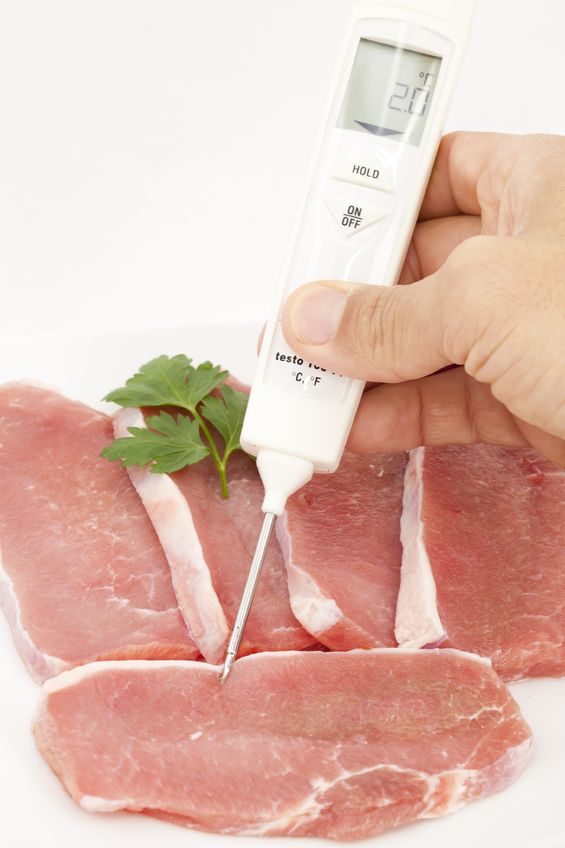
Online food safety training teaches us that cooking proteins to the proper temperature reduces the risk of food-borne illnesses, but we need to use the right tools to make sure that we are getting accurate results. This week, we’d like to explore the different types of probe thermometers and how to make sure that your product is properly cooked before serving.

Online Food Safety Training Guide to Probe Thermometers
Image credit: 123rf.com by Eduardo Gonzalez Diaz

Types of Meat Probe Thermometers

Every commercial kitchen is required to have a thermometer to ensure proper temperature control, but there are several different types to choose from:

  • Instant-read dial probe thermometers
  • Digital instant-read probe thermometers
  • Digital forked thermometers
  • Thermocouple
  • Oven-safe probe thermometer

Due to their affordability, certified kitchen managers often choose to provide their staff with instant-read dial thermometers. While they are designated as “instant-read,” many dial thermometers take up to a full minute to produce an accurate reading. We don’t recommend this style of thermometer for checking the internal temperature of thin proteins such as burgers as the metal stem can pick up heat from cooking equipment or provide a lower reading when exposed. This style of thermometer must be calibrated and checked for accuracy fairly often as the dial can be off by a few degrees with constant use.

Digital thermometers cost a little more than dial thermometers but provide an easy-to-read interface to check the temperature of your cooked product. Depending on the brand, these thermometers can calibrate themselves when placed in ice water, allowing you to be confident with their results. Some of these have a forked prong which will give an accurate reading when checking roasts and larger cooked meat products.

The thermocouple is the most versatile probe thermometer. These work well for checking the internal temperature of both thin and thick products and produce a reading in seconds. These are rather costly, so many outlets prefer to keep a few on hand rather than purchase one for every staff member.

Oven-safe thermometers are a handy tool if you are slow cooking or smoking your product. These can remain in your roasts or large pans of food to monitor the internal temperature throughout the process. These come in two distinct styles, one has a dial at the end of a probe while the other has a probe attached to an oven safe cord which leads to a digital readout outside of the oven. This feature allows you to easily view internal temperatures without opening your oven.

What types of thermometers do you utilize in your facility?

When Certified Food Managers Should Return From the Flu?

When Should Certified Food Managers Return From the Flu

With flu season in full swing, it’s important that certified food managers recognize the symptoms in themselves and their staff, as well as make tough decisions as to whether they should be at work with or without symptoms. Influenza can easily be spread to guests and co-workers even after symptoms have passed.

When Should Certified Food Managers Return From the Flu
Image credit: PXhere under Creative Commons CC0

Taking Precautions Against Influenza

While monitoring the CDC’s flu data, we note that this illness is something that affects the entire country and currently poses an elevated risk. This means that the possibility exists that your establishment will have staff that misses time due to the flu.

The flu has the potential to be more than an annoyance, it has the potential to be deadly, especially in the food service industry where it can be spread to those that are susceptible. If you or a member of your staff even suspects they are infected, we strongly urge that you do not work.

One dilemma that arises is the timetable for returning to work after the flu. In some cases, a worker infected with the flu may still be contagious once symptoms begin to dissipate. Taking a day or two off after symptoms disappear may be advisable. Just because symptoms have lessened or that you feel as if you could make it through your shift does not mean you are ready to return to work. To put it simply, we feel that certified food managers and food service workers should take extra time before returning to work, even if they feel well enough to perform their duties.

The certified food manager should take steps to stay healthy during this season and recover fully if they become ill. We’d recommend visiting your physician if you are concerned about your health and not returning to work until they confirm you are no longer contagious.

If you are not ill, remember to wash your hands frequently, even when not at work. While it’s common food safety procedure to wash your hands frequently, it will also prevent illnesses like the flu from spreading outside of the kitchen environment. Keeping hydrated is also key. Kitchens are hot and restaurant workers often risk dehydration. Drinking plenty of water will help keep illness at bay.

Does your facility have any precautions to prevent illnesses like the flu from spreading to your guests?

The Certified Food Manager and the Preparation of Large Roasts

The Certified Food Manager and the Preparation of Large Roasts

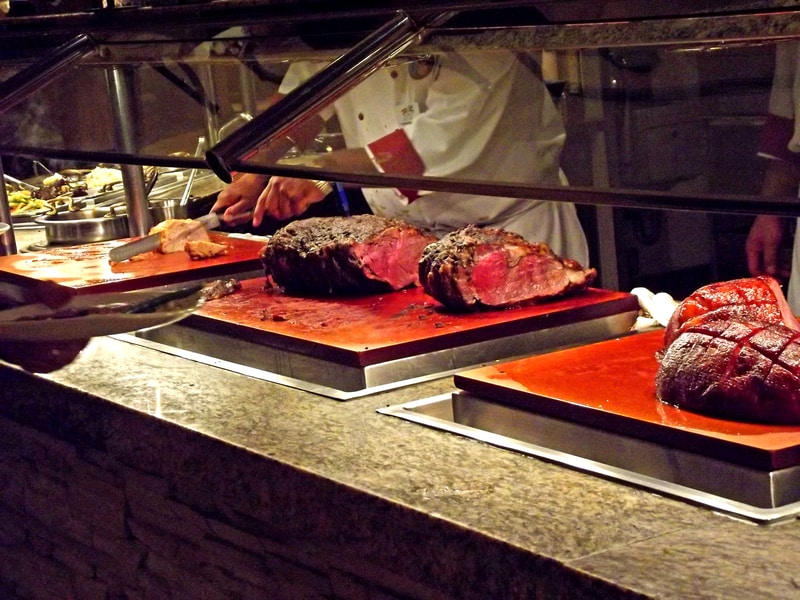
Roasts and turkeys are common items served on holiday buffets and catered parties. These items bring with them a unique food-borne illness potential, and certified food managers should take steps to ensure that their roasted meat is safe for their guests.

The Certified Food Manager and the Preparation of Large Roasts
Image credit: commons.wikimedia.org

How Certified Food Managers Can Prevent the Spread of C. perfringens

C. perfringens ranks as one of the most common food-borne illness culprits. This bacterium exists in raw meat and poultry, and it historically causes outbreaks in facilities such as nursing homes and schools and at catered events where large quantities of food consist of roasted meat. To reduce the risk of the spread of illness, it’s important that all poultry is cooked thoroughly and to and internal temperature of 165 degrees, and meat roasts must reach an internal temperature of 145.

Larger portions of meat pose a second hazard when it comes time to cool and refrigerate them. Big chunks of poultry, beef and pork cannot simply be placed in the refrigerator whole. The Minnesota Food Code outlines proper cooling procedures for this type of product.

  • All product must be cooled from 140 degrees to 70 degrees within two hours and to 41 degrees after reaching 70 within four hours
  • Large portions must be sliced or cut into smaller sections
  • Meat should be placed into shallow pans
  • If necessary, an ice bath should be used to bring cooling foods down to 41 degrees as soon as possible

While it’s important to be diligent throughout the rest of the year, the holiday season brings out many guests who may not often frequent your establishment, so proper cooking and cooling procedures are a must. If your outlet serves children, the elderly or other high-risk groups, make sure that your staff is fully trained on these procedures.

We’d like to know what your favorite holiday meals are. Leave your go-to dishes in the comments section below.