Online HACCP Training and Cash Handling Practices

Online_HACCP_Training_and_Cash_Handling_Practices

As one of the leaders in online HACCP training and food safety certification industry, we like to dine out often, and we’ve noticed a trend that has caught our attention. Many local eateries are no long accepting cash as a form of payment. At first this may appear to be a way to limit lost funds by keeping all transactions digital or reduce the risk of robbery. While these are probably the most influential decisions to go cash free, we think this also helps reduce the risk of food-borne illness.


Online HACCP Training and Cash Handling Practices
by gkunayayimages.com


The Public Health Benefits of Cash Free Restaurants

Most cash in peoples wallets aren’t crisp bills fresh from the bank. It’s been around for a while and on its journey from person to person, it’s picked up a few residents, namely bacteria. There are many of the common culprits of bacterial contaminates on paper cash and coins, but the potential also exists for something more exotic to have come into contact with your money before it got to you.

We know from online HACCP training that you must wash your hands properly after handling money. This should be a given in every establishment. Handwashing has proven to be an effective way to greatly reduce the risk of contaminating food. But a few other steps could be taken to keep food safer when collecting payment from guests.

In the digital age a solution can be found around nearly any dilemma. Simply going cash free reduces contamination risks. Modern point-of-sale systems allow customers to pay without handing a credit card to a server or cashier. This reduces contact between foreign contaminates and food service workers even further.

It’s still perfectly acceptable and possible to continue accept cash. Just make sure proper handwashing techniques are taught and enforced. You may also wish to employ a designates cashier who never or rarely handles food.

What are your thoughts on establishments that no longer accept cash?
Minnesota Food Safety Managers Alert: For Restaurant Fire Hazards

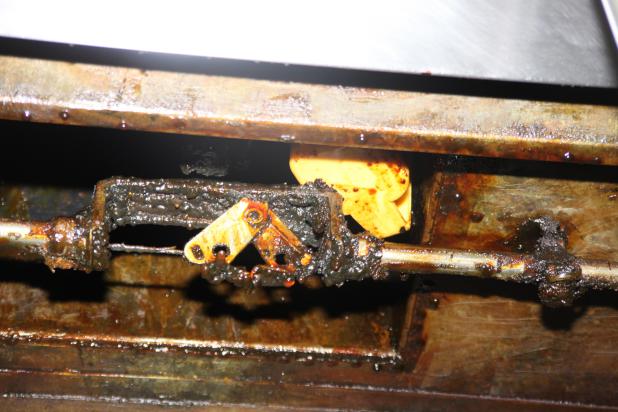
Minnesota Certified Food Managers Alert watch for Kitchen Hood with Black Steel Pipe
Kitchen Hood with Black Steel Pipe
Figure 1
All image credits: Scott Futrell

As Minnesota food safety managers we are trained to create a safe eating experience for our guests. Delivering food safe for human consumption includes many variables.  Sometimes overlooked are the grease and creosote cleaning and fire protection requirements in the commercial hoods above the cook line. As owners and managers we can do a variety of things to improve the safety for our staff and guests as well as protecting our business. That’s why Safe Food Training has asked, Scott Futrell, a local fire protection consultant to discuss some of the fire safety issues owners and managers should consider. This is the second in a series of blogs that will explore fire safety in the food preparation environment.


Fire safety in your kitchen and your restaurant

In our last issue we looked into the statistics both nationwide and in Minnesota relating to fires in eating and drinking establishments.  We can reduce the odds of a fire impacting our business if we frequently and routinely do several things.


It is very important that grease and creosote, if you use solid-fuel burning appliances is kept off of and out of the hood, filters, plenums, ducts, fans and fire protection nozzles.  Yes the nozzles. But more on that later on.  The hoods, filters, plenums, ducts, and fans are required to be cleaned to bare metal semi-annually for most of you.  Sometimes more frequently and sometimes annually. Many of you do the filters (weekly) and the exposed surfaces (daily), but how can you do that effectively when the piping isn’t stainless steel? See Figure 1. Minnesota Statute: 4626.0495 4-101.111 Non-food-contact surfaces.


What can Minnesota Food Safety Managers do to protect your investment or your facility?

Minnesota Food Safety Managers Watch for Grease in Plenum
Grease in Plenum
Figure 2

Do you ever look behind the filters and into the exhaust ductwork? A spark, a flare up, or a grill cleaning fire that is too hot can ignite the grease that builds up causing a fire and a loss. See Figure 2 for the grease that remained the day after the professional cleaning and yes, the cleaner left their flashlight in there.

On the other hand, that same grease gets into the fire suppression nozzles if the caps are off and then when the system needs to operate it can’t flow agent out of the grease plugged nozzles.  See Figure 3 for a nozzle with the cap off and for a nozzle with grease caked inside of it post-fire.

Minnesota Certified Food Managers Fire Suppression Monitor Nozzels
Nozzle Missing Cap and Grease in Nozzle
Figure 3


If you have any questions about fire safety in the food preparation environment that you would like Scott to discuss leave a comment below.

ABOUT THE AUTHOR: Scott A. Futrell, PE, FSFPE, CFPS, SET, CFEI, is a fire protection consultant with Futrell Fire Consult & Design, Inc., in Osseo, Minnesota and has over 40 years’ experience designing, specifying, and investigating fire protection system related losses and can be reached by e-mail at: scottf@ffcdi.com, or visit www.ffcdi.com.