Food and Handling Course for Seasonal Menus

Food Handling Course for Seasonal Menus

As the chill of winter recedes, many restaurant managers rotate warm comfort foods off of their seasonal menus in pursuit of fresh ingredients. Rotating menus seasonally can be a great way to keep your loyal clientele returning to find new dishes available and bring out the best in your creative kitchen staff.

Seasonal Menu Food and Handling Course Guidelines
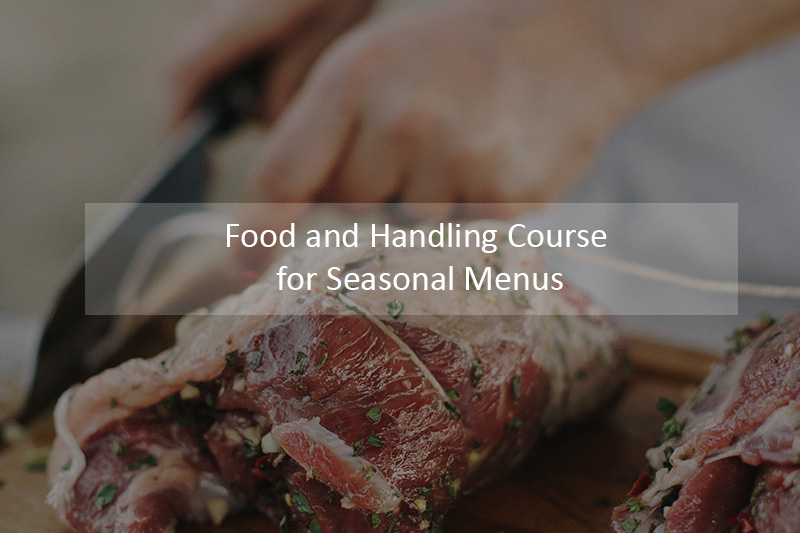
Food Handling Course for Seasonal Menus
Image Credit: mayushka

Each season brings its own food safety challenges and the upswing in fresh ingredients spring offers creates some cause to take extra precautions. We’ve isolated a few issues you may want to consider as you bring in the ingredients for your fresh new menu:

  • Proper storage of fresh proteins
  • Proper washing of fresh fruits and vegetables
  • Review of holding procedures for new hot and cold items

Most food and handling course protein storage guidelines tell you to store your product on shelves in descending order of final cooking temperature. For example, whole raw pork would be stored above ground meats and poultry products must always be placed on the lowest shelf. Most seafood products will have the lowest cooking temperature, but we recommend you find a separate storage location for fish and shellfish that is not on a shelf over any other product. Some of your guests may suffer from seafood allergies, so taking precautions to prevent cross-contamination is a must.

Spring also brings an abundance of fresh produce. Remember to wash all produce that will be cooked or served raw, even if you bring in organic ingredients. Washing produce removes residue left from pesticides, fertilizers or dirt that remains on fruits and vegetables.

Finally, review hot and cold cooking and holding temperatures with your staff. Raw seafood items are particularly popular in the spring and summer when fresh ingredients can be purchased. If you serve sashimi, sushi or seafood tartare, spend some extra time reviewing cold holding and cross-contamination prevention.

Do you choose to rotate your menus with the seasons or do you have other ideas for keeping the food you serve fresh and relevant?

Food Safety Certified Procedures for Produce

Food Safety Certified Procedures for Produce

In ServSafe training, food safety certified professionals learn that washing raw fruits and vegetables before serving helps prevent the spread of food borne-illness. We all know that plants grow in the dirt, and dirt contains bacteria that can be harmful if consumed. Some farms utilize fertilizers and pesticides to yield a larger crop, and residues of these compounds may still exist on the surface of fruits and vegetables. We’d like to suggest that restaurants develop standards that require all produce to be washed before any use.

Food Safety Certified Procedures for Produce
Copyright: denisfilm / 123RF Stock Photo

Washing of Produce and Food Safety Certified Standards

Even if you plan to cook your fruits or vegetables, there may be a chance that pathogens on their surface can spread. During preparation, they will inevitably come into contact with knives, prep surfaces and hands that will then go on to touch other items in your kitchen.

Produce ingredients that often go unwashed include fruits and vegetables with peels or rinds. Some examples of these include:

  • Carrots, beets and other root vegetables
  • Avocados
  • Melons
  • Oranges, pineapples and other tree fruits
  • Thick-skinned squash such as pumpkins and butternut squash

During classes prepared for food safety certified managers, we’ve often been asked why we feel it’s necessary to wash these items before preparation; the customer will never eat the peels. Your knives and peelers can come into contact with contaminates on the surface of these ingredients and then become infected. The grooved surface of a cantaloupe, for example, contains many nooks and crevices for bacteria and remnants of fertilizer to reside. As you slice through the surface, your knife can pick up these microscopic particles and spread them to the meat of the fruit as your knife passes through. The same theory can be applied to a peeler that picks up contaminates while root vegetables are being prepared.

Washing all produce is just one small way to prevent food-borne illness, and should never be overlooked. Can you think of any small, but necessary, procedures you feel gets forgotten far too often.

Food Safety Training Advances for Specialty Crop Farmers

Food Safety Training Advances for Specialty Crop Farmers

At Safe Food Training, we focus on keeping food preparers and certified food managers informed and up to date on food handling procedures. We also spend a significant amount of time keeping an eye on where our food comes from. Recently, the USDA has funded grants for specialty crop farmers in an effort to help modernize food safety training on farms and keep our food supply safe.

Food Safety Training Advances for Specialty Crop Farmers
Photo credit: Flickr/U.S. Department of Agriculture

Innovations in Food Safety Training on Farms

Farmers of major crops such as corn, soybeans and rice receive their share of approximately 25 billion dollars in subsidies from the US government, but, up until recently, specialty crop farmers received very little. A specialty crop farm ranges from large producers of unique produce to small family farms. Many of these growers don’t have the resources necessary to use more modern and technologically advanced techniques to battle food-borne illness carriers such as insects, amphibians and other influences.

Much of the money from these new grants will be spent on education to help underfunded farms receive training on how to comply with the Food Safety Modernization Act. These workshops teach farmers how to update their sanitation procedures to prevent potential contaminates such as E.coli, listeria or chemical products from spreading from sources such as manure or farming equipment to product that is ready to be shipped.

One of the largest issues these grants are looking to tackle is the issue of water quality control. Microorganisms and pathogens are easily spread through water, whether it’s the water in irrigation systems, drinking water for animals or water used to clean equipment. With better water-quality standards and practices, the chances of contaminated produce reaching restaurants and other food preparers will greatly decrease.

Beyond training and water-quality modernization, there are many other food safety training goals for specialty farmers that come along with this funding, including:

  • Advanced washing and storing solutions for leafy greens to extend shelf life
  • Water temperature control during the washing of fruits and vegetables
  • The establishment of clear guidelines on how to follow the FSMA

We think that funding food safety training at all levels will go a long way to reduce product recalls due to contamination and keep the food supply safe for food preparers and consumers in general. Are there any other aspects of the food supply chain before it reaches your facility you’d like us to explore?

Minnesota Food Training and Hepatitis A

Minnesota Food Training and Hepatitis A

Late in the month of September, customers of a grocery store in Michigan were warned about the potential of consuming food that had been handled by an employee who tested positive for Hepatitis A. Hepatitis A isn’t one of the most discussed pathogens, but the subject occasionally comes up in product recall notices and articles such as this one, so we think it prudent to discuss its causes and symptoms.

Minnesota Food Training and Hepatitis A
Image credit: Czarina Alegre via flickr

Minnesota Food Training Guide to Hepatitis A

Hepatitis A can be spread when an infected person handles prepared food. Hepatitis A outbreaks also come from shellfish harvested in infected waters. Some of the symptoms of Hepatitis A include:

  • Diarrhea
  • Jaundice
  • Fever
  • Abdominal pain
  • Loss of appetite

Our Minnesota food training courses tell us that the best way to prevent the spread of food-borne illness is to properly wash our hands and to never handle prepared food with bare hands. This rule applies to preventing the spread of Hepatitis A as well.

Hepatitis A is one of the few food-borne illness culprits that can be prevented via vaccination. If you plan to travel to exotic locations or you routinely care for the sick or potentially infected, you should ask your doctor about being vaccinated. If you come into contact with the bacteria or become exposed to someone who has it, seek out vaccination as soon as possible.

Finally, know where your shellfish comes from and keep an eye out for contamination information if you serve it in your restaurant. If you have a potentially infected batch, contact your local health department to request information as to what steps must be taken next.

Are there any other pathogens that aren’t discussed regularly in food training classes that you’d like us to cover in an upcoming blog entry?