
Food Safety Managers and E.coli in Raw Flour

E.coli in Raw Flour

It’s easy to identify the most common causes of foodborne illnesses; Undercooked proteins, ready-to-eat items contaminated by unwashed hands and produce that contacts pathogens in the dirt. Lately, we’ve noticed an increase in recalls and reports of illnesses caused by E.coli in raw flour. We’d like to take a look at the hazards of raw flour and how you can prevent contaminated product from sickening your guests.

E.coli in Raw Flour
Image credit: PXhere.com

Raw Flour and E.coli

Raw flour isn’t exactly something that appears on everyday menus. In fact, we’ve never been to a restaurant where the wait staff has asked if we’d like to order a side of raw flour while we wait for our meal. If that ever does happen, we’ll take some time to question the chef’s qualifications before proceeding with our order.

Raw flour is, however, an ingredient in many different types of foods. Food service professionals use it in bread doughs, desserts, breading for fried foods and as thickening agents in soups and sauces. So how can we prevent E.coli that may exist in raw flour products from reaching our guests? Here’s a few tips:

  • Treat raw flour and products with raw flour ingredients as a high-risk food
  • Always sanitize preparation surfaces raw flour has contacted
  • Wash all utensils that contact raw flour before reusing
  • Fully cook products with flour ingredients to kill bacteria
  • Monitor recall notices for flour contamination

Food safety managers need to alert staff that E.coli in raw flour can sicken guests. Review cross contamination guidelines and remind employees that just like raw chicken, allowing prepared food to contact raw flour can potentially spread pathogens to your guests. Most products with flour ingredients are cooked well enough to kill E.coli. Just remember, do not undercook foods with flour ingredients.

Finally, remember that flour is a common allergen and can sicken your guests even if it does not contain the dangerous E.coli bacteria. You may wish to include a disclaimer on your menus and packaging that your products either contain or may have come into contact with wheat flour during preparation.

Do you know of any other under-the-radar food that could sicken guests that we should investigate?

MN Food Safety Managers and Fish Labeling Fraud

Fish Labeling Fraud

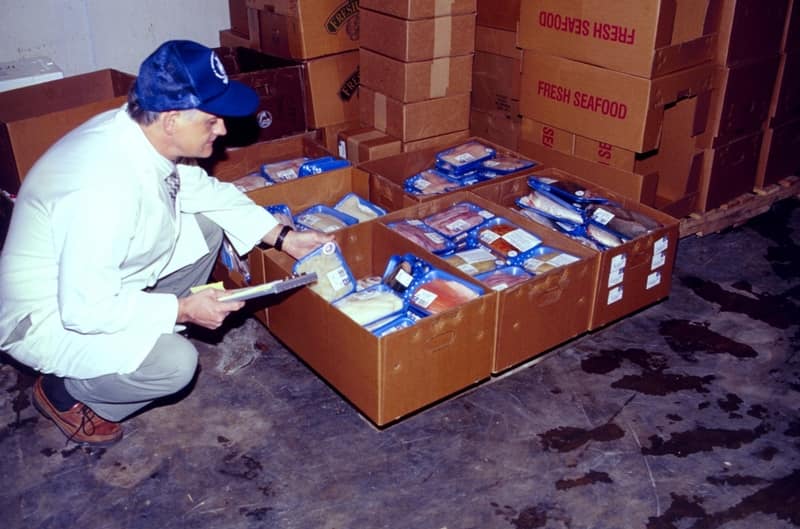
According to a recent report out of New York state, fish labeling fraud is becoming fairly rampant, with many species of fish being substituted with cheaper, lower quality seafood. If this is such a widespread problem, how can MN food safety managers actually know if their seafood is actually what the supplier says it is?

Fish Labeling Fraud
Image credit: NOAA Photo Library

How to Avoid Becoming a Fish Labeling Fraud Victim

While this study concerned fish sold in New York state, we can assume that seafood sold in Minnesota at least has the potential of being mislabeled. Here’s a few ideas that we’ve come up with to help you avoid bringing in mislabeled fish:

  • Use reputable seafood suppliers rather than large restaurant supply services
  • Ask your supplier for a precise label that includes your seafood’s source
  • If you order wild fish, reject any shipment that is not labeled as wild caught
  • If a supplier’s cost is much lower than market price, be wary

Large food suppliers are great for basic items, but the seafood market is so specialized that it’s probably a good idea to find a supplier that specializes in seafood, especially ocean caught fish. With our state far away from both oceans, food safety managers should put their trust in companies with seafood shipping experience to ensure freshness, quality and authenticity.

Most seafood, especially wild caught species such as salmon, should be labeled accordingly. Look out for generic labels on fish species such as salmon, cod or snapper. These three species of fish are susceptible to labeling fraud, especially if you are expecting wild caught or a specific variety of these popular seafood items. Ask your supplier for an accurate and specific label that includes a harvest location.

Finally, be wary of deals that look too good to be true, because they probably are. It’s not uncommon for more disreputable suppliers to mask a cheap, low quality fish as a desirable product and advertise an unbelievable price. Once cleaned and fileted, a generic white fish may resemble cod, but your customers will taste the difference.

Do you take steps to make sure that you’re receiving the seafood that you actually ordered?

Food Safety Certified Managers and Hot Air Hand Dryers

Food Safety Certified Managers & Hot Air Hand Dryers

Once touted as a convenient and sanitary aid in handwashing, touchless hot air hand dryers are in a multitude of public restrooms. However, during a recent study performed at the University of Connecticut, scientists discovered that hot-air hand dryers do more than remove water from your skin, they blast bacteria onto your hands and circulate fecal matter throughout the restroom.

Food Safety Certified Managers & Hot Air Hand Dryers
Image Credit: CC0 Creative Commons

Food Safety Certified Managers and Bacteria from Hand Dryers

Minnesota Food Code rules do allow for your facility to employ the use of heated hand dryers as long as they are not “the only device provided at the sink,” but given this current study, we think discussing the use of these devices in your kitchen or public restrooms would be prudent.

Touchless hand dryers provide a convenience for guests and save money on supplies by not wasting disposable paper towels, but is equipping restrooms with devices that actually cover users with invisible particles of fecal matter in the best interest of food safety?

To be on the safe side, we suggest you consider automated paper towel dispensers as a replacement for forced-air hand dryers. These provide the opportunity to procure a paper towel with a wave of the hand and avoid contact with a potentially contaminated surface.

Now may also be a good time to make sure that all of your restrooms are equipped with a current handwashing fact sheet.

It will be interesting to see how health departments and the food-service industry will react to this information in the future. Considering the results of this study, will you still be utilizing hot-air hand dryers in your restrooms?

Food Safe Training for Summer Hires

Food Safe Training Classes for Summer Hires

Summer is coming, and that usually means that local businesses become flooded with high-school and college student applicants looking for temporary employment to earn some extra spending money before Fall drags them back into the classroom. For the most part, the added staff helps food service and hospitality businesses that cater to a summer crowd survive the busy season and gives food service managers the opportunity to bring in temporary staff that do not have the expectation of continued full-time employment once business slows down in the off season. The issue of properly training and getting these part-time employees prepared to follow food safe training procedures brings up a dilemma.

Food Safe Training Classes for Summer Hires
Copyright: auremar / 123RF Stock Photo

Food Safe Training Temporary Employees

There are a few possible solutions to get all of your temporary hires properly trained:

  • Let your new employees complete their training on their own time
  • Allocate time for new staff to complete online food handling education at work
  • Schedule a group food safe training session led by your certified food manager of food safety industry professional

Leaving your new hires up to their own devices when it comes to obtaining food handlers education takes the responsibility away from your food supervisors but comes with risks. New employees may stall, procrastinate or simply forgo the training with the expectation that they will be allowed to work regardless. They may get the idea that completing food handling training is not worth their time for a part-time or temporary position. This could leave you shorthanded or forced to take time you do not have to hire a replacement for a hire who fails to complete any required training. It could also pose a health risk to your guests by being served by an employee who does not understand basic food handling procedures.

Giving new team members an opportunity to complete their training online at a computer in your facility is one way to guarantee they will be ready to fill the position. This could, however, lock up a manager’s computer that may be put to better use. If your facility requires many seasonal hires, it could also take significant time to fully train new staff one at a time.

A group course led by your certified food manager or private instructor is the most efficient way to fully train your summer staff to keep food safe.

If you’re a hospitality business that requires added summer help, how do you deal with food safe training?