Food Safe Training and Menu Design

Food Safe Training and Menu Design

After a long day of teaching food safe training classes and helping food service professionals obtain their food safety certification, we like to visit the local restaurants that many of our students represent. We often notice is that many of the restaurants we eat at seem to have incredible menu designs while others could use an adjustment or two to make them more presentable to their guests.

Food Safe Training and Menu Design
Image credit Yay Images

Food Safe Training and Menu Design

Menus not only let your guests know what dishes you offer, they have the potential to tell the story of your restaurant. We feel that a well-designed menu is like a well written novel. Your menu can display your personality, intrigue your diners and help you build a reputation. Here are some tips that we hope you find helpful when designing your next menu:

• Be clear but concise
• Be true to your theme
• Avoid clutter
• Have defined dish types

We have seen some menus that take meandering steps to describe each dish. That can confuse diners and cause them to scan over items with long descriptions. If you own a book store café or some other themed restaurant, you may take liberties here to fit your restaurant’s theme, but in many cases you will be best served to utilize simple descriptions. Many fine dining restaurants even skip the descriptions and simply list key components.

You also need to remember that it is important to be true to what you envision your theme to be. Use fonts, layouts and backgrounds that identify with your décor or the style of cuisine that you serve.

Finally, we’ve stepped into restaurants after a food safe training class and have been handed a convoluted menu with very little rhyme or reason. The fonts were elegant, the menu looked classy, but it took a while to find the type of dish that we were looking for. To avoid a cluttered menu, make sure that you group like items together. Have a section of burgers, maybe organize by food types, or even separate your dishes by the type of proteins involved. However you organize your menu, make sure that you take the time to assess whether or not it is organized in a logical and readable manner.

On a final note, with so many guests suffering from allergies and having special dietary needs, we suggest you consider finding a way to alert your guests if any item contains common allergens. We find it also helpful to see menus that identify vegetarian, vegan and gluten free options, and remember, if you serve any dishes that contain undercooked proteins or eggs, you must include a disclaimer somewhere on your menu.

Restaurant Websites and the Certified Food Manager

Restaurant Websites and the Certified Food Manager

When we give certified food manager exams we are often privileged to discuss other aspects of the food industry with experienced professionals after they have completed food safety testing. Recently, we engaged in a discussion on the value of restaurants and food-production facilities having their own websites. We see a lot of benefits to investing in having a unique web presence, so we thought we would share some of the highlights of past discussions.

Restaurant Websites and the Certified Food Manager
Image credit: Yay Images


The Certified Food Manager and Restaurant Websites


While word of mouth advertising has its benefits, we have discovered that more and more potential guests turn directly to their smart phones and tablets when scoping out local restaurants. While having great reviews on Yelp and a five-star Google rating can help you attract customers, many will take their review of your restaurant one step further by looking at your business’ website. From listening to qualified professionals, it is our opinion that a guest may choose a similar restaurant to yours simply because they can easily access the menu and get a feel for you a location’s ambiance from the convenience of their computer or tablet.

Your website should be unique, and we have a few suggestions to could help you come up with a visually appealing plan if you choose to create a website or hire a designer to do it for you.


  • Visually show off your style
  • Have an easily accessible menu
  • Allow mobile viewers to easily navigate your site


It is important that visitors to your webpage get a feel for your cuisine and ambiance the second they visit your site. It is also important to note, that many of these viewers will be on the move looking for a place to eat, so you may wish to consult with a web designer that has experience designing mobile friendly websites.

Finally, potential diners are going to want to know what is on your menu. Having a concise, easy to read menu on your web page will go a long way towards attracting them to your location. It could also have visually appealing pictures of your dishes, but if they get in the way of the actual menu, visitors to your site may look elsewhere if your menu page is convoluted.

Having a well-designed webpage does not only benefit local food producers. If you are a certified food manager that has a product on local grocery shelves or sell your prepared food at any other outlet, consumers may pull out their smartphones to investigate your product for further information before making a decision to purchase your goods.

Web pages are just one modern marketing technique used to attract customers. Do you have an online marketing strategy that works for you?

(Note: Street Level Solutions has been handling Safe Food Training’s Internet marketing needs since 2013. They have years of experience and will give a free no strings attached consultation to anyone who mentions this blog.

“Websites are just one of the many digital marketing tools that a business needs to consider when creating a marketing plan. Each restaurant and food-production facility is unique, if you want to get more customers you need to tell them how you’re different, show them why they need to try your establishment then consider the most effective way to get that message in front of your prospective customers. I’d be happy to brainstorm with you to help create a plan. You can contact me at (763)416-2000.” Dave Haas, Street Level Solutions)

Will FDA Definition of Health change Food Safety Certification?

Recently, the FDA opened a public inquiry requesting comments on how to define the term “healthy” as it relates to the labels on packaged foods. While this appears only to immediately impact the retail sector, any time the FDA changes any regulation the potential exists that the food service industry will see the effects. We do not foresee any upcoming changes to ServSafe or food safety certification requirements, but this looks like an important topic to explore.

FDA Impact of Food safety certification
Image credit: commons.wikimedia.org

FDA Definition of Healthy and Food Safety Certification

The time period to give the FDA your opinion began on September 26th, so we would like to ask a few questions pertaining to this inquiry in case you plan on submitting your opinions.

• Should a government agency define healthy?
• Should the public define healthy?
• Is there one definition of healthy that works for all consumers?

It is not our intent to influence your opinion on what the FDA’s role is when it comes to the diet of consumers in our country, but we do think we should consider whether or not the FDA is responsible for deciding what healthy means. We all know that the FDA enforces and maintains regulations that keep our food supply safe from natural and man-made hazards, but does a food’s nutritional value fall under their department’s jurisdiction?

On the other hand, does the general populace have all of the information necessary to determine if a food is “healthy”? Even many experts disagree on which types of foods have health benefits and how much of each nutrient we need to consume. We all like to think that we know what is best for us, but how does product labeling influence our food choice decisions?

Finally, can we simply put the entire population in a box and tell them what is healthy for some is healthy for all. The FDA’s inquiry resulted from a complaint that foods rich in certain fats that have health benefits for some consumers are refused the “healthy” label. There may be questions as to whether refusing the “healthy” label to all foods that contain fats will prevent consumers from purchasing items that contain certain elements that may actually have nutritional value.

These are only a few of the questions that we have come up with that should be considered. If you’d like to submit your opinion, the FDA is currently accepting your comments on the topic of how to define “healthy” as a food label until January 26, 2017. We would also like to know how you feel about this topic so please leave your input in the comments section below.

A Safe Food Training Alert: For Restaurant Fire Hazards

A Safe Food Training Alert: For Restaurant Fire Hazards

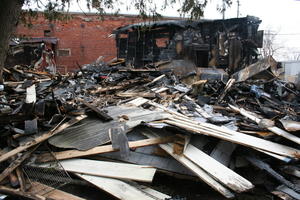
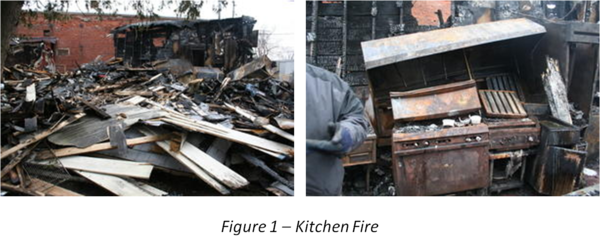
During a break in a recent Safe Food Training class a side discussion on kitchen fire safety “spontaneously ignited”. We decided it would be a good topic to have our friend and nationally recognized fire safety expert, Scott Futrell, blog about. This is the final in a series of blogs that will summarize fire prevention. Don’t let your kitchen, restaurant, and livelihood end up like the one in Figure 1 did, practice fire prevention!

A Safe Food Training Alert: For Restaurant Fire Hazards
All Image credits: Futrell Fire Consult & Design, Inc

Fire safety in your kitchen and your restaurant.

The Minnesota State Fire Code provides the minimum requirements for the fire prevention and fire protection in eating and drinking establishments.  It is up to you to reduce the odds of a fire impacting your business by routinely doing several things.


It is very important that you monitor the work done by contractors hired to clean hoods, ducts, and fans as well as contractors hired to inspect, test, and maintain the fire suppression systems.  The services they sell you may not match the objectives required to maintain your systems in a fire safe manner.


What do you need to do to protect your investment or your facility?


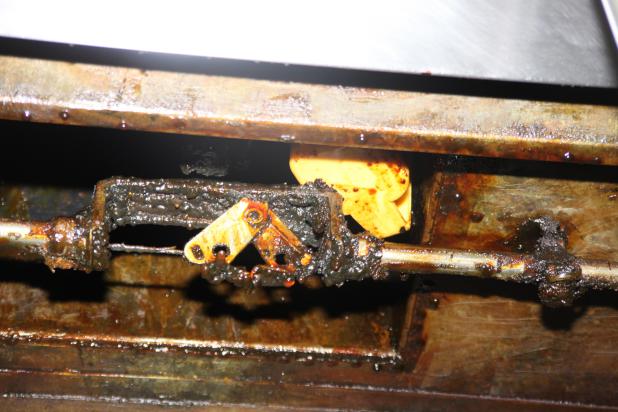
Look behind the filters and into the exhaust ductwork and monitor the grease build up prior to scheduled cleaning as well as immediately after cleaning to ensure it is cleaner than shown in Figure 2 where grease and the cleaner’s flashlight remained the day after the professional cleaning.  Keep in mind that solid-fuel burning appliances leave creosote and it is harder to clean, but easier to ignite.

Minnesota Food Safety Managers Watch for Grease in Plenum
Grease in Plenum
Figure 2

Get any redesign of appliance floor plans approved


A consultant knowledgeable in the:

  • Minnesota State Fire Code,
  • International Mechanical Code
  • National Fire Protection Association: NFPA 96, Standard for Ventilation Control and Fire Protection of Commercial Cooking Operations

should approve planned changes before any appliances are moved or replaced from under existing nozzles or existing hoods.


Be vigilant about fire suppression nozzle caps


Grease gets into the fire suppression nozzles if the caps are off and then when the system needs to operate it can’t flow agent out of the grease plugged nozzles, so a policy that includes ensuring the nozzle caps are always in place protects your investment.  See Figure 3 for a nozzle with the cap off and for a nozzle with grease caked inside of it.

Minnesota Certified Food Managers Fire Suppression Monitor Nozzels
Nozzle Missing Cap and Grease in Nozzle
Figure 3

Fire prevention and protection training


Establish as a part of your training program the fire prevention and protection requirements for all kitchen employees highlighting such topics as:

  • Manual pull station use (always the first thing in a fire if the system hasn’t operated automatically),
  • Always operate the exhaust system when there is activity in the kitchen
  • Define cleaning schedule and procedures
  • Check that nozzle caps are in place daily
  • Proper fire extinguisher use
  • And more.

Then have weekly or monthly staff meetings to reinforce the fire prevention, fire protection, and cleaning requirements associated with grease-laden cooking.


If you have any questions about fire safety in the food preparation environment that you would like to discuss contact Scott directly at (763) 425-1001 or scottf@ffcdi.com.

ABOUT THE AUTHOR: Scott A. Futrell, PE, FSFPE, CFPS, SET, CFEI, is a fire protection consultant with Futrell Fire Consult & Design, Inc., in Osseo, Minnesota and has over 40 years’ experience designing, specifying, and investigating fire protection system related losses and can be reached by e-mail at: scottf@ffcdi.com, or visit www.ffcdi.com.

Note from Tim Niles, Safe Food Training, Trainer and Editor-in-Chief, we truly appreciate the knowledge and hints Scott has provided for us in this series of blogs. He has a wealth of experience in fire prevention/protection and he’s regarded as a national expert. We’ve just scratched the surface of his knowledge in these blogs. It’s our hope that this information will stimulate our readers to take steps to make their facility a safer place for customers and employees. Thanks Scott!