The Ultimate Food Safety Certification Guide To Controlling Fruit Flies In MN Restaurants

A food safety certification tip- creating a simple trap can be used to catch fruit flies

Fruit flies are one of the most invasive restaurant pests in MN this time of the year. While MN food safety certification training does not specifically cover how to control fruit flies, keeping them out of your facility is an important part of maintaining a clean and safe environment.

Food Safety Certification Guide To Controlling Fruit Flies

Food Safety Certification Guide To Controlling Fruit Flies

Keeping a clean kitchen is an obvious step towards preventing a fruit fly infestation. However, a simple surface clean will not be sufficient to avoid the appearance of fruit flies. A deep clean will be necessary to remove potential fruit fly nesting sites. Hidden breeding grounds often exist under refrigeration units, sinks, and designated preparation areas.

Fruit flies thrive on fruit and vegetable matter. Keeping fruit and vegetables from becoming nesting grounds for these pests is crucial. This is not only for keeping them out of the kitchen but also for food safety. Storing normally shelf-stable produce under refrigeration rather than on counter surfaces will keep your fruits and vegetables out of warmer temperatures. This is important because warmer temperatures are where fruit flies thrive.

Maintaining produce quality for items that are located in dry-storage locations is vitally important. A potato or squash that has begun to rot will not only attract pests. It will become a major breeding ground. This breeding ground has the potential to infest your entire workspace. Keeping your produce areas clean and free of spoiled items will greatly reduce your risk.

Even if you have taken all the necessary steps to prevent fruit flies from finding nesting grounds, they will inevitably make an appearance. The next step is to remove them from your work space.

Fruit fly strips are easily accessible at local hardware stores, but you must exercise caution when using them in food preparation facilities. MN food safety certification training states that all pest control chemicals must be kept away from food. Proper placement for fruit fly strips will be in places such as inside the lids of covered garbage cans, near compost containers and under sinks and other surfaces.

A Simple Homemade Trap

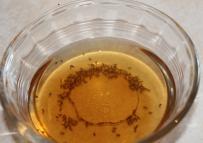
Homemade trap for fruit flies is not part of food safety certification training but it works

For areas where a fruit fly strip will not be an option, such as near food preparation areas and where they will be visible to customers, a rudimentary trap may be an alternative. These can be easily created with a shallow transparent glass or bowl. Fill it with a small amount of apple cider vinegar or orange juice. Then, place a thin film of dish soap on top. Fruit flies will be attracted to the sugar of the vinegar or juice. They will become trapped when the soap prevents them from breathing.

While MN food safety certification training does not outline steps for preventing these invasive pests, such as fruit flies, there are ways to control their presence and provide a safe and healthy food preparation environment.
Going Beyond Unbelievably Simple Food Safety Storage Regulations

Proper storage of all types of food products, whether raw meats, dairy, produce, or fully prepared foods, is essential in any segment of the food service industry. Improperly stored food can lead to loss of profits due to waste, and wasted time while employees search for product. Food safety training addresses the storage regulations issue, we’ll explore other storage solutions as well.

Going Beyond Unbelievably Simple Food Safety Storage Regulations

Image credit: stu_spivack via Flickr

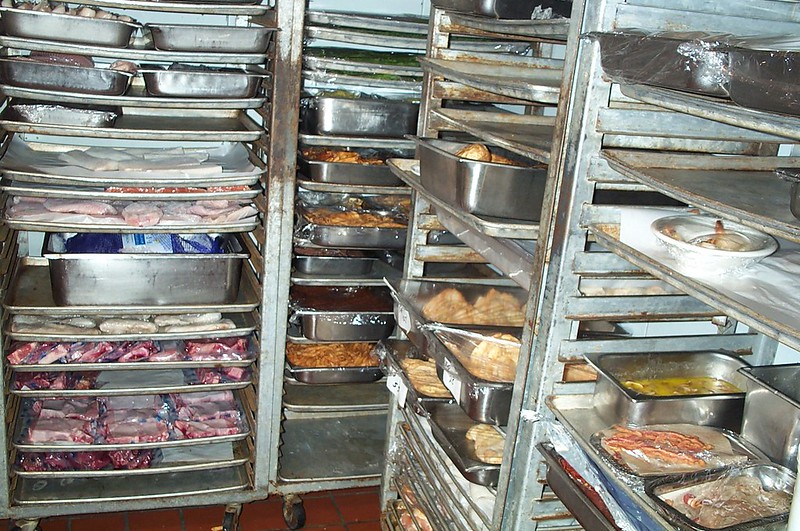
Meat storage tends to be the most misunderstood and poorly implemented procedure when it comes to food storage. We know that raw meat should always be stored below cooked product, but according to MN food safety certification regulations, raw meats should be separated during storage and production. One way to safely store raw products and prevent cross-contamination is to make sure that products with the highest cooking temperatures are stored on lower shelves than those with lower temperatures. If raw meats were to be stored on the same rack, a properly organized refrigerator should look like this in descending order.

  • Raw steaks and full cuts of beef (145 degrees minimum)
  • Raw ground beef (155 degrees)
  • Raw poultry (165 degrees)

You will notice that we have not included seafood on our list. Even though seafood has a minimum cooking temperature of 145 degrees, we recommend separating it further from all other product. We feel that this is an important safety precaution to protect those who have allergies to seafood and shellfish.

The optimal way to achieve proper storage is to have dedicated areas for meat, dairy, and produce. Larger outlets such as large-scale food manufacturing plants can easily achieve this by using multiple refrigeration units. Many restaurants, hotels, and smaller institutional facilities do not have this luxury, so diligence is important.

Tips for Food Safety Managers Streamlining Food Storage

The first tip to ensure proper food storage is to label everything. Food should be labeled and dated when received or prepared. This is the obvious first step and is required to know for food safety certification in MN, but it is helpful to take labeling one step further than the minimum storage regulations.

Label the sections, shelves, and empty spaces in your refrigerators. This will ensure that employees will be able to see where each type of product is allowed to be stored, and will prevent the confusion of a constantly changing storage system.

Another tip is to store produce and meat as far away from each other as possible. In many cases, this can be achieved by splitting refrigeration space in half. One side of a walk-in refrigerator will contain produce, the other meat products. Two separate refrigerators would be the ideal storage solution, but this is not always achievable. In cramped quarters, the labeling of all available space will streamline your storage process.

Implementing proper food safety storage regulations appear simple on paper, but implementing an organized system is well worth the vigilance.

Informative Food Safety Training Targeted At Rubber Floor Mats

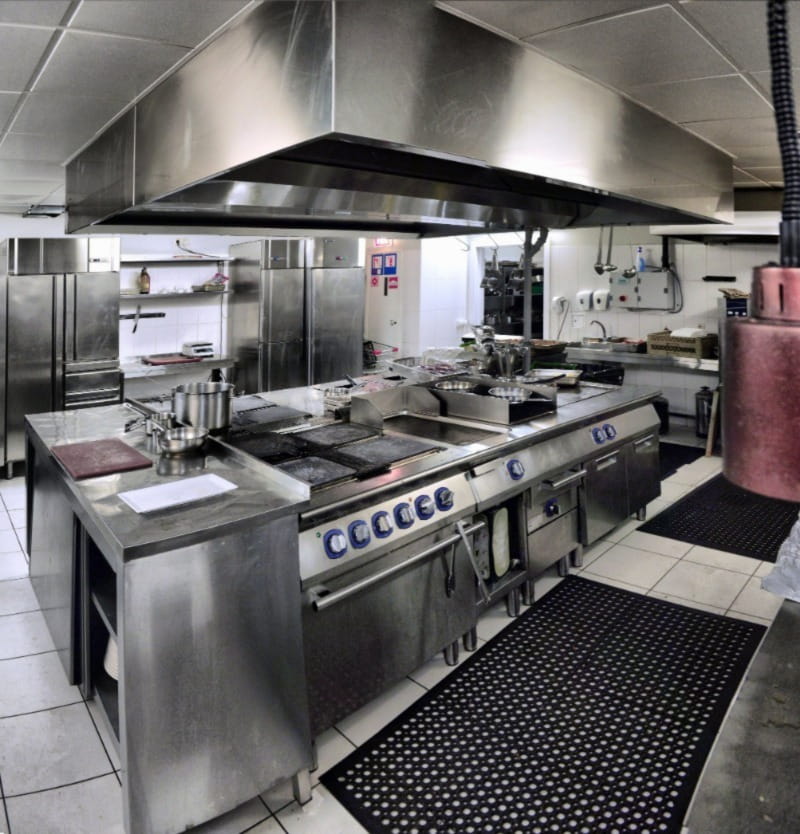
Floor mats in kitchens are essential for the physical health of employees that are on their feet for extended periods, but did you know that they can also become a foodborne illness hazard if not properly maintained? Since you’re not serving food on your floor mats, unless you’re designing a new concept restaurant that probably won’t fly with your local health inspector, you may not see the connection between foodborne illness and rubber floor mats, so let’s take a look at food safety training for rubber floor mats.

Informative Food Safety Training Targeted At Rubber Floor Mats
Image credit: nikitos77 via 123rf

Food Safety Training Tips for Floor Mat Cleaning

From an employee safety standpoint, dirty floor mats can be a slip hazard, so making sure they are clean prevents potential injury. Ripped or torn mats can catch the toes and heels of shoes causing staff to drop food or utensils, or even trip and fall. If your mats are in a condition that causes staff to fall into deep fryers, replace them immediately.

Dirty and torn mats also present a likely habitat for bacteria and pests. If your mats aren’t washed and cleaned on a regular basis, you’ll breed pathogens that can be stirred up by fans or even staff walking on them. Good food safety training should include regular maintenance of your floor mats to prevent this from happening.

Pests like fruit flies, ground bugs and even mice can be attracted to the smell of debris and grease left on dirty rubber mats. Cracked and torn portions can be an ideal spot for flies to lay eggs, harbor fruit fly nests and provide snacks for cockroaches and other small ground insects.

Making sure your floor mats are in good shape is not only good for the physical well-being of your staff but can also result in improved food safety training. Do you regularly sanitize your rubber floor mats?

The Truth About Food Safety Managers And Fingernail Hygiene In The Kitchen

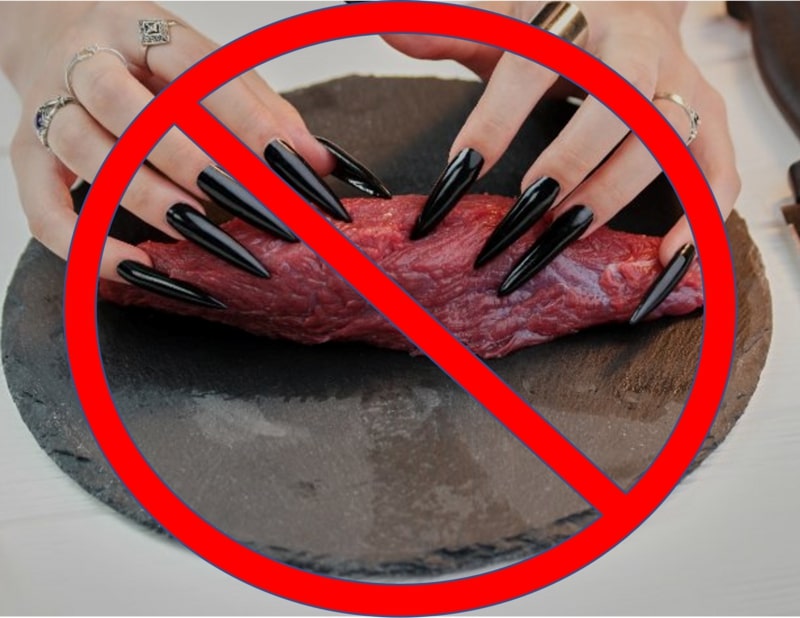
When discussing handwashing station setups with our students, we’ve noticed since finger nail brushes are no longer required, fingernail hygiene training has been often neglected . Even if you wash your hands properly dirt and bacteria can remain trapped under the fingernails creating the risk of pathogens transferring to food that is handled with bare hands. While fingernail maintenance only has two lines in the Minnesota food code, there are some important reasons that food safety managers should not overlook risks poor fingernail hygiene can cause.

Food Safety Managers And Fingernail Hygiene In The Kitchen
Image credit: denisfilm via 123rf

Food Safety Managers and Fingernail Maintenance

Food safety managers should provide fingernail hygiene training concerning:

  • Trimming Fingernails
  • Wearing Gloves over Painted Fingernails
  • Artificial Fingernails

Fingernails must be trimmed and filed so that they are easily cleanable. Rough fingernail tips can become caught in food product and potentially break off into food or onto preparation surfaces. Rough fingernails can also harbor bacteria in the frayed edges, even with proper handwashing, so maintaining smooth nails is much more than a grooming aesthetic. Long fingernails also pose the risk of breakage, even if carefully filed, so make sure nails are an appropriate length.

Food safety managers should enforce good fingernail hygiene by making it clear that painted or artificial fingernails should never come into contact with any type of food product. Managers should make note of poor fingernail hygiene and instruct employees with painted or artificial nails to cover them with gloves at all times in the kitchen.

Have you taken the time to review fingernail maintenance with your kitchen staff?