Commercial Food Slicer Safety: Preventing Cross-Contamination

slicer contamination
Prevent food slicer cross-contamination with a strict sanitation schedule!

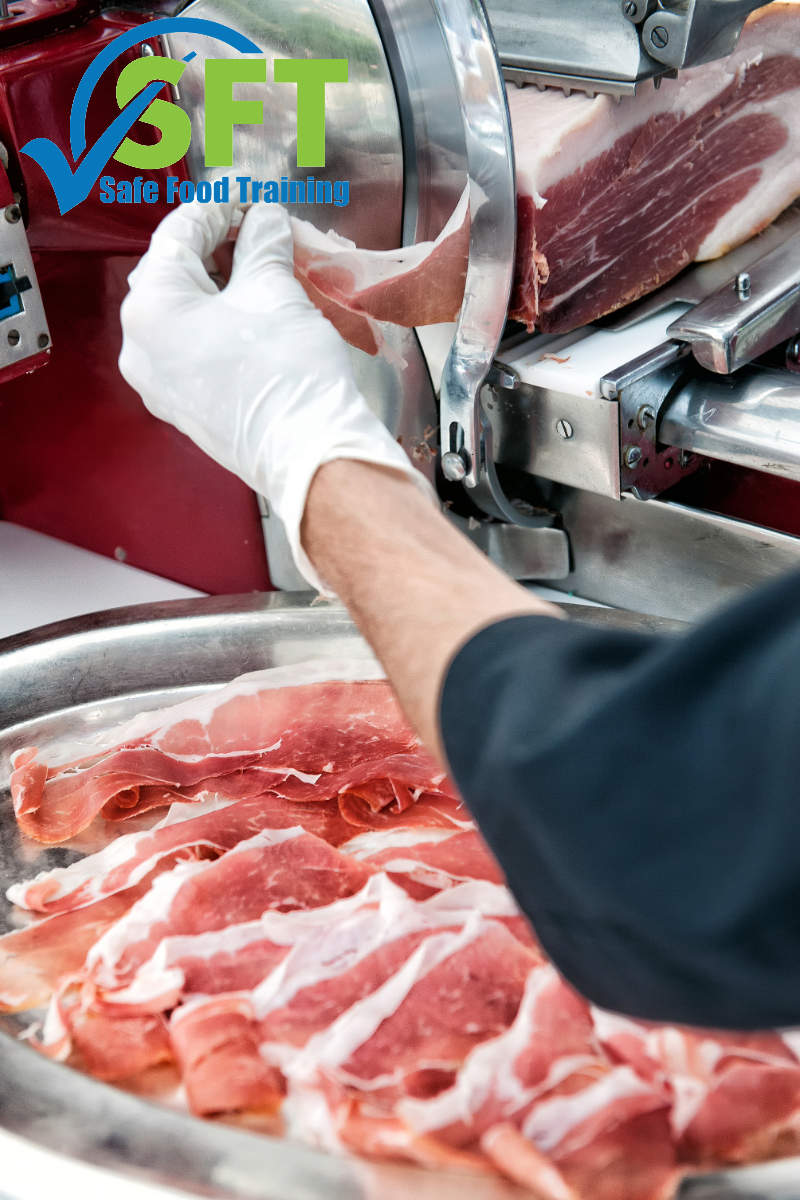
In a professional Minnesota kitchen, the commercial food slicer is a cornerstone of efficiency. While its blade poses a clear physical risk, a more subtle and widespread danger is the cross-contamination that leads to foodborne illness. For a Certified Food Protection Manager, mastering commercial food slicer safety is less about the blade and more about controlling the microscopic world of bacteria, viruses, and allergens.

This guide focuses on the core sanitation principles that truly protect your customers: creating and enforcing a bulletproof system to prevent your slicer from becoming a vector for dangerous pathogens.

1. Why Slicers are a High-Risk Zone for Pathogens

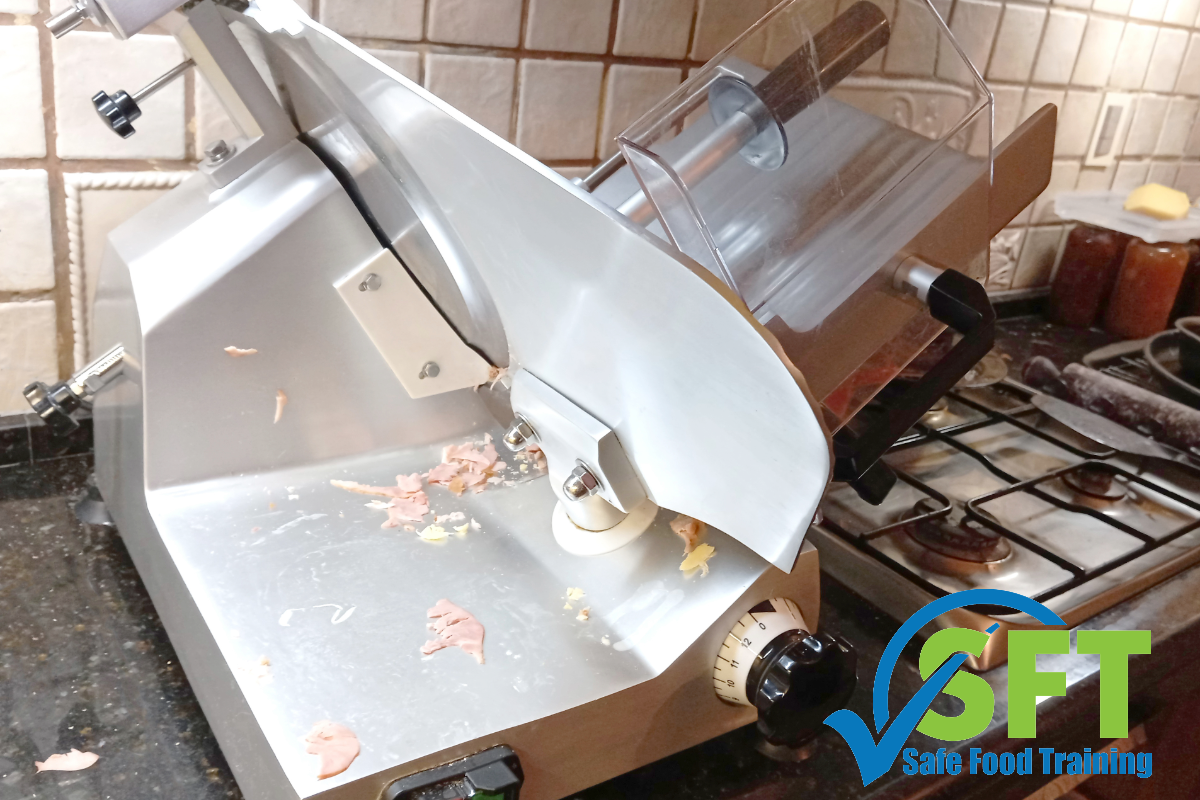
A slicer’s complex design, with its guards, gears, and seams, creates numerous harbor points where food particles accumulate. This debris provides the perfect breeding ground for bacteria. When not meticulously cleaned, a slicer will transfer pathogens from one food to another—for instance, from raw meats to ready-to-eat cheeses.

  • The Danger of Biofilm: Over time, bacteria can form a slimy, protective layer known as a biofilm on equipment. This layer shields pathogens like Listeria monocytogenes, a bacterium frequently linked to deli slicers, making them resistant to standard sanitizers.
  • Allergen Cross-Contact: Beyond pathogens, slicers are a primary source of allergen cross-contact. Trace amounts of cheese (a dairy allergen) or deli meats containing gluten can easily contaminate foods intended to be free from allergens.
  • Molds and Spoilage: Even tiny food particles left behind can develop mold, which then transfers to fresh products, accelerating spoilage and creating a risk of customer illness.

2. The Four-Hour Rule: A Non-Negotiable Standard

The FDA Food Code is unambiguous about cleaning frequency. must be broken down, cleaned, and sanitized at least once every four hours. This is a critical control point, not a suggestion. It is based on the speed at which harmful bacteria multiply to dangerous levels inside the temperature danger zone (41°F to 135°F). For any busy operation, this means a full sanitation procedure is mandatory during each shift, not just at the end of the shift.

3. The Step-by-Step Slicer Sanitation Process

A quick wipe-down is ineffective and dangerous. A compliant sanitation procedure is a detailed, multi-step process that must be followed precisely and accurately.

  1. Prepare for a Safe Cleaning: First, disconnect the power source by unplugging the slicer from the wall. Turn the blade dial to zero. Ensure you are wearing the required Personal Protective Equipment (PPE), especially cut-resistant gloves.
  2. Disassemble the Slicer: Follow the manufacturer’s directions to carefully remove all cleanable parts, including the food chute, blade guard, and product tray. This is the only way to access all food-contact surfaces.
  3. Wash, Rinse, and Sanitize: Use a three-compartment sink setup. In the first sink, wash parts with hot, soapy water and a brush to remove all physical debris. In the second step, rinse them thoroughly with clean, hot water. In the third step, sanitize the parts by submerging them in a properly concentrated, food-safe chemical solution for the required contact time.
  4. Air Dry Completely: Place all sanitized parts on a clean surface and allow them to air dry. Using a cloth to dry can re-contaminate the surfaces you have just cleaned. Once dry, reassemble the slicer.

Your Leadership Role in Preventing Contamination
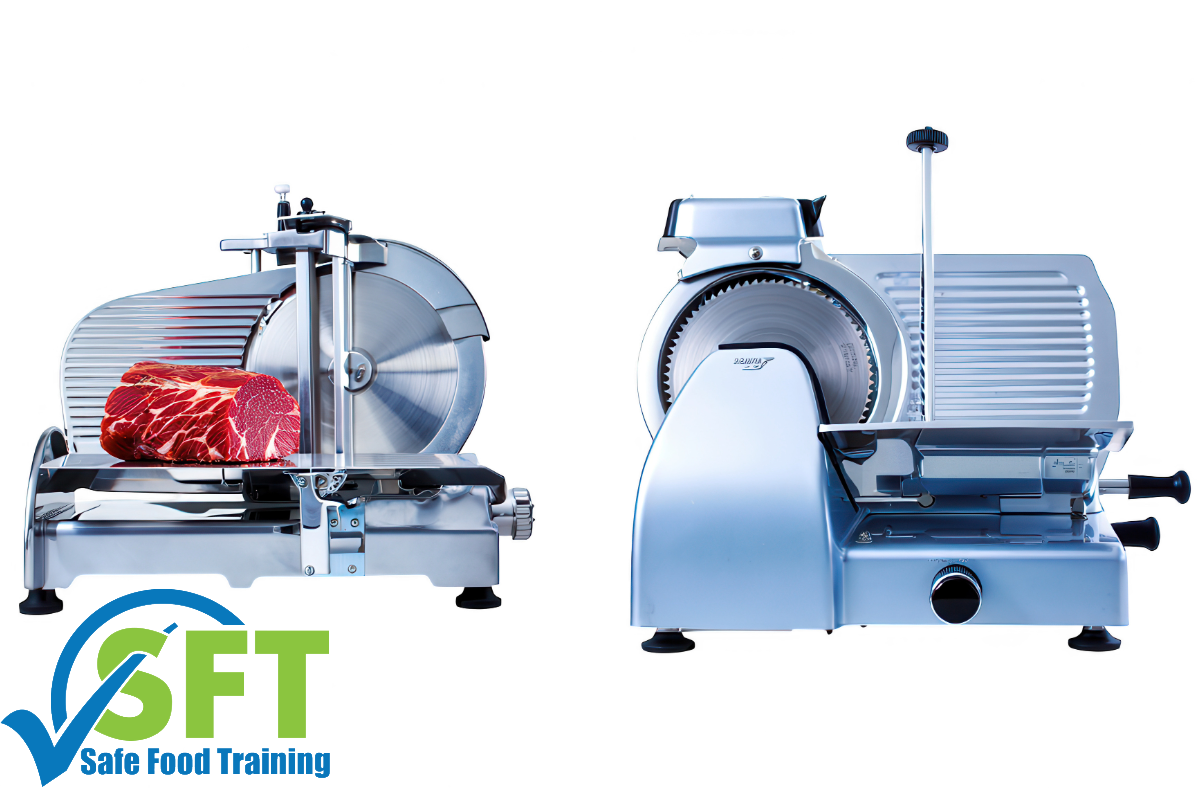
slicer contamination.
Prevent slicer contamination with these tips!

As a Certified Food Protection Manager, your responsibility extends beyond simply knowing these steps. You must effectively train your team on the importance of each step, provide the necessary tools and time to perform the job correctly, and establish a system to ensure that these procedures are followed consistently. Your leadership is what transforms knowledge into a lasting culture of food safety.

Mastering these commercial food slicer safety protocols is a non-negotiable part of running a professional and reputable food establishment. These procedures are a core competency taught in our Certified Food Protection Manager course, where we empower you with the knowledge to protect your customers from the hidden dangers of contamination.

Contact Safe Food Training today to book a session for your team or follow the link to our upcoming courses!


Shocking Shigella Alert: Facts Every Food Protection Manager Must Know Now

Shigella

Shigella Alert: What Every Certified Food Protection Manager Must Know

Shigella
How to prevent Shigella.

In the complex world of food safety, certain pathogens demand our utmost attention. Shigella is one of them. As a certified food protection manager, recognize the threat Shigella poses to build strong defenses in your establishment. Shigella’s high infectivity and severe health consequences demand rigorous control beyond other contaminants.

This isn’t about fear—it’s about empowerment. Understanding the science behind Shigella, including how it spreads and the precise actions to prevent it, enables you to lead your team with confidence. Additionally, it helps you protect every customer who walks through your doors.

Why Shigella is a “Big 6” Pathogen

Shigella is a group of bacteria that causes an infection known as shigellosis. The U.S. Centers for Disease Control and Prevention (CDC) estimates it is responsible for approximately 450,000 infections in the United States each year. Fever, stomach pain, and diarrhea that is often bloody characterize the illness.

However, what truly sets Shigella apart is its designation by the FDA as one of the “Big 6” foodborne pathogens, alongside Norovirus, Hepatitis A, Salmonella Typhi, Nontyphoidal Salmonella, and E. coli. The FDA designates highly infectious pathogens that cause severe illness and are frequently transmitted by food employees as having this special status.

  • Extremely Low Infectious Dose: Shigella is notoriously easy to contract. It takes as few as 10 to 100 bacterial cells to cause an infection. This microscopic amount easily transfers from contaminated surfaces or unwashed hands to food.
  • Severity of Illness: While many cases resolve in 5-7 days, some can lead to severe complications, including post-infectious arthritis and bloodstream infections.
  • Emerging Drug Resistance: The CDC has issued alerts regarding extensive drug-resistant (XDR) strains of Shigella. These “superbug” versions are resistant to all commonly recommended antibiotics, making prevention, not treatment, the only reliable strategy.

How Shigella Spreads in a Food Service Environment

The primary mode of transmission for Shigella is the fecal-oral route. This means an infected person’s stool passes the bacteria to the mouth of another person. In a food service setting, this happens almost exclusively through the hands of an infected food employee. If an employee uses the restroom and fails to wash their hands properly, they can contaminate everything they touch afterward, including food, equipment, door handles, and utensils.

  • Direct Food Contamination: This is the most common risk in a kitchen. An infected employee preparing salads, slicing fruit, or making sandwiches can directly transfer the bacteria to ready-to-eat foods.
  • Contaminated Water: Produce irrigated or washed with contaminated water can carry Shigella into your kitchen.
  • Person-to-Person Spread: Because the infectious dose is so low, the bacteria can spread rapidly among staff members if hygiene protocols are not strictly followed, increasing the risk of a widespread outbreak.

Your Action Plan: A Certified Food Protection Manager’s Prevention Strategy

As a Certified Food Protection Manager, your role is to move from awareness to action. Preventing a Shigella outbreak depends on implementing, monitoring, and enforcing a multi-layered defense system. Your leadership in these areas is non-negotiable.

  • Mandate Impeccable Hand Hygiene: This is your single most effective tool. Go beyond simply having sinks available.
  • Action: Implement a policy requiring hand washing for at least 20 seconds with soap and water. Ensure it is done after using the restroom, before starting work, between tasks, and any time hands may have become contaminated.
  • Verification: Directly observe staff during shifts and make handwashing a key part of your daily walk-throughs.
  • Enforce a Strict Employee Health Policy: An employee with diarrhea cannot work.
  • Action: The FDA Food Code requires that any employee diagnosed with an illness from Shigella spp. be excluded from work. Your policy must be even more direct: any employee experiencing vomiting or diarrhea, regardless of the cause, must report it and stay home.
  • Support: Create a work environment where employees feel safe reporting symptoms without fear of penalty.
  • Implement Rigorous Cleaning and Sanitizing: Treat every surface as a potential point of cross-contamination.
  • Action: Develop a clear schedule for cleaning and sanitizing all food-contact surfaces, equipment, and high-touch areas (such as cooler handles and POS screens) with approved sanitizers.
  • Training: Ensure staff understand the difference between cleaning (removing soil) and sanitizing (reducing pathogens to safe levels), as well as the correct procedures for both.
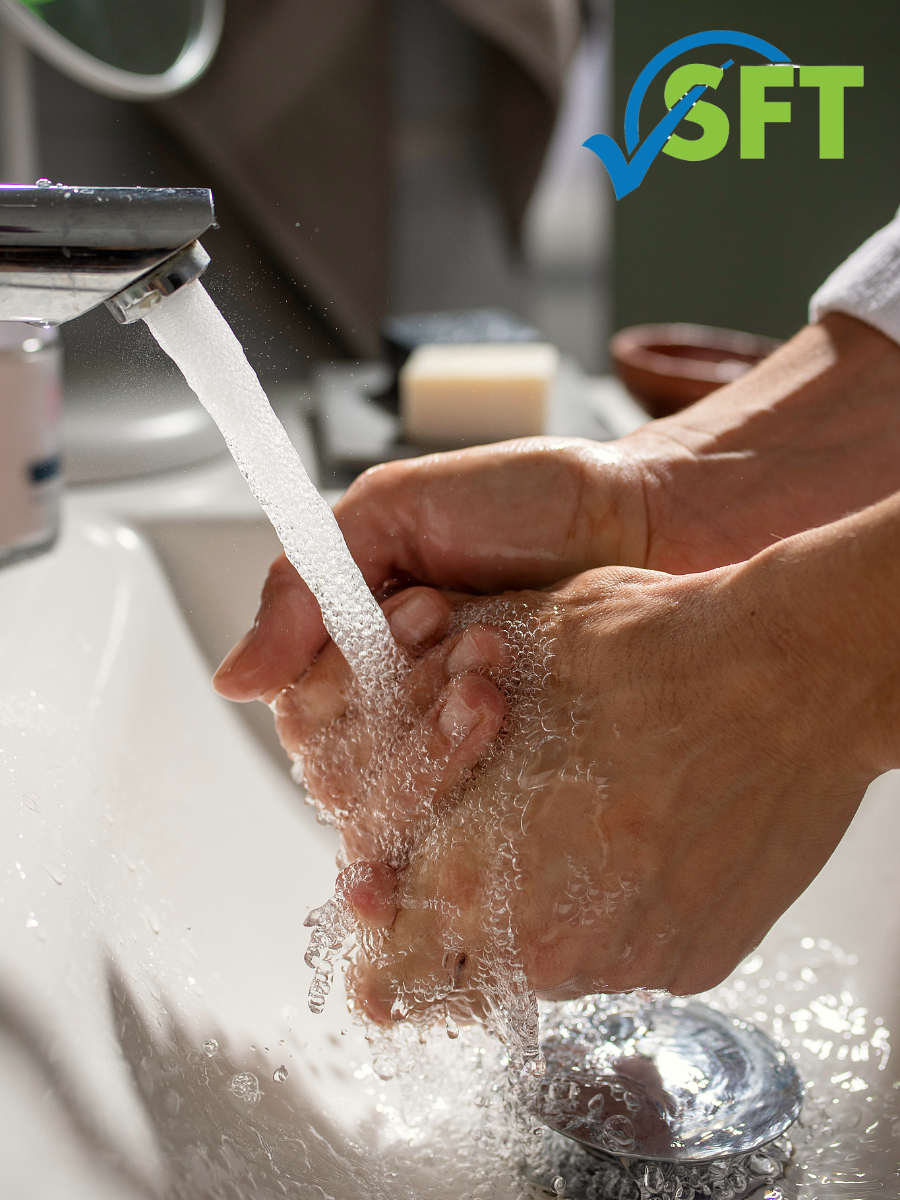
handwashing
The key to preventing shigella is handwashing!

A well-trained team led by a knowledgeable certified food protection manager is the ultimate defense against pathogens like Shigella. Your expertise is critical to public health and the success of your business.

Is your team fully ready to handle threats like Shigella? Safe Food Training offers expert, instructor-led options for 8-hour food manager certification and continuing education, all right here in Minnesota. Ensure that you and your team have the knowledge and tools to protect both customers and employees. 

Register for an upcoming course today!

How CFPMs Can Reinforce Approved Use Of Sanitation Solutions

CFPMs can reinforce Approved use of Sanitizing Solutions

Sanitizer solutions are essential in reducing the risk of sickening guests, but when used improperly, they can actually increase foodborne illness hazards. So how can certified food protection managers ensure that the staff is using the sanitation solution properly?

Proper Sanitation Solution Use for Certified Food Protection Managers

There are four things CFPMs should be aware of when it comes to properly using sanitizer solutions:

  • Approved Solutions
  • Strength
  • Effective Time Lapse
  • Cloths Soaked in Solution
CFPMs Can Reinforce Approved Use Of Sanitation Solutions
Image credit: vectorfusionart via 123rf

Your sanitizer solution must be a solution approved by the Minnesota food code. Common approved solutions include bleach, quat sanitizers and iodine. These solutions must be mixed to the appropriate strength, so follow the directions closely and use test strips from your sanitizer supplier to ensure proper strength. If it’s too strong, you risk contaminating food with the chemicals involved, and weak solutions will not properly sanitize your surfaces and equipment. Many restaurant suppliers offer automated dispensers that will mix sanitizers and water at the appropriate strength, just make sure to test from time to time to ensure that your solutions are in acceptable ranges.

Sanitizer solutions don’t remain effective forever, so certified food protection managers should instruct their staff to dispose of old sanitizer at regular intervals. If used often, these solutions may become less effective sooner than indicated on the bottle’s label, so be aware that solutions may need to be rotated frequently.

Finally, be aware that your solutions don’t necessarily completely sanitize cleaning rags. If you have an extremely dirty cloth and continue to use it, you’re not exactly sanitizing anything. In fact, you could be spreading grease and bacteria all over your kitchen no matter how long a dirty rag has sat in your sanitizer solution. The best plan is to keep a damp sanitizer rag available rather than soaking it in sanitizer buckets and use clean cloths after old ones become soiled.

Do you take the time to test your sanitizer solutions from time to time to ensure their effectiveness?

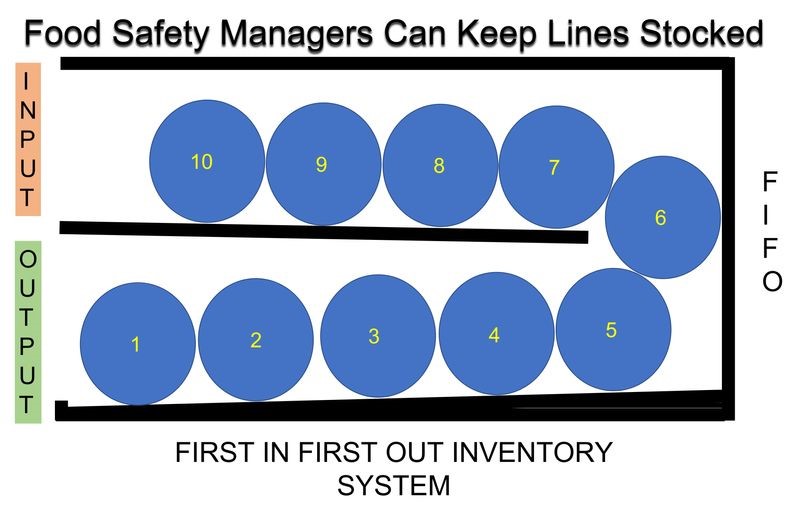
A Practical Way Food Safety Managers Can Keep Lines Stocked

A Practical Way Food Safety Managers Can Keep Lines Stocked

Food safety managers like to keep their production lines fully stocked so that all ingredients for every dish are readily available and in abundant supply, but there are foodborne illness hazards that can occur if you stock your lines improperly. Whether you call it rotating product, flipping your lines or simply stocking a quick access station, you should make sure that you’re doing it properly to reduce the risk of spreading illness.

A Practical Way Food Safety Managers Can Keep Lines Stocked

How Food Safety Managers Reducing Foodborne Illness while Stocking Production Lines

The most important thing to consider when stocking your production lines is that the oldest ingredients should be used first. Whatever method you use to stock your lines must take this into consideration. If you simply refill or top off storage containers, the oldest product will remain on the bottom and eventually begin to go bad contaminating all other product in the same container. When keeping your lines stocked, a first-in-first-out (FIFO) philosophy must be employed.

During food safety manager training classes, we’ve had a few discussions on stocking production lines, and it’s been asked if topping off containers and rotating product into clean containers is an acceptable method. While it sounds like a good idea to have a clean storage container every shift, you’re still running the risk of old product contaminating fresh ingredients. Imagine a pan filled with cheese that is one-third empty when you rotate it, and then you use one-third before the next time you rotate it, how fresh is the middle third? If you simply top off product and rotate it into a clean container, you may need an archeologist to date the product that has been trapped in the middle of your storage container every time you flip your lines.

Our suggestion is to have backup containers readily available rather than fill old containers with new product or rotate mixed-date products into new storage vessels. This will guarantee that fresh product doesn’t mix with older product that could be in danger of spoilage.

Do you have an effective strategy for keeping your ingredients stocked without mixing old and new product?