Five Remarkable Ways Certified Food Managers Can Beat The Heat

Five remarkable Ways certified food planners can beat the heat

Summer temperatures can be brutal on kitchen staff, and certified food protection managers need to find ways to keep their staff healthy without sacrificing food safety. Since we’re nearing the dog days of summer, let’s take a look at a few ways certified food managers can beat the heat.

Five Remarkable Ways Certified Food Managers Can Beat The Heat
Image credit: hxdyl via 123rf

Tips for Certified Food Managers to Surviving Summer Heat in the Kitchen

We all have our horror stories about the hottest kitchen we’ve ever been in, but before your current one becomes the next inferno, you may want to look into better ways to cool your kitchen. We’ve talked to many certified food protection managers, and we’ve compiled the top five ways to keep your staff cool:

  • Air curtains
  • Better fan locations
  • Frequent break times
  • Clean hood vents
  • Adequate hydration

Simply propping open an exterior door can provide some airflow to kitchen areas but may allow for insects to intrude, especially after dark when moths, flies and gnats are attracted to the light. Installing an air curtain over your doorways will allow for fresh air, but keep bugs away.

Fans are the most common way to introduce airflow into the kitchen and cool staff down, but beware about where you place them. Make sure that any fans placed in the kitchen do not blow air onto preparation or cooking surfaces. Fans can suck in dust and other contaminants, spray microscopic particles off of raw food onto other surfaces and potentially introduce other contamination hazards to the force of blown air. To prevent this, many certified food protection managers supply fan stations away from the line in non-food areas for a brief respite or place them at ground level to offer some air circulation.

Many times, kitchens overheat due to the ventilation system not functioning properly. Before the summer heat begins to melt your line cooks, make sure that hood vent filters are cleaned regularly and the system is in good working order.

Our last tip doesn’t necessarily involve a cooling method, but dehydration can raise the human body’s internal temperature causing overheating. Certified food managers can also beat the heat by ensuring your staff drinks plenty of water, or provide them with an electrolyte-fortified drink to prevent dehydration from becoming an issue.

Revealing New Certified Food Manager Debate: Day Dots Versus Labels

Revealing New Certified Food Manager Debate: Day Dots Versus Labels

The Minnesota health code requires certified food managers to utilize a date marking system to keep tabs on when food was produced and stored in their business, but it doesn’t require a specific type of marker. We’ve asked some of our Certified Food Manager students where they stand in this date marking controversy, and we’ve heard a lot of different answers, so we thought we’d explore the different types of methods used.

Revealing New Certified Food Manager Debate: Day Dots Versus Labels
Image credit: luismolinero via 123rf

An Online Certified Food Manager Guide for the Date Marker Debate

Just for a quick review, certified food managers should date mark all food that is:

  • Ready to eat
  • Stored for over 24 hours
  • Refrigerated

All food prepared or moved from its original packaging should be marked with the date it was made or stored, but which marker is the best? We’ve heard several suggestions, but two stand out; day dots and preprinted labels. Certified food managers have strong opinions on the subject, so we’ve had some lively discussions on the pros and cons.

On one side of the certified food manager date marker debate, day dots are color-coded to a specific day of the week, giving a quick visual of when the product was made, but they do have the drawback of limited space to include any details besides the date. Preprinted labels come in a variety of types but often come in a format allowing for the date, what is in the container, the staff member who produced it and the expected shelf life. These labels can be more expensive than day dots, take more time to decipher and could be harder to remove from plastic and metal containers.

During our certified food manager discussion, We also heard of some other creative solutions that may be more cost-effective, but might not be as convenient as using day dots or pre-outlined labels. Masking tape or painter’s tape has been suggested, but oftentimes this will leave glue behind on your storage bins creating a hassle for your dishwasher when containers are empty. We also heard of writing directly on plastic wrap that covers the container. This unfortunately doesn’t meet the standards as plastic wrap can easily be discarded or broken by a felt pen, and please don’t ever consider writing directly on food product, even with edible ink.

Where do you stand on the date marking debate?

Announcing A CFPMs Guide To Proper Handwashing Sink Locations

Announcing A CFPMs Guide To Proper Handwashing Sink Locations

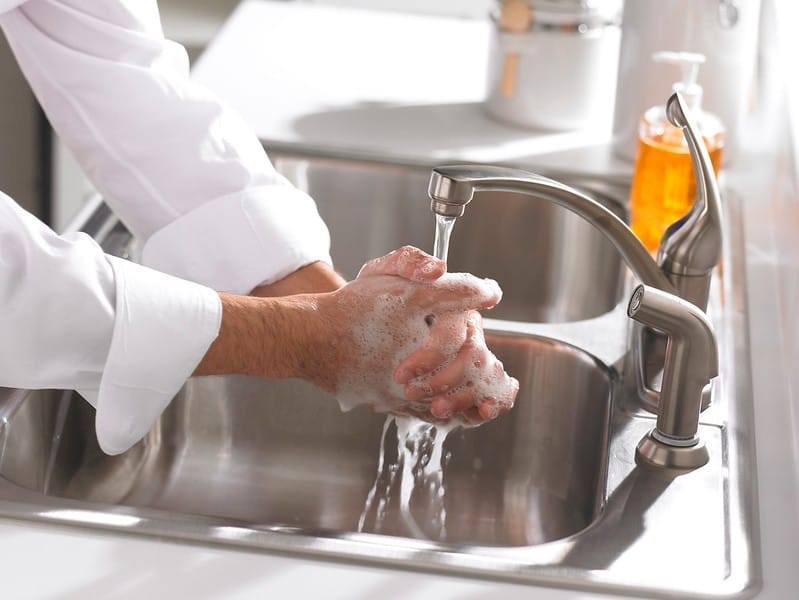
We talk a lot about proper handwashing procedures as the best foodborne illness prevention, but many times the areas surrounding handwashing sinks are overlooked by certified food protection managers. Let’s take a closer look at how CFPMs properly maintain the area around your handwashing sink locations.

Announcing A CFPMs Guide To Proper Handwashing Sink Locations
Image credit: USDA via Flickr

How To Set up a Proper Handwashing Sink Location For CFPMs

CFPMs already train their staff on how to properly use and stock a handwashing station, but, as a quick review, remember your handwashing station should be supplied with:

  • Hot Water
  • Soap
  • Paper Towels of Air Dryer
  • Fingernail Brush

This is usually one of the first things covered in any online or in-person CFPM training course. What may be misunderstood is what the area surrounding your handwashing station should look like. There can be foodborne illness risks involved if your sink location isn’t properly arranged or installed.

First CFPMs should make sure, your handwashing sinks should be easily and immediately accessible. They should be in the food preparation areas and not located behind closed doors. If you block your handwashing sink with storage racks or other equipment, it serves little use if your staff cannot wash their hands. A restroom sink should also not be considered a handwashing sink as door knobs and handles may be contaminated if touched after washing your hands.

Another thing to consider is the relative location to preparation surfaces or clean dish storage. If your handwashing sinks are in close proximity to clean spaces in your kitchen, make sure that there is no risk of water or soap splashing on sanitary items or surfaces. Ensuring there is a gap between these areas and your handwashing station will reduce the risk of contamination from dirty water and handwashing soap.

Finally, CFPMs should avoid storing any food product or clean utensils above and below handwashing station. Doing so may increase the risk of contamination from dirty hands or water used in the handwashing process.

Have you taken the time to evaluate your handwashing stations?

How Certified Food Managers Can Deal with Supply Shortages

How Certified Food Managers can Deal with Supply Shortages

During certified food manager training, we have time to discuss general food service issues beyond food safety, and we’re hearing a lot of students vent their frustrations with supply chain issues. It seems that many suppliers are having a hard time getting certain ingredients, cleaning supplies and other essentials to restaurants and other food service businesses that need them. What should certified food managers do in the wake of our recent supply shortages?

How Certified Food Managers can Deal with Supply Shortages
Image credit: pxhere

Solutions for Supply Chain Shortages for Certified Food Managers

Supply shortages resulting in not receiving all the ingredients necessary in order to produce every item on your menu disappoints not only certified food managers, but your loyal customers who attempt to order a menu item only to be told that it is unavailable or will be altered in some way that doesn’t quite resemble their expectations. In order to prevent customer frustration, it might be wise to:

  • Inform guests of substituted or unavailable items when seated
  • Include a printed list of unavailable ingredients in menu
  • Design specials out of items in stock to create more choices
  • Reduce menu size to compensate for commonly out of stock ingredients

Most of our patrons have been to the grocery store and been unable to find certain food items they commonly use at home, so they’ll usually be pretty understanding if they are aware of the situation ahead of time. Frustrations will start to arise when they place their order only to find they have to make another selection. It even gets worse when they’ve already ordered and a server informs them their dish is unavailable after time has passed, so make sure all of your staff is up to date on shortages in the kitchen.

When it comes to cleaning supply shortages, it’s vital that certified food managers have everything you need in order to sanitize, stock handwashing stations and clean your facilities. While you may be able to 86 mozzarella sticks or braised sea bass, you cannot 86 hand soap or sanitizer solutions. If your supplier is unable to provide essential cleaning supplies, a certified food manager should do their due diligence by searching warehouse clubs, other restaurant suppliers or even grocery stores in order to ensure your facility can still produce food safely without risk of contamination from bacteria, viruses or raw protein products.

Have you been affected by recent supply shortages?