In Minnesota, the “Danger Zone” is the temperature range between 41°F and 135°F where bacteria grow most rapidly. To stay compliant with the Minnesota Food Code, Time/Temperature Control for Safety (TCS) foods must be kept outside this range—either held hot above 135°F or maintained cold at 41°F or below.
If you are managing a busy kitchen during a rush, it is easy to trust the thermometer on the outside of the walk-in cooler or assume the steam table is “hot enough.” However, after years of training food professionals across Minnesota, I’ve seen that relying on guesswork is the fastest way to land a correction order from the health department—or worse, cause a foodborne illness outbreak.
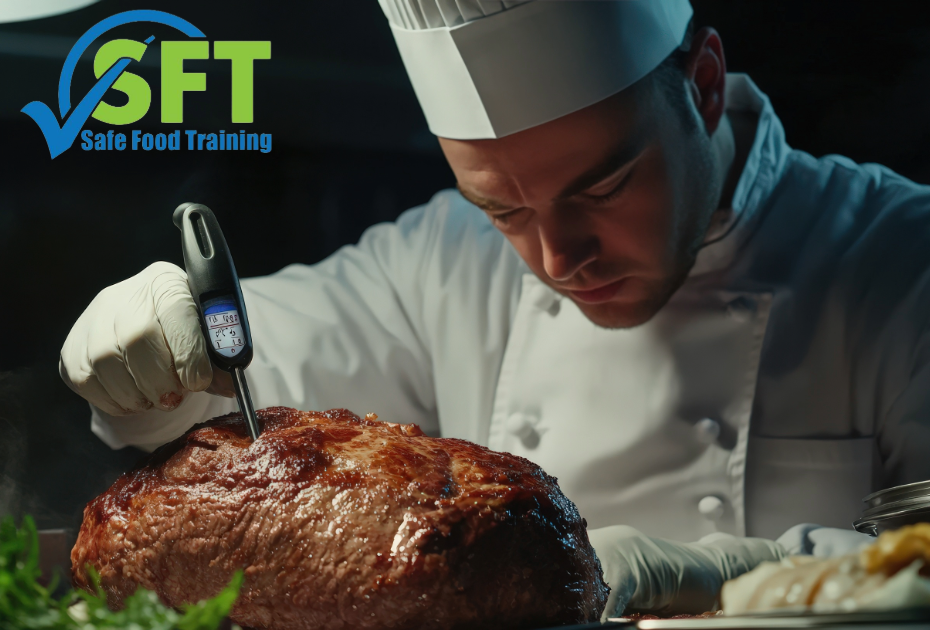
Here is your guide to mastering precision temperature control and keeping your kitchen safe.
Why Minutes Matter in the Danger Zone
Bacteria need little time to become dangerous. In the Danger Zone (41°F – 135°F), bacteria can double in number every 20 minutes. This means a pan of soup left on a prep table for just a couple of hours can turn from safe to hazardous before you even notice.
In a professional kitchen, we aren’t just concerned with “spoiled” food; we are concerned with pathogens such as Salmonella and E. coli that don’t change the appearance, smell, or taste of the food. The only way to prevent this is to control how long food spends in this temperature range.
The 3 Critical Temperature Rules for MN Kitchens
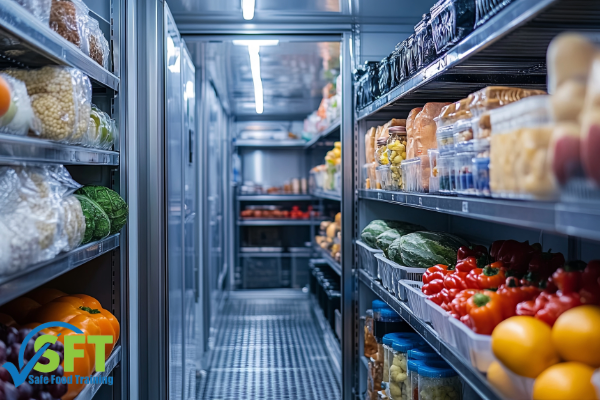
To keep your food safe and your inspection report clean, your staff needs to memorize these three critical thresholds:
1. Cold Holding: 41°F or Below
- The Rule: Cold foods (like cut melons, dairy, raw meats, and cut leafy greens) must be kept at an internal temperature of 41°F or lower.
- Common Mistake: Overfilling the prep table. If you stack pans too high, the food on top isn’t getting the cold air it needs.
- Jeff’s Pro Tip: Don’t rely on the built-in thermometer in your cooler. Place a separate thermometer in the warmest part of the unit (usually near the door) to get the real story.
2. Hot Holding: 135°F or Above
- The Rule: Hot foods (such as soups, rice, and cooked meats) must be maintained at 135°F or higher.
- Common Mistake: Reheating food in a steam table. Steam tables maintain temperature; they don’t bring food through the danger zone quickly enough.
- Jeff’s Pro Tip: Always reheat food to 165°F (for 15 seconds) first, then transfer it to the hot-holding unit.
-
3. Cooling: The Two-Stage Process

What procedures do you use for cooling? Cooling is where most kitchens get into trouble. You cannot just place a 5-gallon pot of hot chili in the walk-in; it will remain in the Danger Zone for hours and raise the temperature of everything else in the fridge. You must follow the Two-Stage Cooling Process:
Stage
Temperature Drop
Time Limit
Stage 1
135°F down to 70°F
Within 2 Hours
Stage 2
70°F down to 41°F
Within the next 4 Hours
Total
135°F to 41°F
6 Hours Max
Why 70°F? Bacteria grows even faster between 125°F and 70°F. If you don’t reach 70°F within the first two hours, you must reheat it to 165°F and start over—or discard it.

How to Speed Up Cooling
To stay compliant, I recommend using one of these three methods:
- Ice Baths: Place the food container in a larger prep sink filled with ice and water.
- Shallow Pans: Transfer hot liquids into shallow metal pans (2 inches deep or less) to increase surface area.
- Ice Wands: Use frozen plastic paddles to stir liquids and cool them from the inside out.
The “Ice Water” Calibration Test
A thermometer is only useful if it’s accurate. If you drop your thermometer, it can easily lose its calibration. We recommend testing your thermometers at least once a week:
- Fill a glass with crushed ice and add water (more ice than water).
- Stir the mixture and let it sit for 3 minutes.
- Insert the probe into the center of the glass (don’t touch the sides or bottom).
- The reading should be 32°F (0°C).
- If it reads differently, adjust the nut under the dial until it hits 32°F.
Frequently Asked Questions
Common questions we get about temperature control.
What is the temperature danger zone in Minnesota?
The specific danger zone defined by the Minnesota Food Code is 41°F to 135°F.
How long can food sit out before I have to discard it?
Generally, TCS food should not remain in the Danger Zone for over 4 hours. If you aren’t using a specific “Time as a Public Health Control” (TPHC) plan, you must discard it once it reaches the 4-hour mark.
Can I use a laser (infrared) thermometer for everything?
No. Laser thermometers only measure surface temperature. To determine whether a chicken breast or a pot of soup is safe, use a probe thermometer to check the internal temperature.
Get Certified with Safe Food Training
Understanding these rules is just the beginning. To truly protect your business and your customers, you need a deep dive into the Minnesota Food Code. We offer two ways to get your Certified Food Protection Manager (CFPM) license:
|
Feature |
In-Person Training |
Online Training |
|
Best For |
“Get it done in one shot.” |
“Learn on your timeline.” |
|
Pass Rate |
Highest pass rates because of live Q&A. |
High, but requires self-discipline. |
|
Environment |
Distraction-free with immediate feedback. |
Flexible; learn from home or office. |
|
Jeff Webster |
Direct interaction with Jeff. |
Self-paced modules. |
Ready to secure your spot?
Register for an In-Person or Online Course Today at SafeFoodTraining.com