The Best Quick-Serve Product Tips For Certified Food Managers

The Best Quick-Serve Product Tips For Certified Food Managers

During summer, more people tend to grab food while on the go. This is especially true when they’re hitting the golf course, taking their families to parks or the swimming pool. Many certified food managers create quick-serve products such as sandwiches and other ready to eat food available to their customers for this exact situation.
Certified Food Manager’s Role in Keeping Prepackaged Foods Safe

Your food safety training course normally covers this topic. But, it’s essential for certified food managers to review it before any changes in operation. This is particularly relevant since numerous outlets only sell prepackaged, ready-to-eat items seasonally. We think you should take into consideration the following four points concerning this style of service:

  • Appropriate sealing is necessary for self-serve items.
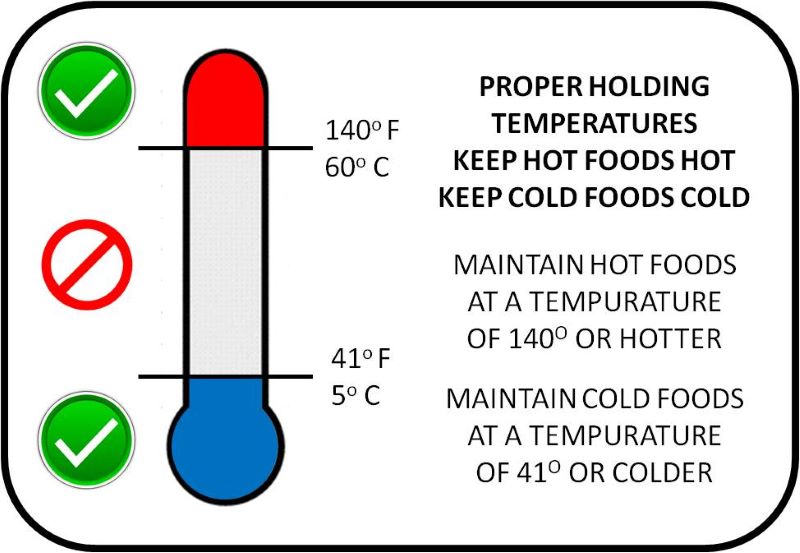
  • Always display hot & cold foods at safe temperatures
  • Displayed food must be fresh
  • Store unwrapped fruits and vegitables in a display case

The first item on our grab-and-go list may seem like common sense to most certified food managers. However, we have seen baskets of freshly made, unsealed cookies sitting on countertops for customers to grab. We have also seen unwrapped deli-style sandwiches in self-serve refrigerators. If you offer self-service for your ready-to-eat product, you must wrap it to prevent a customer who may not want to buy the item from touching it with bare hands. Products not for self-service could be left unwrapped in a display case if an employee will package them when sold. All food displayed outside a case or refrigerator should be covered to prevent contamination.

Hot and cold ready-to-eat items packaged for quick sale must follow all Minnesota Food Code temperature rules when displayed. Ensure that your employees know which products to keep hot and cold and which ones are stable at room temperature and do not require refrigeration.

Never have items in your case that are for display only. All items should be fresh and available for service to avoid accidentally serving a guest expired product.

A Case For Certain Grab and Go Items

Our final suggestion is that certified food protection managers are not necessarily required under current food handling regulations. However, it is prudent to store grab-and-go items, such as unwrapped fruits and vegetables, in a display case. Certain fruits, such as bananas, attract fruit flies and other insects. Keeping them in your display case rather than on a counter top can reduce the risk of attracting pests.

Certified food managers should consider both pros and cons when choosing between self-service and attended service for selling quick-serve products. We want to know which style your establishment uses and why it works to help you with this decision.

The Truth About NRFSP Food Manager Certification

Advantages of NRFSP Food Manager Certification

Minnesota food manager certification is required by many restaurants and institutional kitchens. However, there is often some confusion as to the differences between NRFSP certification, ServSafe training, and the standard food workers permit classes. At Safe Food Training, we focus on offering the National Registry of Food Safety Professionals -NRFSP food manager certification.

Advantages of NRFSP Food Manager Certification

While we are able to offer other certification classes upon request, we feel that there are certain advantages to the current NRFSP program of study:

  • National recognition
  • More in-depth education concerning contaminates
  • Most courses include allergen awareness.
The Truth About NRFSP Food Manager Certification?

The certification classes that we offer are endorsed by NRFSP and recognized by the MN Department of Health. This dual recognition means the training that meets Minnesota standards will still have value if you move to a different jurisdiction. There may be some states that require you to retake the certification test locally. Even so, many employers will see your training as an attractive asset on your resume.

The next item on our list can be a valuable addition to your knowledge of food-borne illnesses. The training for basic food workers teaches that bacteria causes food-borne illness. During food manager certification training, you’ll learn about different types of contaminants and their origins. This information will help you more fully understand why bacteria spreads in certain food products. It will also give you a better insight into the consequences of improperly prepared food.

With a growing concern for food allergies, preventing cross-contamination is also crucial for the safety of sensitive guests. The current training sessions will cover food allergens and biological toxins that exist in certain foods such as shellfish. This heightened awareness of how to handle common allergy risks will help you keep guests from having a reaction to these food groups.

Two Certification Options Available Through Safe Food Training

In-person NRFSP Food Manager Certification Class

There are two ways that you can gain your certification from Safe Food Training. It’s possible to take an instructor lead class. You’ll have access to an educated and engaging teacher who can answer any questions during the training. Alternatively, you can take online food safety training if you prefer independent study.

With multiple endorsements available, we’d like to know your thoughts as to which certification classes have benefited you the most. Are there any training sessions that you have found to be more informative that others? We’d love to hear your stories.

Simple But Powerful Dishwashing Essentials Training For CFPMs

Simple But Powerful Dishwashing Essentials Training for Certified Food Protection Managers

Your dishwashers are an important member of your team. Providing them with adequate food safe training can help prevent unintentional food safety hazards from arising. This week, we’ll take a look at three items that we feel all certified food protection managers (CFPMs) should include in any dishwashing training program.

Simple But Powerful Dishwashing Essentials Training for Certified Food Protection Managers
Image credit: Dollarphotoclub_12947910

CFPM Training Essentials for Dishwashing

While your dishwashers may have already passed their food safety course online. That may not fully prepare them to be sure that they are using your specific machine properly. We have three things that you should focus on whenever training a new dishwasher.

  • Keep clean dishes separate from dirty ones.
  • Dishes must air dry
  • Chemicals in the machine must be checked often

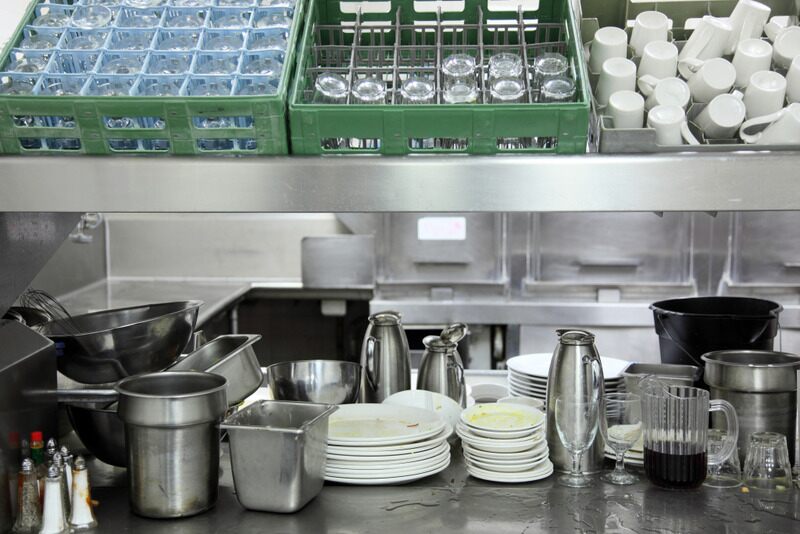
The first item may seem like common sense. However, the line between staging areas for clean dishes and where dirty are dropped off often blurs in a busy facility. As a certified food protection manager, you can train your staff to appropriately sort and stack dirty dishes when leaving them for your dishwasher. It can help eliminate this issue and make life easier on one of the hardest working members of your team. Also, having a completely separate table or cart for your clean dishes can prevent any confusion.

Towel drying your dishes after they have come out of the machine is a thing of the past. Dishes should air dry, as to prevent any possible transfer of contaminants from towels to clean utensils.

Our third item is very important. Make sure that your dishwashers know how to check the chemical levels of your machine and replace them when necessary. It is a good idea to have sanitizing test strips available. You can use them to make sure that your machine has the appropriate amount of sanitizer running through the system.If there is a problem with your machine using too much or too little solution, contact your maintenance provider to adjust it as soon as possible.

In a Pinch Use the Triple-Sink Dishwashing Method

If your machine becomes inoperable, you can still use the triple-sink dishwashing method. It is acceptable. For a quick review on what that entails, it may be beneficial to review the Minnesota Food Code’s official triple-sink dishwashing protocol.

The dishwasher in their favorite restaurant has been the starting point for many certified food protection managers. Do you remember those intense moments of a Friday night fondly, or have you moved on without looking back?

How MN Certified Food Managers Prepare For The Employee Turnover Challenge

How food managers prepare for employee turnover-now hiring sign

Employee turnover is inevitable in any business, but it is especially high in the hospitality, restaurant, and industrial food processing industries. How should the MN certified food managers prepare for employee turnover scenarios such as, surprise labor shortages, employees moving away, or vacancies due to promotions or transfers?

How MN Certified Food Managers Prepare For The Employee Turnover Challenge

Image credit: jackf via 123rf

Tips for Certified Food Managers Dealing with Employee Turnover

A business should not turn away resumes when they are not currently hiring. Current human resource practices tend to still collect unsolicited resumes from potential job seekers. Applicants can submit their resumes at any time, regardless of whether your business is currently hiring or not. This way, you’ll have a roster of potential candidates in case any unexpected vacancies arise. Rather, the MN certified food manager should look at an unsolicited resume as an opportunity to build a roster of candidates that would be qualified for future employment.

Recognizing Potential Employees

Not all submitted resumes need to be saved. A quick review can determine which ones to keep and which to discard.

It is not uncommon for a manager to contact an applicant, even if they are not hiring. Certified food managers should be on the look-out for stellar staff even when their employment roster is already full. If an applicant submits a resume with extensive industry experience, certified food protection manager, and unique skills, save and highlight their resume as having potential.

Even if there are no available positions, the company may offer an interview to a highly qualified candidate. During the interview, they can be informed that no job openings are available at the present, but the company is interested in considering them in the future. If the candidate is exceptionally good, the company may even create a position for them.

As a certified food manager keeping an open outlook on your staffing, even when there are no current needs, is a good preventative measure against labor shortages and will streamline the hiring process should you need to fill any vacant positions.