Important Differences Between A Certified Food Protection Manager And A Person In Charge

Differences Between Certified Food Protection Manager and Person In Charge

Certified food protection managers play a very important role in keeping the Minnesota dining community safe from foodborne illness through food safety training, monitoring cooking procedures and ensuring the Minnesota food code is properly followed. Because this is such an important role, all establishments serving food are required to employ a certified food protection manager. The food code also outlines the rules for a designated person in charge (PIC). We’re sometimes asked if these two roles are the same, or if they are two completely separate management figures.
Important Differences Between A Certified Food Protection Manager And A Person In Charge
Image credit: AllaSerebrina via Depositphotos

The Differences between a Certified Food Protection Manager and a Designated Person in Charge

In order to understand the difference between a certified food protection manager and a designated PIC, we should take a close look at the two food code rules that address these positions. While every establishment is required to employ at least one CFPM, a PIC is required to be responsible for safe food handling practices “during all hours of operation.” If your establishment only has one certified food protection manager on staff, they would have to be on the clock every single second your business is open if they were also the designated person in charge. If your establishment is open more than 40 hours a week, you may want to make sure that there is plenty of hot coffee on hand for your CFPM if they are on the job for hundreds of hours a week.

Fortunately, your PIC doesn’t always have to be a certified food protection manager. While you should designate your CFPM as a person in charge when they’re on the clock, you should identify and schedule a qualified staff member as the PIC for shifts when the certified food protection manager is not in the building. Some likely candidates include:

  • Sous Chef
  • Lead Cook
  • Front-of-the-House Supervisor
  • Assistant Kitchen Manager

Your designated PIC doesn’t necessarily have to be a management figure, but they should be knowledgeable, willing to be responsible for monitoring food safety standards and be available should the local health inspector arrive for an inspection.

How do you designate your PIC?

How To Tips For Certified Food Protection Managers Recalling Staff

Certified Food Protection Managers recalling Staff

During the course of the past year, many restaurants have had to lay off or furlough employees and many certified food protection managers have found themselves with a greatly reduced staff. Now that food businesses are increasing their capacity and guests have a desire to return to inside dining, many restaurants and food retail businesses find the need to increase staffing without hurting their bottom line. This week we’ll offer a few insights on how Certified Food Protection Managers can effectively recall furloughed staff while keeping an eye on your budget.

Certified Food Protection Manager Recalling Furloughed Staff
Image credit: Dmytro Sidelnikov via 123rf

A Strategy for Certified Food Protection Managers Recalling Staff and Balancing Labor Costs

We know that nearly all certified food protection managers have had growing concern about their staff’s financial wellbeing during the pandemic, but with restaurant closures and limited capacity there hasn’t been much businesses can do to provide hours for every staff member. Many food service businesses have been able to rely on forgivable PPP loans to fund their payroll even if employees are unable to work due to regulations or a reduction in business. If you’re still struggling to keep your staff employed, you may want to talk to your banker about the possibility of obtaining a PPP loan to pay your staff and keep your business afloat until guests once again begin flocking to your establishment.

If you are in the process of bringing in more staff members, but need to keep an eye on your bottom line, you may want to consider:

  • Prioritizing furloughed employees
  • Having an “on-call” list
  • Coordinating with other similar establishments to keep industry professionals employed

When composing a scheduled, certified food protection managers should prioritize staff they’ve been forced to furlough rather than hire new employees. Not only will this show your loyalty to your former staff, you’ll also be bringing back a trained employee that can begin work right away. You can also reach out to staff members who were once full-time employees and ask them to consider being on-call. An on-call employee may not receive guaranteed hours, but will often be willing to work on short notice.

Once you begin reaching out to former employees to re-staff your establishment, you may find that they’ve moved on to other industries or have found employment in a different food service business. We’ve heard stories that several restaurants have coordinated sharing part-time employees that desire to remain in the food-service sector even if fulltime hours are currently unavailable.

What’s your strategy for recalling staff now that restrictions are starting to lighten?

Important Vaccination News For Certified Food Managers In Minnesota

Important Vaccination News For Certified Food Managers In Minnesota

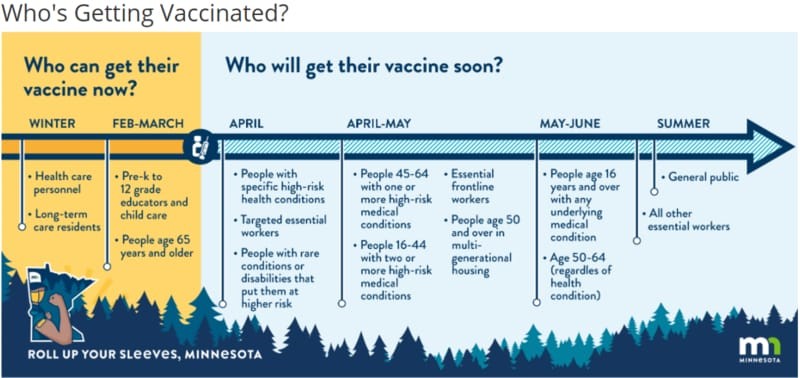
We’ve all seen the news reports showing the steady rollout of the COVID-19 vaccine among Minnesotan healthcare workers, seniors, susceptible groups and educators, but until recently, there’s been nothing more than speculation as to when certified food managers and other food industry employees will be eligible. In a recent announcement by Governor Tim Walz, a more detailed tiered approach to coronavirus vaccine distribution was explained and it provides specific vaccination news for certified food managers.

Important Vaccination News For Certified Food Managers In Minnesota
Image credit: mn.gov

New Vaccination News For Certified Food Managers On When Food Service Workers Can Be Vaccinated For COVID-19

Previous information stated that essential workers would be somewhere on the schedule before the general population, but certified food managers would have to make assumptions on when they and their staff would be eligible. On the current schedule, food service workers have been specifically placed into two targeted groups:

  • April: Food processing plant employees
  • April to May: Food production, food retail and food service
  • Summer: General population

While these targeted vaccination windows are speculative based on vaccine availability, a clearer picture exists as to when restaurant employees, food processors and others in the food and beverage industry will have an opportunity to receive the vaccine.

It’s also encouraging to see that Minnesota is targeting summer for open eligibility. Once we’ve reached a state of herd immunity our restaurants can return to one-hundred percent capacity, diners will be able to enjoy special occasions with large groups of friends and family and we can continue to grow our Minnesota food industry.

How do you feel about food service workers and certified food managers being allocated essential worker status when it comes to the COVID vaccine?

Overlooked Front of the House Food Safety Management Risks

Front of house manager speaking to staff about food safety management risks

Oftentimes the focus of food safety management risks are on the kitchen and food preparation procedures, but that doesn’t mean there aren’t foodborne illness risks elsewhere in your establishment. It’s important to realize that even when the food that comes out of your kitchen is safe to eat, front-of-the-house procedures can potentially compromise food safety in your establishment. Let’s take a look at the most common food safety risks in dining rooms.

Manager Talking To Front of the House Food Safety Management Risks
Image credit: Cathy Yeulet via 123rf

Dining Room Food Safety Management Risks

Servers, bartenders, hosts, hostesses and busboys must receive training to prevent foodborne illness on nearly the same scale as line cooks, prep cooks and dishwashers. They don’t actually prepare food, but there are several dining room food safety management risks that should have well-defined protection.

  • Handwashing
  • Table sanitation
  • Bar and service station storage
  • Restroom cleanliness

Handwashing is drilled into the minds of kitchen staff, and front-of-the-house staff should follow the same procedures. Hands should be properly washed after handling dirty dishes, touching order screens or pens when taking orders and following any situation that causes them to come in contact with potentially dirty surfaces.

All tables and the arms of chairs should be sanitized after each guest departs. Guests could touch surfaces with unwashed hands, food and beverages can be spilled and contaminants from breathing, sneezing or coughing could be present. Don’t overlook the underside of the table. Dirty hands often touch the underside of table surfaces, so be sure to sanitize regularly.

Bars and service stations present several food safety management risks. These areas often have service utensils and ready-to-eat foods such as garnishes for drinks and complimentary bread baskets. Remember that servers and bartenders must not handle any ready-to-eat-foods with bare hands. Foodservice gloves or clean utensils are a must. It’s also important to remind staff not to handle clean forks, spoons, knives and other utensils if they have unwashed hands. Even if they only touch the handles, they may spread contaminates after touching dirty surfaces.

Finally, guest bathrooms should be checked for cleanliness often. A dirty restroom can cause guests to bring contaminants back into the dining room. Make sure there are ample soap, paper towels and a friendly handwashing procedure sign.

Are there any other dining room food safety management risks you often see overlooked?