Food Safety Certification Exams For Non-English Speakers

Food Safety Certification Exam

Minnesota has a rather diverse food community, and many food service workers and certified food protection managers have learned English as their second language. If you’ve had the experience of taking a test or reviewing course materials in a language you’re not fluent in, you’ll know how frustrating it can be to fear misunderstanding test questions. The good news is, that at Safe Food Training, we can help you with food safety certification exams in a few different languages.

Food Safety Certification Exam
Image credit: maridav

Food Safety Certification Exam Language Options Beyond English

If English isn’t your first language, you might benefit from an online food safety course. The online course can be taken at a slower pace and give you a little more time to understand the material. We currently have online food safety courses available in English and Spanish. For the many fluent Spanish speakers in the Minnesota food community, this offers a the advantage of taking the course in their native language rather than one they may not be 100-percent fluent in.

What about other languages? While courses are currently limited to English and Spanish, we do have food safety certification exams available for those whose native tongue is something other than English or Spanish. We offer food safety certification testing in:

  • English
  • Spanish
  • Chinese
  • Korean

While the courses themselves may not be available in Chinese and Korean, you have the option to take the food safety certification tests in your native tongue should you speak one of these languages more fluently than English.

Could you or your staff benefit from testing or training in languages other than English? Let us know how we can help.

Food Safety Standards for Automated Restaurants

Food Safety Standards for Automated Restaurants

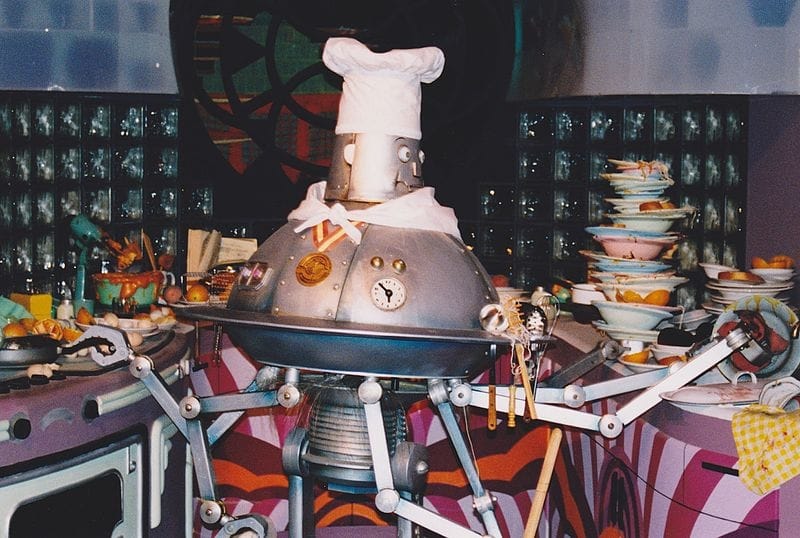
It may sound like we’re pulling this story out of an episode of the Jetson’s, but the future is here and automated mobile restaurants are starting becoming a reality. That got us to thinking, in the absence of employees and ServSafe food managers that have completed food safety courses, how exactly will we know if the food safety standards are being maintained in future automated restaurants?
Food Safety Standards  for Automated Restaurants
Image credit: Corneillia5 via Wikimedia

Food Safety Standards and the Future of Restaurant Automation

While current examples of automated restaurants appear to be types of juice and smoothie bars, it’s not too hard to fathom that technology will eventually provide opportunities for automation to serve more complicated dishes that require storing and cooking raw foods.

While the Minnesota food code doesn’t currently contain a section regarding robot chefs, we’d have to speculate that much more than the cooking process would have to be automated. Sanitation procedures would have to be closely followed, and we feel those procedures should at least be moderated and supervised by a living, breathing human being. Here are just some procedures we feel would have to be monitored by a ServSafe food manager:

  • Hot and Cold Holding Temperatures
  • Sanitation of Cooking Utensils
  • Temperatures of Finished Product
  • Quality of Raw Ingredients

As we all know, machinery can malfunction and even our computers freeze up from time to time. Without human observation, who’s to say that a robotic restaurant hasn’t had some sort of memory failure? If storage temperatures drop for hot-held foods or refrigeration fails, will an automated system have fail-proof safeguards for preventing customers from receiving tainted product?

Another major issue we see with automation is the quality of product. Not all products store for the same duration of time, and there can be product that may be spoiled or damaged that an organic chef can spot that robotic system won’t be programmed to assess.

While the Foodarackacycle may be several decades off, the foodservice industry and ServSafe food managers will have to adjust as automation becomes more and more prevalent.

How do you feel about the concept of maintaining food safety standards for automated restaurants without on-site human monitoring?

New Food Safety Training for Reusable Takeout Containers

Food Safety Training for Reusable Takeout Containers

Over the past few months, we’ve been covering upcoming changes to the Minnesota Food Code, and in the course of our research, we’ve come across a proposed rule that allows food outlets to utilize reusable takeout containers for food and beverages. Since these containers are not always stored on site, adapting to this new opportunity will take a quick food safety training for reusable takeout containers. A simple procedure adjustment that will assure your product can be delivered in reusable containers with minimized risk of spreading food-borne illness.

Food Safety Training for Reusable Takeout Containers
Image credit: webstaurantstore.com

A New Guide to Food Safety Training for Reusable Takeout Containers

A reusable take-home container prevents wasted paper products, and potentially reduces supply costs for food service providers. If you plan on supplying reusable takeout containers to your customers, you should follow these guidelines in the food code.

  • Use  only containers designed and constructed for reuse
  • Takeout containers must be initially provided by the food establishment
  • You must always clean, sanitize and inspect for food particles before refilling

Your local food service provider or restaurant supply store should have plenty of options for refillable containers that meet the health department’s criteria. It’s important to note that guests cannot bring a container from home and ask to have it filled with food. These containers must initially come from your facility. This provides two opportunities for business owners. First, it allows you to ensure that the container is safe for food. If you know where the container comes from it will be greatly reduce your risk. Secondly, marketing opportunities abound if you supply custom containers with your business’ logo and contact information. Having a refillable container that reminds customers of your establishment generates more revenue from return visits.

Always clean, sanitize and inspect  returned containers at your facility. Also note, a guest cannot fill a reusable food container. The code requires an employee of the establishment fill the take-home food receptacle.  Guests may fill beverage containers, however, if there is a contamination-free transfer process.

Considering the potential to reduce waste and packaging cost along with the branding/customer loyalty possibilities; will you provide your team with food safety training for reusable takeout containers and try this new takeout option once the rules take effect?

Prepackaged Food Safety Training

Prepackaged Food Safety Training

Most restaurants make their menu items in their own kitchens, but some chain restaurants with a multitude of locations and other facilities may not have the luxury of staff or kitchen space so they bring in certain prepackaged items to fill out their menus. In these cases, the distributor is the one who prepares and packages these meals, salad mixes or other ready-to-eat foods, so how much responsibility do you have to take to ensure prepackaged items are safe? We’ll take a look at prepackaged food safety training.

Prepackaged Food Safety Training
CC0 – Pubic domain license- Martin Vorell

Prepackaged Food Safety Training and Food-Borne Illness Risks

McDonalds recently fell victim to a food-poisoning outbreak in 15 states that was traced back to a salad mix that was prepared by Fresh Express and shipped to a large number of McDonalds restaurants. Just like July’s cases involving Del Monte vegetable trays, this salad mix was found to be contaminated with a parasite called Cylcosporiasis. In both of these cases, the parasites came from an outside source and not the restaurants, grocery stores or other outlets that sold them.

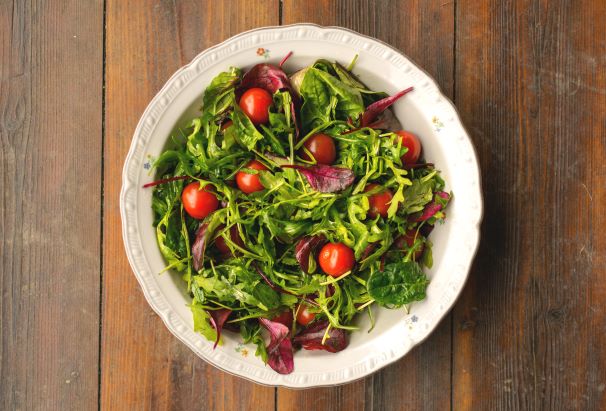
As food service managers, we cannot simply assume that these cases won’t happen to us, and if they do we need to have a better response than; “I didn’t make it, not my problem.” We need to use our food safety training in all instances, whether we’ve prepared the food ourselves or brought it in from an outside source. In the case of salad mixes and prepackaged vegetables, you’re still safe to wash and rinse these types of produce even if the sealed plastic bag declares that its contents are “ready to eat.” This extra precaution may save big headaches in the long run should the product be contaminated.

You should also take steps to prevent sickening your staff from non-produce items. Sometimes, undeclared allergens appear in dressings, snack bars and many other types of pre-packaged foods. We recommend vigilance in checking the FDA’s recall alert page. Here you can find a searchable list of all recent recalls due to contaminates or allergens.

Do you serve prepackaged, ready-to-eat foods in your facility? If so, do you provide prepackaged food training to your staff to ensure it is safe for your customers?