Food Safety Classes and Food Safety Month

Food Safety Classes and Food Safety Month

September is National Food Safety Month, and this makes for the perfect time to brush up on what you have learned in your food safety classes and go out of your way to make sure your facility is in top shape. It can also provide an opportunity to enlighten your guests to the steps you take to keep pathogens from reaching their plate.

Food Safety Classes and Food Safety Month

Promoting Food Safety Month During September

While we should remain vigilant throughout the year, setting aside one month to assess and address food safety in your facility is a great idea. This could be the perfect time to perform a mock health inspection so you can see if there are any gaps in your staff knowledge and performance. If you find any issues, conducting a few group food safety classes with your employees will get everyone on the same page and increase food safety awareness.

This also provides you with an opportunity to clue your guests in on some food safety procedures. A detailed handwashing sign in your public washroom, a card on the table informing them of your table sanitation process or even an extra sheet in your menu with a daily food safety tip they can apply at home in honor of food safety month can impress upon your clientele how much you value their health.

You should also take the time to identify key members of your team that are ready for the responsibilities of a certified food manager. It never hurts to have multiple employees certified in the event of the absence of your current certified manager.

ServSafe has provided tools and worksheets for you and your staff to review over the coming month to improve your food handling practices. Do you participate in Food Safety Month?

Online Food Safety Course to Beating the Summer Heat

Food Safety Course to Beating the Summer Heat

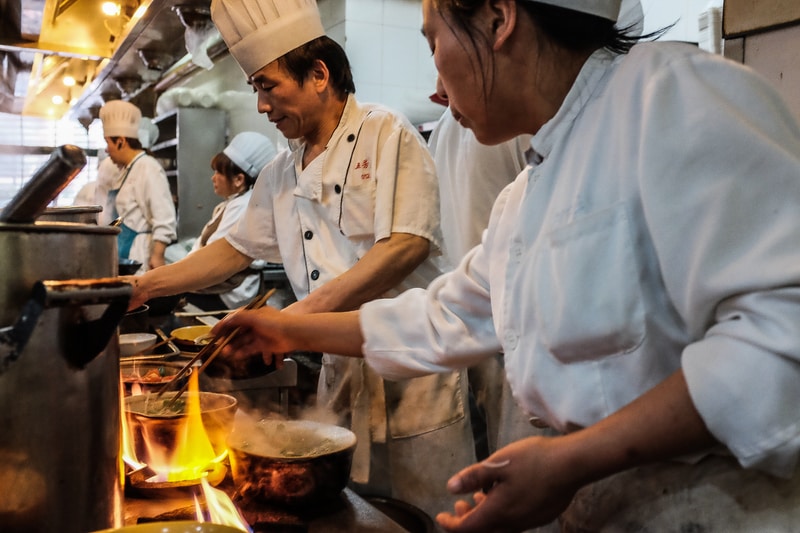
The summer months can be brutal in the food production industry with hot, muggy air combining with the high temperatures of ovens and other cooking implements. Your kitchen staff will do anything necessary to maintain a remotely comfortable work environment, but there are a few things you have to look out for to make sure that your cooling techniques are not causing a food safety hazard. This week, we’d like to provide a brief online food safety course to keeping cool and keeping your food safe.
Food Safety Course to Beating the Summer Heat
Image Credit: PXhere

Food Safety Course on Cooling Guide for the Hot Summer Months

When temperatures rise, food service worked head immediately to storage and dig out whatever fans they can get their hands on and begin to strategically place them around the kitchen for maximum effect. While fans will circulate the air in your facility, they also circulate dust and other contaminates in the direction of your food. If you utilize fans to keep the air moving, take extra precautions that they are kept below the level where food is stored or prepared. Pointing a fan down onto your production line may pull in dust from the tops of equipment, areas that have not been cleaned properly and other locations where dust tends to build.

Propping open doors to the outside and using a fan to blow air in may also cause a food-borne illness hazard. Opening doors leads to the potential for flies and other contaminate-spreading insects to enter your facility, especially if the open door leads to an area where garbage is stored. It may be wise to look into cooling techniques that do not require an open exterior door

Cleaning your ventilation system regularly will help suck the hot air coming from your equipment out of your facility. Airborne grease and dust caked in ventilation filters greatly reduce efficiency and increase the temperature in your kitchen.

Do you have any sure-fire ways to keep your kitchen cool and prevent fans and ventilation from circulating contaminates around your facility?

Food Safety Certified Managers and Hot Air Hand Dryers

Food Safety Certified Managers & Hot Air Hand Dryers

Once touted as a convenient and sanitary aid in handwashing, touchless hot air hand dryers are in a multitude of public restrooms. However, during a recent study performed at the University of Connecticut, scientists discovered that hot-air hand dryers do more than remove water from your skin, they blast bacteria onto your hands and circulate fecal matter throughout the restroom.

Food Safety Certified Managers & Hot Air Hand Dryers
Image Credit: CC0 Creative Commons

Food Safety Certified Managers and Bacteria from Hand Dryers

Minnesota Food Code rules do allow for your facility to employ the use of heated hand dryers as long as they are not “the only device provided at the sink,” but given this current study, we think discussing the use of these devices in your kitchen or public restrooms would be prudent.

Touchless hand dryers provide a convenience for guests and save money on supplies by not wasting disposable paper towels, but is equipping restrooms with devices that actually cover users with invisible particles of fecal matter in the best interest of food safety?

To be on the safe side, we suggest you consider automated paper towel dispensers as a replacement for forced-air hand dryers. These provide the opportunity to procure a paper towel with a wave of the hand and avoid contact with a potentially contaminated surface.

Now may also be a good time to make sure that all of your restrooms are equipped with a current handwashing fact sheet.

It will be interesting to see how health departments and the food-service industry will react to this information in the future. Considering the results of this study, will you still be utilizing hot-air hand dryers in your restrooms?

Food Safety Certified Procedures for Produce

Food Safety Certified Procedures for Produce

In ServSafe training, food safety certified professionals learn that washing raw fruits and vegetables before serving helps prevent the spread of food borne-illness. We all know that plants grow in the dirt, and dirt contains bacteria that can be harmful if consumed. Some farms utilize fertilizers and pesticides to yield a larger crop, and residues of these compounds may still exist on the surface of fruits and vegetables. We’d like to suggest that restaurants develop standards that require all produce to be washed before any use.

Food Safety Certified Procedures for Produce
Copyright: denisfilm / 123RF Stock Photo

Washing of Produce and Food Safety Certified Standards

Even if you plan to cook your fruits or vegetables, there may be a chance that pathogens on their surface can spread. During preparation, they will inevitably come into contact with knives, prep surfaces and hands that will then go on to touch other items in your kitchen.

Produce ingredients that often go unwashed include fruits and vegetables with peels or rinds. Some examples of these include:

  • Carrots, beets and other root vegetables
  • Avocados
  • Melons
  • Oranges, pineapples and other tree fruits
  • Thick-skinned squash such as pumpkins and butternut squash

During classes prepared for food safety certified managers, we’ve often been asked why we feel it’s necessary to wash these items before preparation; the customer will never eat the peels. Your knives and peelers can come into contact with contaminates on the surface of these ingredients and then become infected. The grooved surface of a cantaloupe, for example, contains many nooks and crevices for bacteria and remnants of fertilizer to reside. As you slice through the surface, your knife can pick up these microscopic particles and spread them to the meat of the fruit as your knife passes through. The same theory can be applied to a peeler that picks up contaminates while root vegetables are being prepared.

Washing all produce is just one small way to prevent food-borne illness, and should never be overlooked. Can you think of any small, but necessary, procedures you feel gets forgotten far too often.