Simple But Powerful Dishwashing Essentials Training For CFPMs

Simple But Powerful Dishwashing Essentials Training for Certified Food Protection Managers

Your dishwashers are an important member of your team. Providing them with adequate food safe training can help prevent unintentional food safety hazards from arising. This week, we’ll take a look at three items that we feel all certified food protection managers (CFPMs) should include in any dishwashing training program.

Simple But Powerful Dishwashing Essentials Training for Certified Food Protection Managers
Image credit: Dollarphotoclub_12947910

CFPM Training Essentials for Dishwashing

While your dishwashers may have already passed their food safety course online. That may not fully prepare them to be sure that they are using your specific machine properly. We have three things that you should focus on whenever training a new dishwasher.

  • Keep clean dishes separate from dirty ones.
  • Dishes must air dry
  • Chemicals in the machine must be checked often

The first item may seem like common sense. However, the line between staging areas for clean dishes and where dirty are dropped off often blurs in a busy facility. As a certified food protection manager, you can train your staff to appropriately sort and stack dirty dishes when leaving them for your dishwasher. It can help eliminate this issue and make life easier on one of the hardest working members of your team. Also, having a completely separate table or cart for your clean dishes can prevent any confusion.

Towel drying your dishes after they have come out of the machine is a thing of the past. Dishes should air dry, as to prevent any possible transfer of contaminants from towels to clean utensils.

Our third item is very important. Make sure that your dishwashers know how to check the chemical levels of your machine and replace them when necessary. It is a good idea to have sanitizing test strips available. You can use them to make sure that your machine has the appropriate amount of sanitizer running through the system.If there is a problem with your machine using too much or too little solution, contact your maintenance provider to adjust it as soon as possible.

In a Pinch Use the Triple-Sink Dishwashing Method

If your machine becomes inoperable, you can still use the triple-sink dishwashing method. It is acceptable. For a quick review on what that entails, it may be beneficial to review the Minnesota Food Code’s official triple-sink dishwashing protocol.

The dishwasher in their favorite restaurant has been the starting point for many certified food protection managers. Do you remember those intense moments of a Friday night fondly, or have you moved on without looking back?

The Truth About Temperature Control For Food Safety Certification MN

Temperature Control For Food Safety Certification Boiling Water Method

Temperature Control and Food Safety Certification MN

In order to obtain Food Safety Certification in MN, one key is to understand how to control the temperature of cooked foods, and the proper cooking temperatures for raw foods. Grasping these concepts is not only necessary in order to gain your food manager certification, but also to prevent foodborne illness and ensure quality.

Proper Temperature Checking Technique

Simply inserting your probe thermometer into a cooked meat item will not always give you an accurate temperature result. There are certain things that you should be aware of to ensure proper control when checking the temperature of prepared food items:

  • To check the temperature of beef, lamb, and pork roasts, you need to check the thickest portion.
  • Avoid contact between your probe thermometer and any bones
  • To check the chicken, probe on the thickest part of the breast.
  • It is recommended that thin food be checked with a thermocouple-style thermometer
  • Stir hot and cold soups, sauces, and other liquids before checking them.

Food Safety Certification Tips For Calibrating Your Probe Thermometer

No matter how often you check the temperature of your temperature-controlled items, you will not receive accurate results if you are using a probe thermometer that is not properly calibrated. Health inspectors will calibrate their thermometers before every inspection. Likewise, food safety certification-aware kitchen staff should also recalibrate often to assure accurate temperature control. Thermometers should be calibrated before their first use after they have been dropped, or after they have gone from one temperature extreme to the other. There are two methods to properly calibrate a probe thermometer.

Boiling method

  • Bring water to a boil
  • Once your water has reached a boil, insert your thermometer
  • Adjust your probe to read 32 degrees Fahrenheit.
  • Ice-water method
  • Fill a container with crushed ice and then add water
  • Wait five minutes in order for your ice water’s temperature to stabilize
  • Insert your thermometer into the center of your ice water, making sure the probe does not touch the side or bottom of your container
  • Adjust the probe to read 32 degrees Fahrenheit.

Ice Water Method
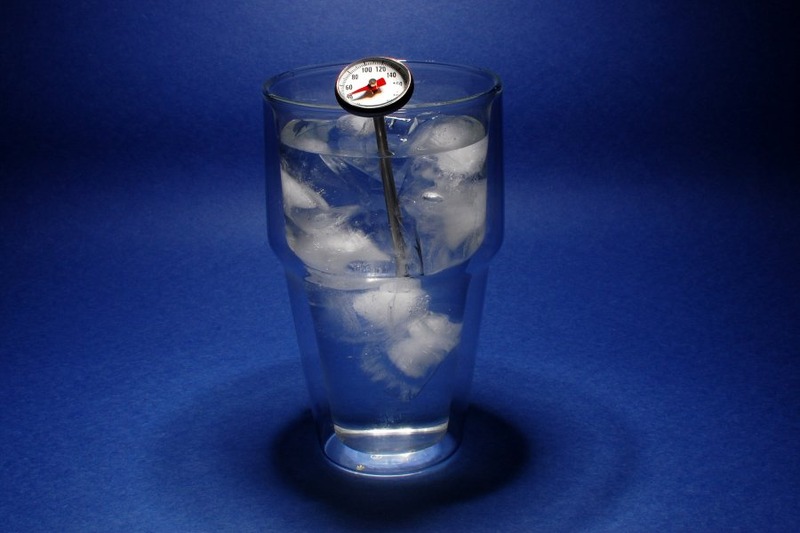
Temperature Control For Food Safety Certification Ice Water Method
Image credit: Flickr
  • Ice-water method
  • Fill a container with crushed ice and then add water
  • Wait five minutes in order for your ice water’s temperature to stabilize
  • Insert your thermometer into the center of your ice water, making sure the probe does not touch the side or bottom of your container
  • Adjust the probe to read 32 degrees Fahrenheit

    The ice-water method is the safest and most accurate method.  The Food Safety Certification MN training should cover these tips and other temperature control information in depth to ensure understanding.

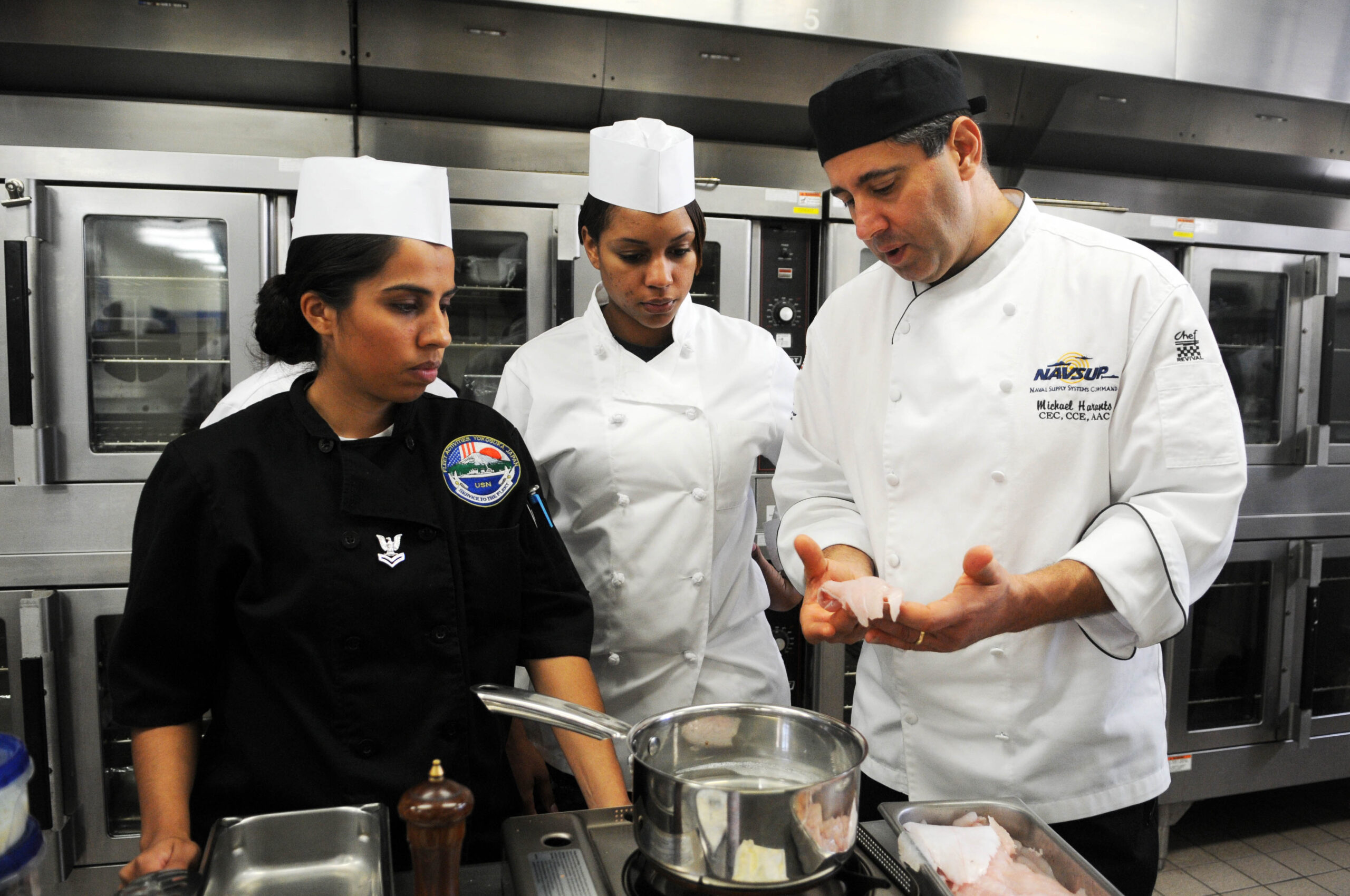
    Who Should Immediately Obtain A Food Protection Manager Certification?

    who should obtain food protection manager certification

    Most establishments that process or serve food must have an in-house leader with food manager certification MN. Although regulations require this certification, they do not specify which manager in the company should obtain a food protection manager certification.

    We feel that to get the most value out of food protection manager certification, it is essential to make sure that a person who directly oversees and manages food production is certified. In many smaller food service establishments, such as restaurants, it is not uncommon for the owner to be certified. This is only a good idea if the owner is under constant supervision of his kitchen. Many restaurant owners spend more time supervising the floor and taking care of guests than overseeing the day-to-day operations of the kitchen staff. If this is the case, you should consider your Chef, Sous Chef, or kitchen manager for certification.

    Who should obtain food protection manager certification
    Image credit: US Navy

    In large-scale establishments, we suggest an overseer of production gain food protection manager certification. They will have a much easier time dealing with food safety issues than a manager who spends little time supervising production. If you are coordinating multiple locations, keep in mind that there must be one certified manager at each location.

    There are some jurisdictions in the state that require that there is a certified person present whenever the business is operating. For those businesses, it is important to have several key people certified so that there is always coverage.

    Role of the Certified Food Protection Manager

    When selecting a candidate to be a CFPM, it is important to take into consideration the duties expected of them and their role in your establishment. Keep the following duties in mind when you determine who you will have certified.

    Your certified manager should be in a position to:

    • Identify potential food safety hazards in the workplace
    • Develop procedures to reduce the potential for foodborne illness
    • Coordinate food safety training for employees
    • Ensure there is a Person in Charge (PIC)
    • Correct procedures and habits as necessary to protect consumers
    • Inspecting daily operations periodically ensures proper following of food handling policies.

    When selecting a leader to obtain a food protection manager certification, it is essential to ensure that their position will allow them the opportunity and ability to fulfill all of these duties. For more information on these regulations, the official fact sheet can be obtained from the Minnesota Department of Health.

    Safe Food Training has scheduled classes at convenient locations around the Twin Cities and central MN. It’s quick and easy to register an individual or several employees to take the training and exam. Register early, to assure the availability of the date and location you want.

    New MN Food Safety Certification Guidelines On Avian Influenza

    MN Food Safety Certification Guidelines On Avian Influenza

    Just as it appeared to fade into oblivion, we get another reminder that Avian Influenza is still a health concern in the world and also in Minnesota. A recent article goes into detail on why we should still keep up our guard and a USDA study released  March of 2023 indicates Minnesota is the hot spot of the country for Avion flu. CFPM classes don’t always cover Avion flu, so providing food safety guidelines for it is crucial.

    MN Food Safety Certification Guidelines On Avian Influenza
    Image credit : USDA

    MN Food Safety Certification Guidelines On Avian Influenza That Will Protect Your Customers

    One of the best places to start to answer the question as to whether the “bird flu” can affect guests who have consumed tainted poultry is to look at the FDA’s take on the subject.

    To give you a quick summary, Avian Influenza cannot be spread by consuming properly cooked turkey, chicken, duck or eggs. The most common transfer of bird flu is strictly from bird to bird contact in close quarters. It is possible for the disease to transfer to humans, but only in rare cases where the infected person has come into direct and constant contact with infected birds or their feces.

    Even though there is very little chance of passing Avian Influenza on to your customers via prepared food, they will inevitably have their concerns. Here are a few tips on dealing with poultry and alleviating your guests’ qualms concerning the bird flu.

    MN Food Safety Certification Guidelines On Bird flu
    • Always cook poultry to an internal temperature of 165 degrees
    • Wash all surfaces that have come into contact with raw and cooked meat products after use
    • Always cook eggs until whites and yolks are firm
    • If a recipe calls for undercooked eggs or more than three whole eggs substitute pasteurized eggs for raw shell eggs

    These four MN food safety certification guidelines should always be taken under every circumstance. Even without the threat of Avian Influenza, but under the circumstances, reminding your staff about proper poultry handling can help alleviate contamination concerns.

    The frequency of scares involving our food sources has risen over the past decade. We’d like to know how you educate your staff and customers on MN food safety guidelines to keep food safe when a new scare arises?