The Ulitmate Wild Game Feed Advice For Certified Food Managers

Wild Game Feed Advice For Certified Food Managers

If it’s hunting season, then the Minnesota tradition of wild game feeds cannot be far behind. Many nonprofit organizations use the events to raise money for their causes and activities. Here’s what certified food managers need to know about cooking at wild game feeds.

Wild Game Feed Advice For Certified Food Managers
Image Credit: Brothers Meat & Seafood in Maple Grove, MN

Certified Food Managers Running Wild Game Feeds For Non-Profits

In Minnesota, only nonprofit organizations can hold wild game dinners. These groups rely on donations from hunters. Meats may include deer, elk, bear, and wild boar. Wild game also includes pheasant, duck, goose, and wild turkey. Fishermen donate salmon and trout. To receive pure game, it is necessary that:

  • No sausage or ground venison is included
  • Only legally hunted or fished game is included
  • The hunter eviscerates the game within two hours of harvesting

Receipts


A receipt with the names and addresses of the donor and recipient must accompany the donated game. Other pertinent information includes the vehicle’s license plate used at the hunt and a description of the gift, including numbers and species.

Storing Wild Game


Planning for wild game feeds begins months ahead of time. It’s essential to store the meat safely until it’s cooked. Check how the hunter has stored the harvest before bringing it to the event organizers.

Food Preparation


Often, volunteers will cook the donated wild game. They’ll use traditional family recipes, incorporate the game into a casserole or taco filling, or try various ways to create something new. All standard food safety requirements apply. Wild game must always be cooked to a temperature of at least 165 degrees.

Chronic Wasting Disease (CWD)


CWD is of particular concern when preparing deer or elk. CWD is a fatal disease affecting deer and elk’s brain and nervous system. Abnormally shaped proteins, called prions, are the cause. Prions have not been detected in muscle meat. There is no proof that humans can contract CWD. Nevertheless, the Minnesota Department of Health suggests that individuals should only prepare boneless cuts of venison. The backbone should never be split during venison processing.

Sanitation


Finally, keeping wild game separate from other foods during food preparation is important. The Minnesota Department of Health requires certified food managers to prepare a written statement of sanitation procedures used at every wild game feed event.

Food managers need to be knowledgeable of many different issues and topics to ensure the safety of their operations and qualify for food safety certification MN. Safe Food Training courses prepare you to pass the certification exam and run safe events like wild game feeds.

MN Food Safety And The Medium Rare Cheeseburger

We stay connected to the local food industry. During our visits to several restaurants we’ve noticed an alarming trend. Many restaurants are serving raw and undercooked animal products, but may not be doing so safely. This week, we’ll begin a series of articles aimed at helping you deal with raw and undercooked animal proteins. For the first article in the series we’ll discuss how you balance MN food safety with the ubiquitous request for a medium rare cheeseburger.

food safety certification and medium rare Cheeseburger
Image credit: Flickr

The Medium-Rare Cheeseburger Food Safety Dilemma

On more than one occasion, the waiter has asked us if we would like our cheeseburger cooked with or without a little pink. The first issue we’d like to deal with is what temperature pink actually is. Pink is not a temperature. It is in fact just a color. There can be many factors that change the internal color of your beef patty. The only accurate way to find the internal temperature of a burger is to use a probe thermometer. If you have completed a food safety certification course, you will know that a beef patty does not meet the cooked criteria unless it reaches an internal temperature of:

  • 150 degrees for one minute
  • 145 degrees for thee minutes

We are often asked by Food Safety Managers if it is legal to serve n undercooked cheeseburger that is not cooked according to Minnesota Food Code requirements. According to the current regulations it is acceptable to serve raw or undercooked animal product if:

  • A customer requests it
  • The menu clearly states that the product is undercooked
  • An asterisk next to the menu items directs the consumer to a footnote. Which states the dangers of consuming undercooked animal product.

Some of the language in the regulations can be confusing. Since we are specifically discussing undercooked burgers, we’d like explain how to deal with ground beef patties. If you’re comfortable with honoring a consumers request to serve an undercooked cheeseburger, then you legally may do so. To make sure that you are in full compliance with the law, include the asterisk and warning of the dangers of consuming raw or undercooked beef next to every burger item on your menu.

Solving the Dilemma

We strongly suggest that you do not offer a medium rare or undercooked burger on your menu. In fact,  we’d suggest that your servers do not even ask if your guests how they want their burger cooked.

If you are uncomfortable with serving an undercooked burger, simply explain to the guest that you cannot honor their request. Because your establishment adheres to the Minnesota Food Code standards.


The Ultimate Food Safety Certification Guide To Controlling Fruit Flies In MN Restaurants

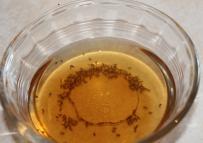
A food safety certification tip- creating a simple trap can be used to catch fruit flies

Fruit flies are one of the most invasive restaurant pests in MN this time of the year. While MN food safety certification training does not specifically cover how to control fruit flies, keeping them out of your facility is an important part of maintaining a clean and safe environment.

Food Safety Certification Guide To Controlling Fruit Flies

Food Safety Certification Guide To Controlling Fruit Flies

Keeping a clean kitchen is an obvious step towards preventing a fruit fly infestation. However, a simple surface clean will not be sufficient to avoid the appearance of fruit flies. A deep clean will be necessary to remove potential fruit fly nesting sites. Hidden breeding grounds often exist under refrigeration units, sinks, and designated preparation areas.

Fruit flies thrive on fruit and vegetable matter. Keeping fruit and vegetables from becoming nesting grounds for these pests is crucial. This is not only for keeping them out of the kitchen but also for food safety. Storing normally shelf-stable produce under refrigeration rather than on counter surfaces will keep your fruits and vegetables out of warmer temperatures. This is important because warmer temperatures are where fruit flies thrive.

Maintaining produce quality for items that are located in dry-storage locations is vitally important. A potato or squash that has begun to rot will not only attract pests. It will become a major breeding ground. This breeding ground has the potential to infest your entire workspace. Keeping your produce areas clean and free of spoiled items will greatly reduce your risk.

Even if you have taken all the necessary steps to prevent fruit flies from finding nesting grounds, they will inevitably make an appearance. The next step is to remove them from your work space.

Fruit fly strips are easily accessible at local hardware stores, but you must exercise caution when using them in food preparation facilities. MN food safety certification training states that all pest control chemicals must be kept away from food. Proper placement for fruit fly strips will be in places such as inside the lids of covered garbage cans, near compost containers and under sinks and other surfaces.

A Simple Homemade Trap

Homemade trap for fruit flies is not part of food safety certification training but it works

For areas where a fruit fly strip will not be an option, such as near food preparation areas and where they will be visible to customers, a rudimentary trap may be an alternative. These can be easily created with a shallow transparent glass or bowl. Fill it with a small amount of apple cider vinegar or orange juice. Then, place a thin film of dish soap on top. Fruit flies will be attracted to the sugar of the vinegar or juice. They will become trapped when the soap prevents them from breathing.

While MN food safety certification training does not outline steps for preventing these invasive pests, such as fruit flies, there are ways to control their presence and provide a safe and healthy food preparation environment.

Timely Hints On Food Storage For Food Safety Certification

Timely hints on food Storage For Food Safety Certification

Proper storage of all types of food products, whether raw meats, dairy, produce or fully prepared foods, is essential in any branch of the food service industry. Improperly stored food can lead to loss of profits due to waste, food-borne illness due to cross contamination and wasted time while employees search for product. This post provides timely hints on food storage regulations that go beyond food safety certification.

Timely Hints On Food Storage For Food Safety Certification

Image credit: National Center for Environmental Health

Food Safety Certification MN Tips On Meat Storage

Meat storage tends to be the most misunderstood and poorly implemented procedure when it comes to food storage. Raw meat should always be stored below cooked product, but food safety certification MN states that raw meats should be kept separate during storage and production. One way to ensure the safe storage of raw products and prevent cross contamination is by storing products with lower cooking temperatures on higher shelves than those with higher temperatures. The properly organized refrigerator should look like this in descending order if you store raw meats on the same rack.

  • Raw steaks and full cuts of beef (145 degrees minimum)
  • Raw ground beef (155 degrees)
  • Raw poultry (165 degrees)

You will notice that we have not included seafood on our list. Even though seafood has a minimum cooking temperature of 145 degrees, we recommend separating it further from all other product. We feel that this is an important food safety certification precaution for food storage to protect those who have allergies to seafood and shellfish.

The optimal way to achieve proper storage is to have dedicated areas for meat, dairy, and produce. Larger outlets such as large-scale food manufacturing plants can easily achieve this by using multiple refrigeration units. Many restaurants, hotels, and smaller institutional facilities do not have this luxury, so diligence is important.

Tips for Streamlining Food Storage

The first tip food safety certification to ensure proper food storage is to label everything. Food labeling and dating should occur when received or prepared. This is the obvious first step, and is required to know for food safety certification in MN, but it is helpful to take labeling one step further than minimum requirements.

Label the sections, shelves and empty spaces in your refrigerators. Employees will be able to see the designated storage location for each type of product. It will also prevent the confusion of a storage system that constantly changes.

Another tip is to store produce and meat as far away from each other as possible. In many cases, this can be achieved by splitting refrigeration space in half. One side of a walk-in refrigerator will contain produce, the other meat products. Two separate refrigerators would be the ideal storage solution, but this is not always achievable. In cramped quarters, the labeling of all available space will streamline your storage process.

Proper food storage appears simple on paper, but implementing an organized system is well worth the vigilance.