Important Food Safety Training for Off-Site Catering

Important Food Safety Training for Off-Site Catering

The food and beverage industry has suffered greatly over the past year, but the catering industry has taken a substantial hit due to the limits on social gatherings. Now that the StaySafe MN guidance is beginning to allow more participants at social events, the demand for catering services is beginning to increase. With the pressure to maintain COVID-19 prevention protocols and adhere to food safety training in order to keep guests safe at catered events, it may be useful to take a look at the safe way to cater an off-site event.

Important Food Safety Training for Off-Site Catering
Image credit: rawpixel via 123rf

Food Safety Training for Remote Catering Events

Coronavirus occupancy rules cause the biggest confusion for caterers providing services away from their kitchen. The proprietor of the venue should be accountable for capacity limits, but your catering staff must also be included in the numbers in order to remain in compliance. At the time of writing, there are two capacity standards; indoor and outdoor. Up to 50 attendees can occupy an outdoor event, while indoor events are limited to 15. This means that you may be required to limit the staff on hand in order for the venue to meet these numbers. When planning a catering event, make sure that you consult current StaySafeMN guidelines and coordinate with the venue to ensure you can adequately schedule your staff.

Besides COVID protocols, caterers must follow proper catering food safety guidelines. Many of these guidelines line up with what you’ve learned during food safety training. All food at catered events must:

Time and temperature control go a long way to preventing a foodborne illness outbreak, so make sure that you check your equipment to make sure it is capable of keeping hot foods hot and cold foods cold. Also, take the time to check the internal temperature of all cooked foods to verify they’ve been cooked properly.

There may be times when an off-site catering client suggests they will supply the food product for the event as a cost-saving measure. Unfortunately, you may not be able to verify whether or not they are purchasing ingredients from an approved source. We suggest working with catering clients to purchase all ingredients from your normal suppliers.

Do you have a catering business that’s finally starting to see more clients? Have you taken time to refresh your staff food safety training for off-site catering?

Revealing New Studies On Foodborne Illness Prevention

Foodborne Illness Prevention

With an increased emphasis on sanitation due to the global pandemic, many have speculated that these regulations have had an impact on other types of illness. We recently came across an article stipulating that foodborne illnesses are down due to coronavirus countermeasures. While the studies referenced were performed in Australia and Europe, we see a direct correlation between food safety training, COVID-19 measures and foodborne illness prevention.

Revealing New Studies On Foodborne Illness Prevention
Image credit: Iakov Filimonov via 123rf

How Coronavirus Measures have Impacted Foodborne Illness Prevention

The study conducted by the Australian Government is rather extensive, so we’ll briefly break down their findings.

The Australian study showed a rather large reduction of foodborne illness cases, especially when it came to the norovirus. Norovirus outbreaks are among the most common foodborne illness issues worldwide. This study shows norovirus cases were drastically reduced, almost 80-percent less than the previous year when compared to e.Coli and salmonella, which were reduced by approximately 50 percent. European studies have also suggested that norovirus rates lowered significantly over the past year.

We can speculate that reduced restaurant patronage contributed to the reduction of foodborne illness cases, but when you consider that the spread of norovirus is easily controlled through a food safety training emphasis on sanitation and handwashing, we can account for the vastly differing percentage when compared to e.Coli and salmonella, two bacteria that can also be spread through contaminated product.

We hope to be out of the water soon when it comes to dealing with COVID-19, but if we continue to emphasize good handwashing and sanitation, maybe we can keep the momentum going on preventing other illnesses that can be stopped by good food safety training.

How To Guide For CFPMs Returning To In-Person Training Starting Jan 20

How To Guide For CFPMs Returning To In-Person Training

Over the course of the COVID-19 pandemic, restrictions to indoor gatherings have created great challenges for effective Minnesota certified food protection manager’s (CFPMs) training. Food protection management certification is essential to the advancement of food safety and the protection of those who visit restaurants, cafeterias and other food preparation businesses.

Over the past few months, future CFPMs and those seeking training before renewal have had to rely on online food safety management training with in-person sessions on hiatus. While online food safety training qualifies for certification, nothing quite beats a classroom setting with a food safety expert available to engage with students, answer questions and cover topics that are specifically relevant to students attending the class. There is hope on the horizon for in-person food safety training, so let’s take a look at how future students can prepare for the return of in-person CFPM classes.

How To Guide For CFPMs Returning To In-Person Training
Image credit: Iakov Filimonov via 123rf

Preparation Guide for Returning to In-Person CFPMs Training Classes

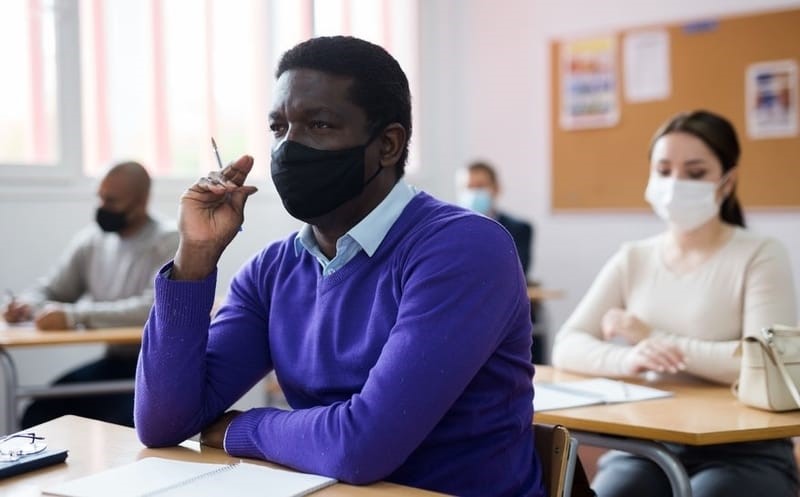
Safe Food Training is excited to announce, we have moved our return to in-person certified food protection manager training in the classroom to Jan 20. The in-person classes will follow the CDC guidelines for group meetings, we’ll require masks and seating will be spaced at least 6 feet apart. We’re enthusiastically preparing for a return to personally engaging with students and providing the training necessary to prevent foodborne illness.

If it’s been a while since you’ve attended a CFPM training class, there are a few things you can do to get the most of your experience:

  • Write down questions you may have
  • Review Minnesota Food Code Fact Sheets
  • Think of unique food safety scenarios specific to your food business
  • Peruse the training materials ahead of time

If you take the time to review these steps, you’ll come to class ready to engage with some knowledge of the subject matter. Being prepared to interact with trainers and fellow students will help ingrain food safety principles in your mind and leave you confident when it comes time to take your certified food manager exam. You’ll also leave with a better understanding of how to keep your food safe and promote a healthy environment for your guests.

Are you excited to return to in-person classroom training for certified food protection managers?

2020 Is Hindsight… Thank Goodness!

2020 IS HINDSIGHT

2020 is about done
It can’t end soon enough
This year doing business
Has been pretty rough

It started out fine
Things going quite well
Then COVID 19 hit
And things went to Hell

Schools moved to homes
ICU’s had no room
If you wanted to meet
You had to use zoom.

2020 IS HINDSIGHT

The virus was raging
We had to cut down the pace
The order was given
To shelter in place

Classes were canceled
For many a day
It started with March
Then April and May

When we could reopen
Was hard to discern
We were waiting some
Damn dials to turn

We got the OK
For some time in July
With our COVID 19 plan ready
We gave it a try

With masks and hand sanitizer
We started our day
Then wiped it all down
With disinfecting spray

This new mask routine
Worked Ok for awhile
I was beginning to think
I could hear people smile

November arrived
With a hard virus smack
And so we proceeded
To dial it back

For December and January
We again started new
So if you need training
Here is what you can do

If you need certification
The online training is best
Then you can come in
And just take the test

If you need recertification
You will also be fine
You can do that whole program
Completely online

We will resume classroom training
As soon as we can
You can sign up for February
When we are starting again

All the great people I work with
Is what will stick in my mind
Thank you all for being
Flexible, understanding and kind

We will get through this
A vaccine is here
From Safe Food Training
Have a Happy New Year