Urgent New Stay Safe MN Guidance For Certified Food Protection Managers

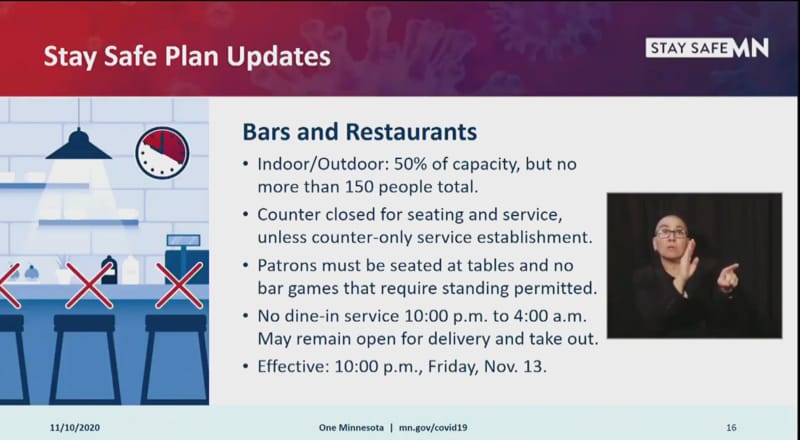
On November 10, Governor Tim Walz released new guidance for Certified Food Protection Managers at restaurants as part of the Stay Safe MN effort to control the spread of COVID-19. While there are only a few new restrictions on foodservice businesses, CFPMs should be aware that these new regulations will go into effect on Friday, November 13 at 10 PM. These changes include:

  • Changes in dine-in hours
  • Limits on games in bars and lounges
  • Reduction in indoor seating capacity
Governor Walz Nov 10, 2020 presentation re Stay Safe MN new regulations for Certified Food Protection Managers
Image credit: Office of Governor Walz

The first rule will affect most certified food protection managers at restaurants and bars as well as any other establishment that offers indoor dining. Starting Friday, dine-in service must end at 10 PM and cannot resume before 4 AM. Delivery, takeout and curbside service are still allowed during normal business hours.

Along with the new restricted hours, restaurants, bars and other establishments must require all patrons to remain at tables except to enter, exit or use restroom facilities. This new Stay Safe MN guidance specifically restricts any types of games that require standing and moving around in gaming areas. Bars and lounges should cover pool tables, remove dartboards, unplug arcade machines and prevent guests from participating in other game activities that require them to leave their tables and come into contact with other patrons.

Finally, indoor seating capacity must be reduced to 50 percent and no more than 150 patrons are allowed in large dining halls.

Hopefully, by following these new Stay Safe MN rules, certified food protection managers will keep doing their part to help reduce the spread of the coronavirus so we can make progress towards restoring our vibrant dining scene.

Highlights From New Consumer Food Safety Confidence Survey

Highlights from New consumer Food Safety Confidence Study

As a supply chain innovator, Zebra Technologies manufactures high-tech products that help businesses manage and monitor their supply chain. Some of their products include technology related to food quality monitoring and supply chain tracking. They recently conducted an extensive survey and study about consumer food safety confidence. This lengthy study brings to the forefront many issues ServSafe food managers should pay attention to, so let’s take a look at some of the highlights.

Highlights From New Consumer Food Safety Confidence Survey
Image credit: nicoletaionescu via 123rf.com

ServSafe Food Managers and Consumer Food Safety Concerns

In conducting this study, Zebra surveyed 4,957 consumers and 462 food and beverage firms worldwide. While each region had its share of diverse concerns, the results of those surveyed in the U.S. and the rest of North America shed some light on how our customers view food safety. Some consumer food safety stats that should concern ServSafe food managers include:

  • 60% would never return to a business where they consumed tainted product
  • More than 80% believe all businesses have an ethical responsibility to enforce strict safety standards
  • Approximately 70% feel it’s important to know how their food is handled and prepared
  • 69% would like to know how their food is sourced

As you can see from the first two statistics, consumers believe in strong food safety standards and trust will be easily lost, even after just one incident. That’s why it’s vital that your food business has clearly outlined safety standards and there are no training gaps when it comes to food safety.

It may come as a surprise that more restaurant-goers feel the need to know where their food comes from and how it’s handled. It’s no longer enough just to trust that restaurants have strict food handling procedures.

To respond to consumers who are looking to know every detail of food production, ServSafe food managers should be prepared to answer questions as to the source of their ingredients, especially potentially vulnerable items such as seafood. Customers will eat much more confidently if their concerns about sourcing and handling can be quickly addressed.

On a final note, consumers were asked what they perceived to be the biggest issues when it comes to food safety. The top answers include:

  • Kitchen staff hygiene
  • Foodborne illness outbreaks
  • Contaminated product
  • Consuming recalled ingredients

As you can see, three out of four issues all concern the state of product before it reaches your facility. Do you feel it’s important to know where your ingredients come from?

Urgent Mental Health Resources For Food Safety Professionals During COVID-19

Food Safety Professionals and Mental Health during COVID-19

COVID-19 has taken its toll on the physical, economic and mental health of working professionals in our country, and the foodservice industry has been especially hard hit. Many restaurants have closed forever, workers have lost jobs and many furloughed and isolated food safety professionals have confessed to overwhelming anxiety, depression, or addiction during these times. where can industry professionals turn in these trying times? We’ve created a shortlist of mental health resources for food safety professionals.

Food Safety Professionals and Mental Health during COVID-19
Image credit: inesbazdar via 123rf.com

Free Mental Health Resources For Food Safety Professionals During COVID-19

The National Restaurant Association has compiled a list of free mental health resources in an effort to help industry professionals who are struggling.

Some of these free resources we’d like to highlight include:

While we encourage struggling food industry professionals to check out the full list of resources the NRA recommends, we’d like to highlight four of them.

Sanvello is an app with self-care resources, connections to other members in the hospitality industry, and coaching to help you get through trying times. With a focus on the hospitality industry, the Sanvello community has the potential to help food safety professionals find relatable resources to ward of anxiety and depression.

With anxiety, depression and isolation come increased risk for addiction or relapse from addiction recovery. Ben’s Friends was founded in honor of a lifelong food safety professional, Ben Murray, whose struggle with addiction led him to take his own life. They are currently offering free Zoom meetings to food and beverage personnel who struggle with drug and alcohol addiction. With a focus on food industry professionals, they have a first-hand perspective on addiction in the industry.

Psych Hub offers comprehensive mental health resources and education that covers a great number of topics. From anxiety to suicide prevention, Psych Hub has an extensive mental health video library to assist those dealing with mental health problems during trying times.

If you need a real person to talk or text with about a mental health crisis, the Crisis Text Line is available 24/7. Just text 741741 anywhere in the United States to be immediately connected to a trained volunteer who will be instantly ready to provide support.

If you or a food safety professional friend are feeling too overwhelmed with anxiety, depression, addiction or any other form of mental health issue that these free resources don’t cover, don’t hesitate to reach out to a professional rather than self-diagnose and self-treat. Mental health is an issue that should never be ignored and neglected.

The COVID-19 Impact On New Restaurant Design For Food Safety Managers

When regulations for the reopening of restaurants rolled out, many food safety managers were left scrambling to meet standards in order to reopen their businesses. Over the course of the reopening processes, we’ve heard speculation that newly opening restaurants are ditching standard designs for plans that already meet or exceed recommendations in preparation for future public health crisis situations. Let’s take a look at some key aspects of how COVID-19 has changed the way food safety managers look at restaurant design.

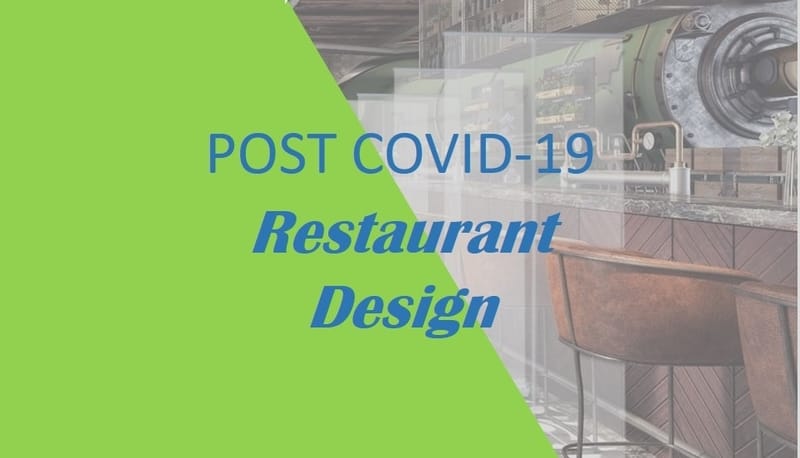
Post COVID-19 Restaurant Design for Food Safety Managers
Image credit: SynicCorp

How the COVID-19 Pandemic Could Change Restaurant Design for Food Safety Managers

In researching new restaurant designs being implemented today, food safety managers notice three key elements that have been implemented due to current COVID regulations:

  • Greater connectivity to support remote ordering
  • Powerful and upgraded ventilation systems
  • Roomier dining rooms and booths separated by partitions

New restaurant designs are also adding remote ordering kiosks at tables, near pick-up counters and even in parking lots. These types of ordering systems put a toll on Wi-Fi networks, so designers are including plans that result in higher bandwidth possibilities that help integrate the ordering and payment process. at restaurants that previously operated without these systems may have been forced to purchase equipment in order to facilitate remote ordering in their establishments. New restaurant designs seem to be taking care of that for owners and food safety managers before construction even begins.

One of the biggest challenges for restaurateurs during these times has been meeting HVAC standards to allow indoor dining. New restaurant designs are being planned with more powerful ventilation in the kitchen and in dining areas. Rather than install HVAC systems that simply meet restaurant construction codes, new facilities are planning ahead by including systems that exceed Stay Safe MN COVID-19 ventilation standards.

Finally, restaurant designers are coming up with plans should social distancing in dining rooms become the norm. Booths are being separated by Plexiglas partitions, more space is being considered in dining areas and even kitchens are being constructed to keep back-of-the-house staff separated while performing their duties.

Have you noticed any other restaurant design trends that the current pandemic has changed to help food safety managers deal with future public health scenarios?