ServSafe Managers and Temporary Labor Solutions

ServSafe-Managers-and-Temporary-Labor-Solutions.jpg

Over the course of a ServSafe managers career, he runs into temporary staffing issues. From covering staff vacations to filling in for employees who require an extended period of time off for personal reasons, supervisors must find a means of staffing their facility. Two of the most common solutions include granting overtime to key team members and bringing in food service workers from temp agencies, but this week we’d like to explore the option of bringing in some part-time help from your local culinary arts program.

ServSafe-Managers-and-Temporary-Labor-Solutions.jpg
Copyright: goodluz / 123RF Stock Photo

ServSafe Food Managers and Part-Time Help

If you only need help for a few weeks or a couple of months, finding workers not interested in full-time employment presents unique challenges. One of the advantages of reaching out to one of the many culinary arts schools or junior colleges offers a solution to finding employees without the expectation of a long term commitment. Many students in these programs need work, but at the same time, they have two to four years of studies to focus on before they begin their career.

We recently engaged in a discussion with a culinary arts student who vented his frustrations with finding a balance between school and work. Culinary students, especially those in four-year programs, have a pretty heavy homework load. Many students are required to take economics, math, cultural studies and many other courses required in traditional colleges on top of their cooking seminars. This particular student expressed that it would be hugely beneficial if there was some sort of on-call style employment program that would allow him to focus on his studies and have a source of part-time income.

Many students are not seeking long term employment until after graduation. While you may find one that exceeds your standards that you want to keep on full time, there won’t necessarily be the expectation of either party that this will turn into a long term solution, and that can have its perks.

We know a few ServSafe managers who have explored this option for temporary staffing and have had a positive experience. If you have any thoughts, or you have your own unique solutions to these types of employment dilemmas, feel free to leave your thoughts in the comments section.

Online Food Safety Certification News: Salmonella and DNA

Online Food Safety Certification News Salmonella and DNA

Over the past few years, our blogs, online food safety certification classes and food manager training sessions have covered many of the different causes and effects of food poisoning. Recently, researchers at Cornell University discovered a previously unknown effect of certain strains of Salmonella, namely its adverse effect on the body’s DNA.

Online Food Safety Certification News Salmonella and DNA
Copyright: radiantskies / 123RF Stock Photo

Salmonella and DNA

Over 2,500 serotypes of Salmonella exist, with just over 100 of these strains responsible for the majority of outbreaks. Of these strains, four of the most common culprits of food-borne illness have tested positive for a toxin closely related to the toxin that is linked to Typhoid fever. Due to this discovery, these bacterium experts decided to delve deeper into the long-term effects of being sickened by Salmonella.

The notes on this study contain many large scientific words, but to break it down into simpler terms, researchers discovered that certain strains of Salmonella, or serotypes, have the potential to damage the DNA and cause the infected individual to take longer to recover from future instances of food poisoning. Researchers also noted that each time a body’s DNA is damaged in this way the chances of it healing itself become greatly diminished.

We find it incredible that modern scientists are pushing the boundaries of what we know about the harmful effects of food-borne illness. It reminds us to remember to remain diligent, expand online food safety certification resources and do whatever we can to keep our food our safe.

Coffee Pot Sanitation and Safe Food Handling Practices

Coffee Pot Sanitation and Safe Food Handling Practices

There’s a story floating around the food service community of a thermal coffee pot in which a server one day discovered the badly stained skeleton of a small rodent that had crawled in and died months or even years earlier. While we hope that this story is nothing more than a myth, it does bring to light

Coffee Pot Sanitation and Safe Food Handling Practices
Copyright: jk1991 / 123RF Stock Photo

Safe Food Handling Practices and Coffee Pot Sanitation

One of the advantages a thermal coffee pot has over the glass variety is that it keeps beverages warm long after they are brewed without the aid of a heat source. The major disadvantage to these convenient containers is that most of them cannot be run through the industrial dishwasher.

We’ve seen firsthand that coffee pots may not be properly cleaned in many outlets. Once the coffee is dumped, an employee will often simply rinse out the vessel and leave to dry. While this makes the pot look clean on the surface, over time coffee deposits can turn rancid and potentially cause an illness.

To keep these pots clean use plenty of hot water when cleaning. Be careful not to use too harsh of a soap or sanitizer, because these can potentially eat away at the interior surface causing pockets where bacteria can thrive. Also be sure to never use a hard brush as this can also scratch the surface.

Over time, it will be necessary to descale your coffee pot to remove the stains of constant use. There are many different products on the market to accomplish this. Just make sure to rinse thoroughly to remove any trace of chemicals from the pot.

We like to cover many different scenarios and items in your kitchen to keep you aware of safe food handling practices when it comes to your utensils and equipment. Are there any items in your facility you’d like us to cover?

Food Safety Training and Raw Chicken Labels

Food Safety Training and Raw Chicken Labels

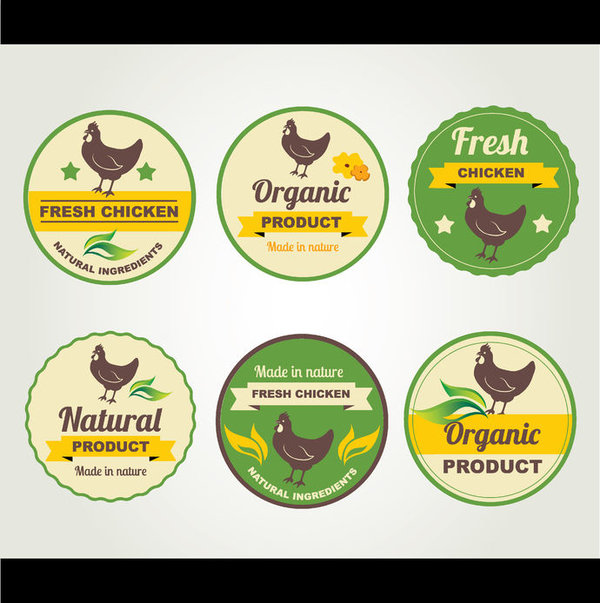
When food service managers order chicken for their facilities, they come across many different labels and distinctions. The labeling of chickens can be confusing with tags such as organic, cage-free and non-GMO floating around. This week, we’d like to briefly discuss the rules behind chicken labels and hopefully clear up some of the confusion.

Food Safety Training and Raw Chicken Labels
Copyright: marchie / 123RF Stock Photo

Food Safety Training Guide to Chicken Labels

Before we begin our discussion, we’d like to mention a few labels that cause the most confusion. From time to time a provider labels their raw chicken as natural, free-range or cage free. Unfortunately, no official inspected or verified class of natural, cage free or free-range chicken actually exists. A free-range or cage-free label simply infers that the farmer raises the chickens outdoor or uncaged. A label of natural gives no guarantee that the product is antibiotic free, organic or GMO free. For all intents and purposes, the natural label is meaningless.

Several chicken labeling standards require inspections and verification that the product meets specific guidelines. The most common include:

  • Organic
  • Certified humane
  • Non-GMO

If your chicken is labeled with one of these designations, you can rest assured that some form of inspection takes place. When you order organic chicken, you should receive raw product that has been fed a vegetarian diet free of antibiotics. However, the egg the chicken hatched from could have been treated with some form of antibiotic before the chick’s first day of life. Live chickens receive some outdoor access, but no minimum requirement is enforced. In order for raw chicken product to gain an organic label, an annual inspection of the facility must take place.

Non-GMO chickens also must pass a verification process in order to achieve permission for the non-GMO label. In order to gain this label, the chickens’ feed must contain less than one-percent GMO ingredients.

Finally, a chicken that has been verified as humanely raised or receives an American Humane Certified label must pass an inspection that stress on the bird’s daily life is minimal.

During food safety training, we occasionally have a question concerning hormones. You can rest assured that hormone use is prohibited in domestically raised chickens.

Decoding labeling standards helps food service managers keep informed about the quality of their product. Are there any confusing labels that you’d like us to look into?