Businesses that Require a Food Manager Certification in MN

Businesses that Require a Food Manager Certification in MN

According to the Minnesota Food Code, establishments that prepare or process food products must employ one certified food manager. This week, we’d like to explore this rule a little bit and outline which types of businesses require an employee with food manager certification in Minnesota.

Businesses that Require a Food Manager Certification in MN
Image credit: by Michael Verdi via Flickr

How to Know if You Require Food Manager Certification

Nearly every business that prepares and serves food items must employ at least one certified food manager. You need to post your designated food manager’s certificate in a visible location that is readily available should the local health inspector require verification. The Minnesota Food Code allows for exemptions for the following scenarios:

  • Satellite locations where you only reheat food for service
  • Off-site catering
  • Outlets that only serve reheated hot dogs or sausages, pretzels or frozen dinners such as pizza
  • Facilities that process raw meats that are intended to be cooked after sold
  • Locations that only serve beverages
  • Heating bakery items or serving prepackaged products

This list covers the basic types of outlets that may receive an exemption from the rule requiring a certified food manager. For off-site events and satellite locations, the rule requires you to display your certification at the facility where food is initially prepared. We strongly recommend that you contact your local health official for clarification if you are unsure if your business is exempt.

Some types of businesses may or may not earn an exemption depending on what type of food is served. Hotels that serve a continental breakfast fall into this category. If you simply serve pastries and cold cereal, then you probably do not need to employ a full-time certified food manager. However, if you prepare any hot food such as eggs, pancakes or other freshly prepared items, then you need to employ a staff member with the necessary certification.

If none of these exemptions apply to you then you do in fact need a certified food manager on staff. Nearly all restaurants, caterers, institutional food service outlets and businesses that prepare and package food items must ensure that they have an employee that qualifies as a certified food manager in Minnesota. There are some jurisdictions in the state that require a certified food manager present at all times the business is open and running. You should check with your inspector to make sure you are in compliance on this issue.

If you have any questions about food manager certification or any other type of food safety training, feel free to reach out to us for any questions. We offer online and instructor led classes and can tailor sessions to meet your facility’s requirements.

Breaking ServSafe MN News: The Norovirus Strikes Local School

ServSafe MN news- Norovirus outbreak at Minnehaha Academy

ServSafe MN News: According to a report on MPR Radio an outbreak of the Norovirus caused Minnehaha Academy to close its doors for several days after dozens of students and faculty members fell victim to the illness. With such a large outbreak, the facility felt it necessary shut its doors in order to prevent further spread of the virus and ensure the safety of its students.

ServSafe MN news- Norovirus outbreak at Minnehaha Academy
Photo credit:Ed Kohler via Flickr.com

Cleaning Up After a Norovirus Event

The Norovirus is one of the most contagious food-borne illnesses. We recently covered this topic in a previous article, but, just to review, some of the Norovirus symptoms include diarrhea, vomiting and dehydration. While rarely life threatening, we cannot ignore the severity of any Norovirus outbreak.

In cases such as the one which occurred at Minnehaha recently, a major outbreak requires major cleanup. The Norovirus spreads from unwashed hands, saliva and contact with other bodily fluids that have been infected. It can live on utensils, hard surfaces and contaminated food for an extended period of time. That means that after an outbreak nearly anything can be affected.

If your facility experiences outbreak of the Norovirus, we urge you to take the following steps:

  • Clean and sanitize all food preparation surfaces
  • Dispose of potentially contaminated food product
  • Wash and sanitize all utensils and serving wear
  • Work with your local health department to facilitate cleanup

Remember, that the best way to prevent an outbreak of any type of food-borne illness is diligence. Remind your staff not to work while sick, and if they have had Norovirus symptoms to refrain from working for several days after symptoms have disappeared. The Norovirus can still be active after a victim has appeared to have recovered. Use good sense and sanitize preparation surfaces frequently, and review proper hand washing procedures with your team.

If you would like to schedule a ServSafe MN review of how to prevent food-borne illness, we can help with both instructor led and online courses tailored to your specific facility.

Valentine’s Day Survival for Food Safety Certified Professionals

How Food Safety Certified Professionals Can Survive Valentines Day

Valentine’s Day is one of the most important holidays on the food service calendar for food safety certified professionals. Reservation sheets are full, chefs have the opportunity to show off their most creative specials and each member on staff prepares to be at the top of their game to impress each couple that walks through the doors. This can be a fun day, but it is also one that puts a lot of stress on team members and can be physically and mentally draining.

How Food Safety Certified Professionals Can Survive Valentine’s Day

Survival on the busiest of days means preparing for the night ahead. Having your prep stations fully stocked, your menu tried and tested and each server trained on their duties will help smooth out Valentine’s Day dinner service. We’ve heard that many busy restaurants sample out their special menus to their service staff so they not only know how to describe each dish, but know how it tastes. This will help them fully answer any guest’s questions about your restaurant’s cuisine. This will also save valuable time if the server does not have to retreat to the kitchen to get menu clarification before taking a guest’s order.

Having your line well stocked will also relieve stress in the kitchen. Nothing bogs down service like prepping on the fly with a full dining room. If your prep cooks and line cooks know exactly how much of each item that is required, they can sail through service with little issue.

One thing that helps keep stress levels low and frustration at a minimum is taking care of your staff’s health. Recommend a limit on caffeinated beverages. Caffeine raises blood pressure and can lead to short tempers if not kept in check. Adding a few extra water breaks into the schedule will keep your team hydrated and productive.

Finally, leaving early can sap your team’s morale. We know food safety certified professionals work as hard as anybody, but if you stick around to help your team clean up at the end of the night, it will keep their spirits high and earn you big time points with your line cooks and dish washing staff. This can do nothing but pay off in the long run.

Valentine’s Day ranks up there as one of the days when restaurants put on their best show. Are there any other special holidays where you strive to put on your best performance?

Certified Food Managers and Customer Rewards

Certified Food Managers and Customer Rewards

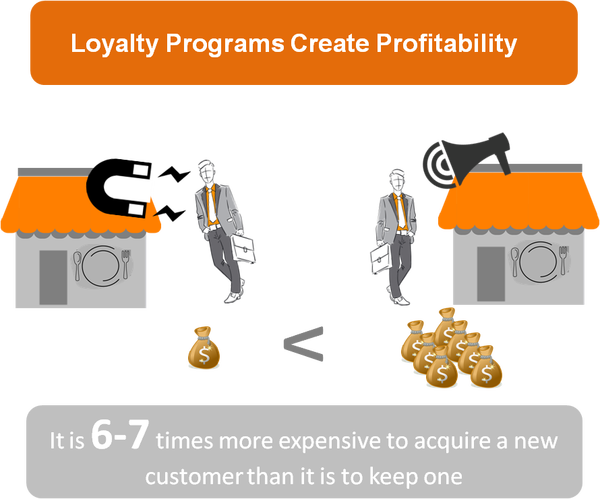
Repeat customers keep restaurants and other food producers in business. During a break at one of our certified food manager exam sessions, we engaged in an interesting conversation with the supervisor at a small restaurant about the challenges of utilizing a customer reward program similar to the ones that larger companies use.  We thought that it would be interesting to explore some options that smaller companies have to give their returning guests a little something extra.

Certified Food Managers and Customer Rewards


Certified Food Managers and Customer Loyalty Programs

There are definitely some difficulties involved when trying to compete with major franchises customer loyalty programs. The biggest obstacle being that big corporations have the infrastructure, the manpower and the finances to hire employees dedicated to the process of keeping customers returning to their stores and restaurants. Small business owners have no need to despair, however, there are numerous things that they can do to keep guests coming back.

A small business’ biggest advantage over large corporations is a familiarity factor. Many times regular guests and business owners know each other by name, and having a smaller staff allows your customers and employees to create a relationship based on seeing a familiar face each time they visit your restaurant. Training your employees to recognize returning guests and learn their names can go a long ways towards keeping them coming back as opposed to a loyalty card and the lack of being recognized when they visit large franchises.

Just because your guests know who you are and are greeted personally by staff each time they visit does not mean that you cannot give them something extra for frequenting your establishment.  We’ve come up with a few ideas that can reward your regular customers for their business:

  • Punch cards
  • Free item on birthdays and holidays
  • Coupons only available to members of an e-mail club
  • Discounts on certain menu items for frequent guests

These are just a few suggestions, and you can get as creative as possible to make it fun for guests to return. Customers spend their money in restaurants that treat them right, but with so many great restaurants in our state it sometimes takes something a little extra to draw them back time and time again. Do you have any special programs for your regular guests?