4 Simple Tips For ServSafe Managers Offering Holiday Takeout Service

ServSafe Managers Delivering Holiday Takeout Meals

With the current COVID-19 crisis and the limits on large gatherings in public places, we predict that many families who traditionally eat their holiday meals in restaurants will choose to order their family dinners for takeout rather than dine in a restaurant or banquet hall. Cooking and packaging large dinners for holiday festivities presents a challenge for food managers who may not be accustomed to this type of service. This week, we’ll take a look at how ServSafe Managers can overcome those challenges and offer advice on how to make sure the holiday takeout dinners you provide are safe from foodborne illness.
ServSafe Managers Delivering Holiday Takeout Meals
Image credit: Inna Tarasenko via 123rf

How ServSafe Food Managers Can Provide Safe Holiday Takeout

For most of the year, takeout is pretty simple. A customer calls in their order and then it’s prepared for either delivery or ready when a guest arrives to pick it up. The process for holiday style dinners will have to include a more detailed plan due to the nature of these types of meals. Turkeys, hams and pork roasts take much longer to cook, side dishes must be produced in greater quantities and restaurants will require much more hot-holding space if they wish to provide heated Thanksgiving and Christmas dinners to their guests. So how can ServSafe managers pull off holiday takeouts safely?

Here’s a few suggestions:

  • Require a deadline for pre-order
  • Provide defined pickup and delivery times
  • Package hot product in reasonable portions
  • Offer ready-to-cook meals

Preparing, cooking and packaging large meals is a huge endeavor, but you can make it easier by having an exact count of how many meals you’re required to prepare. Setting a deadline before your food supplier’s last delivery date before the holiday can give you an advantage. If you fail to adhere to a strict deadline, you run the risk of running out of product to fill orders or simply not having the production capacity to cook and prepare meals in the event of a massive influx of families looking for last-minute solutions. It’s also helpful to have precise times for guests to pick up their meals. This allows for an easier pace and will ease any congestion should we still be under COVID-19 capacity restrictions around the holidays.

In order to keep food safe from the spread of bacteria, it’s important to prepare food in reasonable portions. Most restaurants don’t have the hot-holding equipment to keep large amounts of roasts, turkeys, and hams out of the danger zone. Keeping reasonable portions on hand will allow you to prepare more food throughout the day and slice and package during the appropriate pickup window. Offering ready-to-cook meals is another option to reduce food-safety risks. If your customers can grab prepped meals and heat them at home, this will reduce your need for hot-holding and still provide an unforgettable holiday experience.

Do you plan on offering Thanksgiving, Christmas or other holiday meals for delivery and takeout?

Sanitary ServSafe Procedures for Curbside Pick Up

Sanitary ServSafe Procedures for Curbside Pick Up

As you are aware of by now, the State of Minnesota has asked all food service establishments to close dining rooms and reduce service to takeout or delivery only. This presents some new challenges for ServSafe food managers who are used to maintaining food safety procedures in dining rooms rather than in the parking lots. With these new challenges, we’d thought we’d provide a brief guide on how to not only keep your food safe from the normal foodborne pathogens but from the emerging threat of the Coronavirus.

ServSafe Procedures for Curbside Pick-up

ServSafe Tips for Curbside Pickup

We have a few simple steps you can take to protect your guests and staff during these trying times:

  • Eliminate all bare hand contact
  • Increase handwashing frequency
  • Offer ways for customers to pay in advance
  • Provide curbside service rather than allowing guests in your facility

Managers already know that ready-to-eat foods cannot be handled with bare hands, but we suggest taking this one step further until our state returns to business as usual. ServSafe procedures should require staff to wear food service approved gloves when handling cash or cards and even consider wearing gloves when delivering curbside takeout to your customers. This will prevent bare hand contact with contaminates on money and give your drive-up guests the sense of security that you’re taking their health very seriously.

Handwashing is now more important than ever. Wash your hands after every personal interaction or contact with cash. Remember to wash for 20 seconds with plenty of soap and hot water. For timing purposes, you can sing the “Happy Birthday” song twice, or find other catchy tunes that last for at least 20 seconds.

Some of your guests and staff may be leery about spending too much time in close proximity to strangers. You can help reduce the amount of time your employees and customers must interact by providing a method of prepayment by credit card either on your web page or by telephone.

Finally, the best way to ensure that the COVID-19 virus doesn’t enter your facility would be to close the inside areas altogether. Change your ServSafe procedures to meet your customers or at the curbside as much as possible with a quick handoff of their order. Providing a phone number for them to call or text once they arrive will smooth the delivery process.

Are you taking extra steps to keep your guests safe during this crisis?

ServSafe Allergen Labeling

ServSafe Allergen Labelling Icons

The FDA issues a large number of recalls each year for a multitude of reasons. Reasons for recall include product tainted with bacteria such as E.coli or salmonella or if foreign objects have made their way into the product before shipping. We pay close attention to recalls, and we’ve noticed a trend in recalled product for a third reason. Many manufacturers are failing to identify potential food allergens in their product and label packaging accordingly. This week, we’ll look at Minnesota and ServSafe allergen labeling procedures.

Allergens free icons vector set

ServSafe Guidelines for Allergen Label Warnings

Food allergies have become a growing concern among customers who purchase grab-and-go items from food producers. In order to prevent inadvertent consumption of common food allergens, the Minnesota Department of Health requires labels on pre-packaged foods produced for sale. These labels should contain the following information:

  • Identity or name of packaged item
  • Net quantity of product
  • Ingredient list, including major food allergens
  • Nutritional information

While there’s a lot to consider when labeling your product, we’d like to focus on the major food allergens. There are eight items outlined by the department of health as major food allergens. These eight food items are responsible for approximately 90 percent of all allergies. The labels on prepackaged foods must identify these ingredients:

  • Peanuts
  • Tree nuts
  • Crustacean shellfish
  • Fish
  • Milk and dairy products
  • Eggs
  • Soy

If your product contains any of these items, you must indicate that on the product’s label. We’d like to see food producers take it a step further and indicate on your label if you handle any of these items in your facility. Third-party contact can sicken those with extreme food allergen sensitivity.

We’d like to note that these rules apply more to producers of food for retail and restaurants that have prepacked foods available rather than customers who order takeout. However, you should use your best judgment and rely on this ServSafe allergen labeling training to identify the eight major food allergens on your menu if you don’t serve prepackaged foods. Marking common allergens on your menu can help those afflicted by allergies steer clear of items that may initiate an attack.

Do you identify and inform your customers of allergens in prepackaged food at your establishment?

ServSafe Class Guide to Decide When to Salvage or Discard

Discard or Salvage: A ServSafe Class Guide

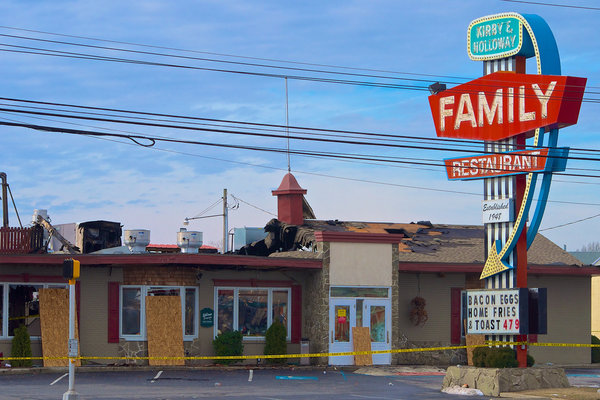
Although we always hope that disaster never strikes, occasions may happen over the course of a food manager’s career when they have to deal with a fire, a burst water pipe or another event that damages their facility. Occasionally, the topic comes up in a ServSafe class, and a student inevitably asks if there is any way to save product in these situations.

Discard or Salvage: A ServSafe Class Guide
Image credit: -Jeffrey- via Flickr

Discard or Salvage: A ServSafe Class Guide

There are a few different situations that can cause harm to food products. A fire can cause heat or smoke damage, water line leaks can create rust and sewage back-ups can infect food product, but does that mean that whenever there an incident occurs you must discard your entire inventory?

The following list clarifies unsalvageable items:

  • Fresh produce, proteins and dairy that comes in contact with water, smoke or sewage
  • Food in soft packaging such as cardboard
  • Dry goods such as flour and spices
  • Charred, rusted, swollen or leaking canned goods
  • Single service items such as plates and utensils

If the incident has occurred in your refrigerator, discard all items that have stayed at temperatures above 41 degrees for four hours. If any item has an unusual smell, texture or color, play it safe and throw it out. You also cannot salvage any previously frozen item that has thawed for two or more hours.

If you have any doubts whatsoever, don’t take any chances and discard items that may have come into contact with smoke or sewage.

The damage from a fire or sewage backup may not necessarily cause a total loss. A few items are salvageable under certain conditions. You can save sealed frozen foods that haven’t fallen below 41 degrees. Undamaged cans and bottles that have not suffered any damage due to heat require sanitation after the incident. In this instance, remove all paper labels and relabel the goods in permanent marker. If you have product in an area unaffected by the incident, inspect it for damage before deciding whether to save it or throw it away.

If a fire or sewage leak occurs in your facility, seek the advice of the local health department. They will easily clarify salvage rules, and they will provide on-site assistance to help you keep your existing product safe.

Fire, water and sewage catastrophes happen more often that we would like. Are there any unique disaster scenarios you’d like to see us cover in an upcoming article?