Service Animals in Restaurants: Vital Rules You Must Know Now

service animals in restaurants

As a Certified Food Protection Manager in Minnesota, you know that balancing public health regulations with excellent customer service is a daily priority. A key part of this is understanding how to accommodate service animals properly in restaurants. This isn’t just about following the law; it’s about creating an inclusive and welcoming environment for all guests, including the half a million American adults with disabilities who rely on service animals to navigate their daily lives.

Understanding the Legal Definition of a Service Animal

service animals in restaurants
Learn the rules for service animals in restaurants!

The foundation of proper handling is knowing exactly what constitutes a service animal under the law. The Americans with Disabilities Act (ADA) has a specific definition that distinguishes these animals from pets or emotional support animals. Getting this distinction right is the first step in confident and compliant service.

  • What a Service Animal Is: Under the ADA, a service animal is a dog that has been individually trained to do work or perform specific tasks for a person with a disability. The service animal’s tasks must directly relate to the person’s disability.

  • Emotional Support Animals Are Different: It’s crucial to understand that emotional support, therapy, comfort, or companion animals are not considered service animals under the ADA. These animals have not been trained to perform a specific job or task and, therefore, are not granted the same legal access to public places like restaurants.

  • The Two Questions You Can Ask: Your staff is legally permitted to ask only two questions when the need for a service animal is not obvious: (1) “Is the dog a service animal required because of a disability?” and (2) “What work or task has the dog been trained to perform?” You cannot ask about the person’s disability or demand any documentation.

Your Legal Obligations for Service Animals in Restaurants

Once a service animal is identified, your obligations are clear. The ADA mandates that service animals in restaurants be allowed to go wherever customers are generally allowed. This federal law supersedes any local health codes that might otherwise prohibit animals in a dining establishment.

  • No Extra Charges or Segregation: You cannot charge a customer a fee for bringing a service animal, nor can you require them to sit in a specific section of your restaurant. They must be treated like any other guest.

  • When You Can Ask an Animal to Leave: Your right to remove a service animal is very limited. You may only request that an animal be removed if it is out of control and poses a threat to others. This includes excessive barking or jumping on other people. Additionally, if the handler does not take effective action to control it, or if the animal is not housebroken.

  • Allergies and Fear Are Not Grounds for Removal: A common concern is the reaction of other patrons. However, allergies or a fear of dogs are not valid reasons for denying access or refusing service to a person with a service animal. Staff should manage these situations by relocating the concerned patron to a different area, if possible.

Best Practices for Staff Training and Patron Communication

Are service animals in restaurants okay?

Proactive training is the most effective tool for ensuring smooth interactions and avoiding legal missteps with service animals in restaurants. When your team is confident in the rules, they can handle any situation with professionalism and grace, protecting both the customer’s rights and your business’s reputation.

  • Train for Real-World Scenarios: Your training should go beyond the basics. Role-play scenarios with your staff on how to ask the two permissible questions, how to politely explain the policy to other guests who may complain, and how to address a situation where a service animal is being disruptive.

  • Keep Food Safety in Mind: While service animals are allowed in dining areas, they can be legally excluded from food preparation areas, such as the kitchen. Ensure your staff understands this distinction to maintain compliance with health codes.

  • Educate All Customers: Consider placing a small, professionally worded sign near your entrance that states your compliance with ADA regulations regarding service animals. This can help educate all patrons and prevent misunderstandings before they arise.

Navigating the rules for service animals in restaurants is a critical skill for every Certified Food Protection Manager. Proper training ensures you can serve all members of your community safely and legally.

Ensure you and your team are fully prepared to meet all of Minnesota’s food safety and public health standards

Enroll in our personalized, instructor-led Certified Food Protection Manager course with Safe Food Handling in Minnesota today.

Strong CFPM Course Advice About Raw Milk Peril

Raw Milk in Minnesota.

In Minnesota, the MN Food Code strictly prohibits the sale or service of unpasteurized (raw) milk in any licensed food establishment. While you can buy raw milk directly from a farm for your own home, serving it in a restaurant or commercial kitchen creates a massive liability because of the high risk of Listeria contamination.

Navigating the Minnesota Food Code: The Raw Milk Debate

When we host a personalized 8-hour Certified Food Protection Manager (CFPM) course for local food service leaders, we often dive into the “gray area” topics that standard training might skip. What does the Minnesota Food Code actually say about serving raw milk?

There’s a lot of noise online about the supposed health benefits of unpasteurized dairy. Some claim that pasteurization “kills” milk’s nutritional value, while others think it’s just better for you. But as a professional food manager running a busy kitchen in St. Paul or a catering operation in Duluth, your priority isn’t the latest health trend—it’s regulatory compliance and customer safety.

What Your CFPM Course Teaches About Raw Milk

Our mission at Safe Food Training is to help your business meet Minnesota’s essential food safety standards without all the fluff. According to the Minnesota Department of Agriculture and the Minnesota Food Code (specifically Section 32D12), the law is very specific: milk and milk products must be pasteurized if they’re offered for human consumption in a retail food establishment.

If a customer wants raw milk, they’ve got to go directly to the source—the farmer. As a licensed food entity, you can’t act as a middleman.

The Risk Factor: Listeria Monocytogenes

The main reason food safety experts and the FDA advise against raw dairy is the high risk of Listeria monocytogenes, a bacterium that causes the foodborne illness listeriosis. In our Minnesota food safety certification courses, we talk about how Listeria is a “hardy” bacterium. Unlike many other pathogens, it doesn’t mind the cold; it can actually grow at refrigeration temperatures.

Why Listeria is a Top Concern for CFPMs:

  • Resilience: It survives in drains, on equipment, and in cold storage.
  • Severity: It has a much higher hospitalization rate than other common foodborne illnesses.
  • Symptoms: Persistent high fever, muscle aches, vomiting, and diarrhea.
  • Vulnerability: It poses life-threatening complications for those with compromised immune systems, the elderly, and pregnant women.

Scientific evidence from the FDA doesn’t support the claim that raw milk is a “superfood” that’s worth these risks. When you’re responsible for the health of hundreds of guests a day, a foodborne illness outbreak isn’t just a PR nightmare—it’s a danger to your community.

The "Choice" Narrative: How to Get Certified

Deciding how to get your team certified is just as important as the safety protocols you follow. Whether you like the energy of a distraction-free classroom or the convenience of your home office, we’ve got you covered.

Pass/fail.

In-Person vs. Online Training

Feature

In-Person CFPM Training

Online CFPM Training

Environment

Distraction-free, focused learning

Flexible, self-paced

Interaction

Real-time Q&A with Jeff Webster

Digital modules

Pass Rate

Very high due to hands-on prep

Depends on your study habits

Best For

New managers & those needing a refresh

Tech-savvy, busy schedules

Personal Choice vs. Professional Liability

 Raw milk.
Do you know the rules about raw milk in restaurants?

As an individual, you’ve got the right to choose what you put into your body. But once you step behind the line of a commercial kitchen, you’re the Certified Food Protection Manager. You’re the gatekeeper. Both Minnesota law and the FDA agree: raw milk poses too great a threat to be served to the public.


Many other food safety risks fly under the radar, and a standard CFPM MN course can’t cover every niche topic. If you’ve got questions about specific ingredients or local ordinances, just ask—we’re here to help.

Frequently Asked Questions (MN Food Safety)

Common questions include:

Q: What is the primary service that Safe Food Training offers?

A: We specialize in providing personalized, 8-hour certified food protection manager licensing courses tailored for food professionals across Minnesota. We also offer dedicated continuing education training at the same time.

Q: How often must I complete continuing education to maintain my food safety certification in Minnesota?

A: In Minnesota, you’ve got to complete approved continuing education every three years to maintain your Certified Food Protection Manager (CFPM) status.

Q: Does the 8-hour course include the exam?

A: Yes. Our comprehensive 8-hour course includes the certification exam, so you leave the session with everything you need to stay compliant.

Q: Can I schedule a private session for my restaurant staff?

A: Definitely. We focus on creating a convenient learning experience that fits your needs. We can focus on the specific food safety challenges of your operation—whether you’re in a school cafeteria, a large restaurant, or a catering business.

Need to renew your credentials or train a new manager?

Register for an upcoming Minnesota Food Safety Course today!

A New Look At Food Safety Certification Hand-Washing Stations

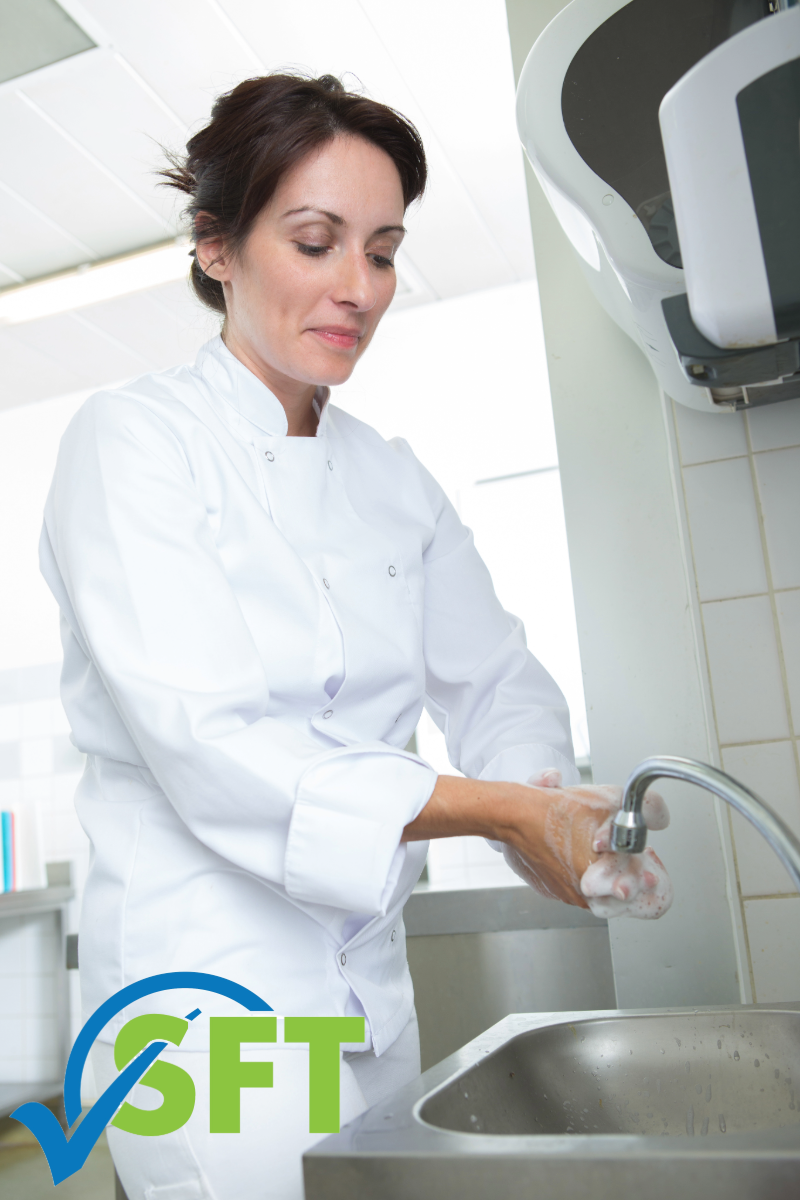
handwashing-food worker washing hands

As a certified food safety manager, you know that proper handwashing is the cornerstone of preventing foodborne illness. While the 20-second scrub is a critical skill taught in every certification course, your responsibility extends far beyond just the technique. The physical environment where handwashing occurs—the handwashing station itself—is a critical control point that demands constant oversight. A poorly maintained station can undermine even the best-trained staff, creating a weak link in your food safety defenses.

This guide will move beyond the basics to focus on three essential areas of management: perfecting the setup of every handwashing station. It will also reinforce the critical moments for hand hygiene and extend your high standards to guest-facing areas.

Perfecting the Setup: Anatomy of an Effective Handwashing Station

An effective handwashing policy is only as good as the tools you provide. Consider every designated hand sink, from the kitchen line to the employee restroom, as a vital piece of safety equipment. Your role is to ensure each one is always ready for service.

The Non-Negotiables: Soap, Towels, and Hot Water

Handwashing
Handwashing is vital for all kitchen staff.

A handwashing station is incomplete without its essential components. Staff should never have to search for soap or paper towels, as this creates a barrier to compliance. Always fill and make dispensers easily accessible. Furthermore, hot water is a requirement. Make it a part of your opening procedures to run the taps at each sink to ensure hot water is readily available, especially during colder months when pipes take longer to warm up.

Reinforcing Behavior with Visual Cues

Even the most experienced staff benefit from reminders. Placing a clear, simple handwashing instructional poster within view of every sink serves as a constant reinforcement of proper procedure. This simple tool helps maintain a consistent standard across your entire team, demonstrating a visible commitment to food safety.

Reinforcing the When: Critical Moments for Hand Hygiene

A certified food safety manager must instill in their team not just how to wash their hands, but also when. This requires diligent training and consistent oversight to build reflexive habits in your staff.

From Routine to High-Risk

Handwashing is required at routine intervals, such as before beginning a shift and after eating, smoking, or using the restroom. However, we must be cautious of high-risk tasks. The most critical of these is after handling raw animal proteins. This action must be automatic and immediate to prevent cross-contamination.

The Glove and Handwashing Connection

It’s a common misconception that wearing gloves replaces the need for handwashing. Gloves can be contaminated just like hands. Train staff to wash their hands before putting on new gloves and after taking them off. A change of task, especially from a raw to a ready-to-eat product, requires a glove change and handwashing.

Extending Standards: The Overlooked Guest Restroom

Your commitment to hygiene should not end where the kitchen does. Customer restrooms are a direct reflection of your establishment’s overall standards of cleanliness and safety.

A Reflection of Your Brand

A clean, well-stocked guest restroom conveys to your customers that you value their well-being. This area must have the same essential components as your staff stations: an ample supply of soap, paper towels, and readily available hot water. Failing to address this area can damage your reputation.

Promoting Public Health

While you cannot enforce health guidelines on customers, you can encourage them to follow them. Placing a handwashing poster in the guest restroom can gently promote proper hygiene and help reduce the spread of illness within your community, reinforcing your role as a responsible public establishment.

Ultimately, the diligence you apply to these seemingly small details separates an adequate food safety program from an exceptional one. As a certified food safety manager, your leadership in maintaining every handwashing station and reinforcing proper protocols is crucial to keeping your food, staff, and customers safe.

You can explore our comprehensive certification and renewal courses to ensure your entire team learns these critical food safety basics. 

Register for an upcoming course with Safe Food Training today!

Certified Food Manager Advice: How To Prevent Hazardous Slip Injuries

MN Certified Food Manager

How do managers keep staff from slipping?

To prevent slips and falls, a Certified Food Protection Manager (CFPM) ensures everyone wears non-slip shoes and uses rubber floor mats with holes to prevent water from pooling. They also make sure the floors are cleaned every day with the right soap and that any spills are wiped up right away.

Keeping your customers’ food safe is a big job, but keeping your workers safe is just as important. Slipping and falling is one of the main reasons kitchen staff miss work. Nationally, falls are a major workplace hazard, resulting in 844 deaths and nearly 480,000 injuries that require time off in 2024. In fact, falls account for 24% of all preventable deaths in the United States. Here is how a food manager can help prevent these injuries and keep the kitchen running smoothly.

The Certified Food Manager’s Role in Preventing Slip Injuries

As a manager, your main job is to show the team that staying safe is the top priority. Preventing accidents is something everyone has to do together. It starts with you giving your staff the right gear and clear instructions so they can work safely.

Most slips happen because of the wrong shoes. Make sure everyone follows these simple rules:

  • Wear the right shoes: Use only non-slip shoes designed for kitchen work.
  • Check the grip: Pick shoes that can handle wet and oily floors.

Even with the best shoes, you still need to set up the kitchen correctly. Use heavy-duty rubber floor mats with drainage holes. These allow water and grease to sink below the surface rather than pooling on top, keeping the walking area much safer for everyone.

The Certified Food Manager’s Role in Preventing Slip Injuries

As a manager, your main job is to show the team that staying safe is the top priority. Preventing accidents is something everyone has to do together. It starts with you giving your staff the right gear and clear instructions so they can work safely.

Most slips happen because of the wrong shoes. Make sure everyone follows these simple rules:

  • Wear the right shoes: Use only non-slip shoes designed for kitchen work.
  • Check the grip: Pick shoes that can handle wet and oily floors.

Even with the best shoes, you still need to set up the kitchen correctly. Use heavy-duty rubber floor mats with drainage holes. These allow water and grease to sink below the surface rather than pooling on top, keeping the walking area much safer for everyone.

Clean Mats For Safety

Prevent slip and falls
Learn how to keep your employees safe on the clock.

To keep everyone safe, managers must also clean mats and the floors underneath them every day. Grease and liquids build up on the mats over time, making them just as slippery as the floor itself.


Use a good floor cleaner to cut through grease and keep the mats from sliding around. It is best to let the floor dry completely before putting the mats back down. If you trap water and soap under the mats, they stay wet longer and can cause someone to slip during the shift.

Always wipe up spills right away. Don’t assume a floor mat will catch everything. Ignoring a small spill could result in a painful injury to one of your coworkers.

While these daily steps are important, the best way to stay safe is to get proper training.

Pick the Best Class for Your Schedule

Whether you work in a kitchen in St. Paul or a restaurant in Minneapolis, safe habits start with good training. To get your Minnesota food manager license, you can choose between in-person and online classes. Both teach you what you need to know, but they work in different ways:


Details

In-Person Class

Online Class

The Setting

A quiet classroom where you can talk with others.

Study at your own pace at home or work.

Passing the Test

More people pass because they can ask the teacher questions right away.

Good pass rates, but you have to be disciplined on your own.

Help with Your Kitchen

We can talk about the specific safety setup in your kitchen.

General safety rules that work for every kitchen.

Who is it for?

People who learn best by talking and doing hands-on work.

People with busy schedules or who live far away.

Ready to Get Certified?

Safety is a habit, and the best way to keep your kitchen compliant and your staff injury-free is through up-to-date certification. You can choose the class that works best for your schedule and get the personalized training you need right away. View the full schedule, or secure your spot for one of our next in-person classes today!

Common Food Safety Questions

Some of the most typical questions we get include:

Q: What is the primary service that Safe Food Training offers?

A: We offer 8-hour classes for food professionals across Minnesota to get their food manager license. We also provide the continuing education hours you need to keep your license current.

Q: Who should take these courses?

A: Anyone in Minnesota who needs a food manager license for their job or business. It is also for managers who need to finish their 4 hours of continuing education before their 3-year license expires.

Q: What does "personalized training" mean?

A: Our instructor, Jeff Webster, makes sure the class is useful for you. We talk about the specific safety issues you face in your workplace, whether you run a school kitchen, a restaurant, or a catering company.

Q: What happens if I do not pass the Certified Food Protection Manager exam on my first attempt?

A: We want you to succeed. If you don’t pass the test the first time, you can come back to a future class and retake the exam for free.