WHY MN FOOD CODE REQUIRES RAW EGGS TO BE REFRIGERATED?

Why MN Food Code Requires Raw Eggs to be Refrigerated

In every restaurant and nearly every home in the United States, raw eggs are stored under refrigeration at 40 degrees Fahrenheit or lower. According to the MN food code and food safety training courses, refrigerating raw eggs prevents Salmonella. Salmonella is a food-borne gastrointestinal illness that affects a reported 42,000 Americans each year. This number is certainly higher due to many mild cases which go unreported. Businesses that sell or cook eggs for public consumption must refrigerate them in an effort to prevent outbreaks of this type of foodborne illness.

Why MN Food Code Requires Raw Eggs to be Refrigerated
Image credit: enginakyurt via 123rf

Why The United Kingdom Does Not Refrigerate Raw Eggs

Many travelers to the United Kingdom, and many other parts of the world, often notice that people do not refrigerate raw eggs and store them at room temperature most often. This has puzzled many individuals who were taught that eggs should always be refrigerated. The answer to this question lies in a brief explanation of the differences in egg production and distribution between the United States and Great Britain.

The different philosophy of egg storage between the two countries is due to the difference in production standards. In the United States, farmers wash and sanitize eggs post-harvest. Correspondingly, Great Britain’s regulations dictate that eggs must remain dry throughout production and distribution. Rinsing eggs destroys the thin natural protective layer, known as the cuticle, which can prevent contaminants from entering the egg.

In the United Kingdom, a majority of egg producers vaccinate their egg-laying hens in an effort to prevent disease. Here in the United States, we use this process minimally.

According to an article written for www.foodsafetynews.com, these practices have “reduced the incidence of Salmonella illnesses in Britain from 14,771 reported cases in 1997 to 581 cases in 2009.” The entire foodsafeteynews.com article can be found here.

MN Food Code Approach To Serving Raw Eggs

In order to complete food manager certification in MN, knowledge of preventing food-borne illness is a must. Salmonella is a common food-borne illness that can potentially be deadly but is also easily preventable. There are a few MN food code statutes to keep in mind when dealing with raw eggs that can prevent the spread of this illness.

  • Refrigerate eggs using temperatures below 40 degrees Fahrenheit,
  • Throw away broken eggs to avoid contamination easily
  • Clean dirty eggs before use
  • When you need a large quantity, use pasteurized liquid eggs instead of raw shell eggs

The two MN food code statutes that pertain to eggs appear:

New MN Food Safety Certification Guidelines On Avian Influenza

MN Food Safety Certification Guidelines On Avian Influenza

Just as it appeared to fade into oblivion, we get another reminder that Avian Influenza is still a health concern in the world and also in Minnesota. A recent article goes into detail on why we should still keep up our guard and a USDA study released  March of 2023 indicates Minnesota is the hot spot of the country for Avion flu. CFPM classes don’t always cover Avion flu, so providing food safety guidelines for it is crucial.

MN Food Safety Certification Guidelines On Avian Influenza
Image credit : USDA

MN Food Safety Certification Guidelines On Avian Influenza That Will Protect Your Customers

One of the best places to start to answer the question as to whether the “bird flu” can affect guests who have consumed tainted poultry is to look at the FDA’s take on the subject.

To give you a quick summary, Avian Influenza cannot be spread by consuming properly cooked turkey, chicken, duck or eggs. The most common transfer of bird flu is strictly from bird to bird contact in close quarters. It is possible for the disease to transfer to humans, but only in rare cases where the infected person has come into direct and constant contact with infected birds or their feces.

Even though there is very little chance of passing Avian Influenza on to your customers via prepared food, they will inevitably have their concerns. Here are a few tips on dealing with poultry and alleviating your guests’ qualms concerning the bird flu.

MN Food Safety Certification Guidelines On Bird flu
  • Always cook poultry to an internal temperature of 165 degrees
  • Wash all surfaces that have come into contact with raw and cooked meat products after use
  • Always cook eggs until whites and yolks are firm
  • If a recipe calls for undercooked eggs or more than three whole eggs substitute pasteurized eggs for raw shell eggs

These four MN food safety certification guidelines should always be taken under every circumstance. Even without the threat of Avian Influenza, but under the circumstances, reminding your staff about proper poultry handling can help alleviate contamination concerns.

The frequency of scares involving our food sources has risen over the past decade. We’d like to know how you educate your staff and customers on MN food safety guidelines to keep food safe when a new scare arises?

The Truth About Custom Food Safety Certification Training

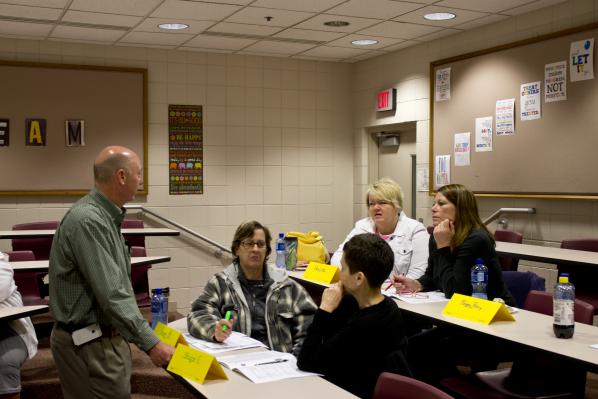
Maple Grove Schools Group Food Safety Certification MN Training

If you’re a restaurateur who owns or manages multiple locations, then you know what a hassle it can be to manage all of the required food safety certifications. In contrast,our trainers make it easy to get all of your team’s certifications/re-certifications up to date. We come to you and deliver a custom group food safety certification training session for all of your employees, and we can administer the testing for new food safety managers who require it.

Maple Grove Schools Group Food Safety Certification MN Training

The Benefits of Custom Group Food Safety Certification Training

By having our trainers come to your facility to provide customized food safety certification training, you can enjoy three significant benefits:

  • Convenience
  • Cost
  • Customizable training

Basically, our on-site options eliminate the need to worry about coordinating the schedules of all staff members who require certification. We are able to work around your unique schedule, ensuring that every staff member that needs certification is able to attend. Additionally, scheduling group training at your restaurant may be more cost-effective. Rather than paying individual fees for each staff member, we are able to offer a group rate that keeps the expense of training all of your staff to a minimum.

Built to Address Your Unique Business Needs

At Safe Food Training MN, we offer customized food safety certification training sessions that are tailored to your unique business needs. Unlike online food safety courses or regularly scheduled classes, our trainers come to your facility and work with you to identify and address any issues specific to your operation. During the training session, we cover unique aspects of your business that are not normally addressed in basic training courses.

Additionally, we can design either a ServSafe or NRFSP training course according to your needs. Then we include any information in your sessions that you feel you or your employees could use more training on. Our knowledgeable trainers will make sure that you’re aware of the most current rules and procedures for any situation.

Our custom food safety certification training sessions are not just for restaurants. We can design a course aimed at:

  • school lunch programs
  • retirement facilities
  • food production outlets
  • or any other type of business that requires unique food safety training in MN

Our training sessions cover unique aspects of your business that are not normally addressed in basic training courses.

Our custom food safety certification training sessions are not just for restaurants. We can design a course aimed at:

  • school lunch programs
  • retirement facilities
  • food production outlets
  • or any other type of business that requires unique food safety training in MN

Our training sessions cover unique aspects of your business that are not normally addressed in basic training courses.

Do Group Training Sessions Work?

Colleen Fairbanks, Lead Food Services Specialist at Osseo Area Schools, had this to say about our group training services: “We had Safe Food Training come in and do our training because they were able to come to us and tailor the training to what our managers needed in order to get their MN food managers license. I would recommend anyone use Safe Food Training because they will tailor the training to what you specifically need in your department.”

A New Look At Delivery Drivers and Food Safety – Part 2

Food Safety Certification MN and Providing Delivery Services

Last month we investigated how food delivery apps work and whether or not they were monitored by your local health department. Following that article, we thought that it would be helpful to provide some food safety information and tips for restaurant outlets that provide their own delivery service to their loyal customers.

Food Safety Certification MN and Providing Delivery Services
Photo credit: www.flickr.com

Food Safety Hints For Providing Delivery Services

This biggest issue with food delivery is that there is a high risk that the food’s temperature will fall into the danger zone. If your product falls between 140 and 40 degrees during delivery, there is a risk of bacteria growth. Many chain restaurants employ the use of insulated containers to keep their food hot during delivery. We strongly urge you to talk to your local culinary supply store about obtaining several of these containers. Before you begin providing delivery to your customers. We also suggest that you consider limiting your delivery range. A smaller delivery area means you can deliver hot food product to your customers in a timely manner.

The rules for keeping cold foods safe for consumption after delivery is more straightforward than those for hot foods. Refrigerated items may go without refrigeration for up to two hours according to the Minnesota Health Code. This means that your salads and sandwiches and other cold items kept in sanitary containers should be safe for delivery. Be aware that raw animal protein items such as sushi are much more sensitive than other cold products. If you are planning on delivering any raw or undercooked proteins. You may wish to consult with your local health inspector.

Non-Food Safety Considerations for Delivery Services

There are other aspects besides food safety that you should plan for if you are considering offering delivery service. Keep in mind that you will need to have additional staff available to provide this service. Be sure to get the right balance of staff to handle the new service. You want to avoid a negative impact on your current services or long waits for delivery. Neither scenario is good for building a satisfied customer base or increasing employee morale on busy evenings. Having an extra hand available on weekends and during peak times will be a key element in helping you offer delivery services to your clientele.

Finally, make sure that your delivery drivers have received food safety training from a certified food protection manager. They are vital members of your team and will be essential in seeing that your product arrives to your customers in a safe-to-eat state.

Are you extending your food services to clients who wish to have their meals delivered? At Safe Food Training, we’d like to know your thoughts on how you plan to keep your meals safe during delivery.