New Food Safety Training For The Dish Pit

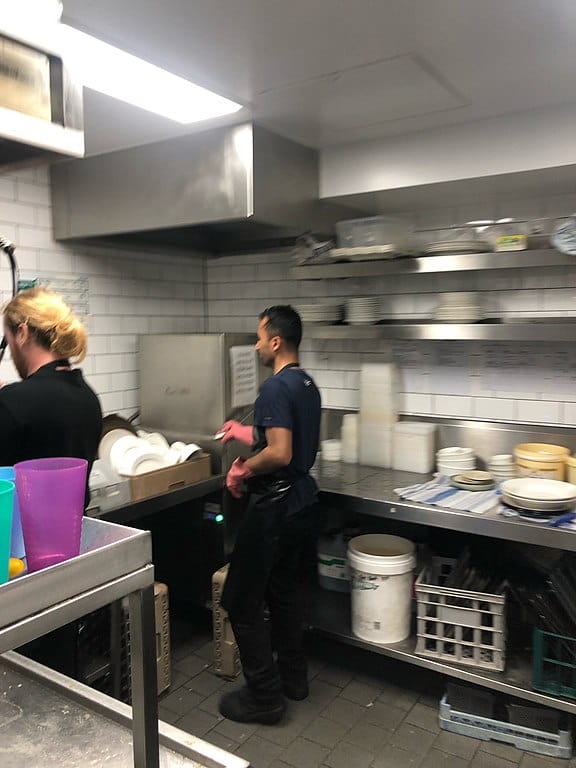
We all know that dishwashing machines are an important piece of equipment in keeping serving ware and the utensils we use to prepare food clean, but do we take the time to ensure that our dishwasher is kept in sanitary condition? Beyond sanitizing the clean side of the dishwasher and making sure drying areas are kept in proper condition, how can we promote food safety training to keep the “dirty” side of our mechanical dishwashers from creating foodborne illness hazards?
Food Safety Training for the Dish Pit
Image credit: Simcitywok via wikimedia commons

Food Safety Training tips for Dish Pit Cleanliness

It’s easy to understand why the clean side of the dish pit needs to remain clean. All of the dishes that end up over there are sanitized and ready for service, but ignoring the dirty side of the dish area creates scenarios that can be a food safety risk. When providing food safety training to dish machine operators, make sure you cover:

  • Garbage Disposal
  • Machine Filters
  • Doors and Seals
  • Dirty Washing Surfaces

We tend to assume that the garbage disposal churns up waste and sends it into the sewage system, but a lot of the residue remains in the drain, on the blades and in your pipes. This food residue attracts pests such as fruit flies. While it’s not necessary or even prudent to take apart your garbage disposal, there are liquid solutions available that can clean and sanitize garbage disposals and pipes. If you have the need to reach into the garbage disposal for any reason, make sure that it has been unplugged to prevent catastrophic injury.

Most mechanical dish washers have filters to prevent waste from ending up in the drainage system. Make locating and cleaning these filters a part of your basic food safety training. Don’t forget that grease and grime can build up on the inside of the doors and transfer to clean items during the rinse cycle.

Finally, the areas where plate ware and production tools wait to be washed can also attract pests and transfer contaminated materials to employees who touch them and work near these areas. The food safety training best practice is take the time to often clean washing surfaces and dirty dish storage areas.

Does your food safety training cover the whole dish pit area?
See 5 Remarkable Food Safety Training Tips For Handling Knives

Food Safety Training Tips For Handling Knives

No matter what type of food business you run, knives will be a vital tool in your operations. Learning how to use a knife safely is important to reduce injury but can also help promote food safety. Since it’s such an important tool in the industry, we should take a look at five tips for food safety training for handling knives effectively.

Food Safety Training Tips For Handling Knives
Image credit: michaelvave via pixabay

Knife Food Safety Training Guide For Using Knives

We’ve identified five steps to keep knives safe and reduce the risk of food contamination from improper use:

  • Use Proper Technique
  • Use the Right Knife for the Job
  • Use Appropriate Cutting Surfaces
  • Clean and Sanitize Properly
  • Keep Knives Sharp

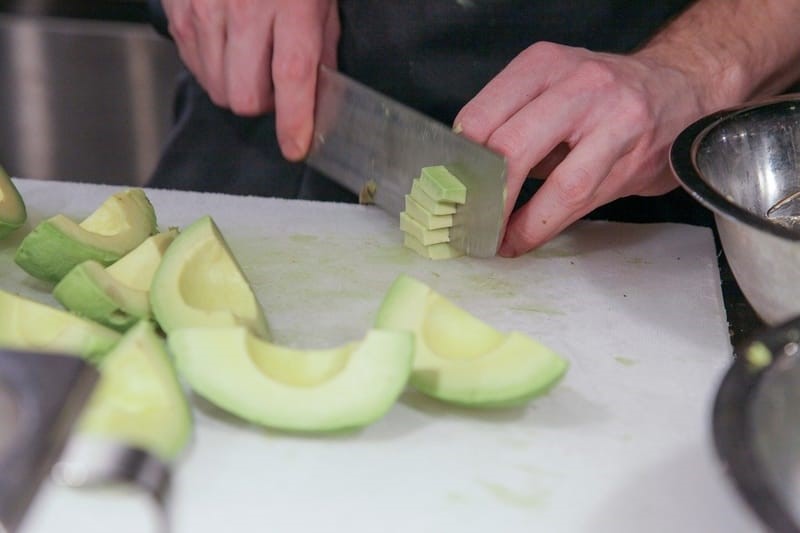
Every staff member who handles a knife should have food safety training on how to handle it properly. Improper knife use can lead to cuts, slices of human flesh ending up in product and the inability to open doors due to missing digits. Knife techniques are best learned visually, so take a look at the following video demonstrating proper knife techniques.

Many knife injuries occur when the wrong knife is used for a specific job. If you’re using a paring knife for mincing onions, not only will it take forever, but you risk the knife slipping or sticking, whereas a chef’s knife is much too long to devein shrimp causing the risk to sliced fingers.

The cutting surface you use can greatly affect both personal and food safety. Glass, stainless steel and other slick and hard surfaces can cause knives to slide or bounce almost guaranteeing an eventual injury, while soft surfaces such as wood can be damaged by knives creating small grooves that can become breeding grounds for bacteria. The best cutting surfaces are NSF-approved cutting boards that can be easily cleaned and sanitized.

Knives also need to be cleaned and sanitized properly for food safety. Even if you’re only preparing vegetables, knives should be sanitized after each use. Over the course of time, remnants of food can begin to decay-causing a pathogen risk if used again unsanitized. It’s often recommended that knives be cleaned by hand using appropriate sanitizing solutions as chemicals in dishwashing machines can create microscopic pits in knife blades causing them to dull quicker and harbor bacteria.

Finally, there is an increased risk of injury and food safety risks from dull or uncared-for knives. A sharp knife will slice through product without bouncing off surfaces or changing angles during entry. Dull knives can also be more difficult to keep clean, increasing a foodborne illness hazard.

Have you taken the time to evaluate food safety training and knife use in your kitchen?

Excellent Food Safety Training Tips You Need To Know About Clean Refrigeration

Food Safety Training Tips

You count on your refrigeration units to keep food cold, but neglecting food safety training for maintenance can result in much worse scenarios than malfunctioning equipment. Besides the hazards of food possibly being stored in the danger zone due to a poorly looked after walk-in; dirt, mold, mildew and other contaminants can come in contact with your product even if your cold storage is kept at the proper temperature. Let’s take a close look at some often overlooked aspects of refrigerator maintenance that can lead to foodborne illness risks and we will provide some food safety training tips to make your job easier.

Excellent Food Safety Training Tips You Need To Know About Clean Refrigeration
Image credit: Tracy Hunter via Flickr

Refrigeration Maintenance Tips for Food Safety Training

Most food businesses should already have a cleaning plan in place for the interior racks, walls and floors of their refrigeration units, but there are several aspects of refrigerators that are forgotten, especially in walk-in units. Every so often it’s important to clean and maintain refrigeration:

  • Door seals
  • Condensers
  • Drain lines

Cleaning the seals or gaskets of every refrigerator in your establishment will help keep warm air from outside forcing your equipment to work harder. Rubber seals can also be a breeding ground for mold, especially if your doors are not sealing properly. The condensation from the temperature difference inside and outside of your fridge could accelerate mold and mildew growth which could end up in your food. When you perform your regular interior cleaning, make sure to wipe down and sanitize your door seals and inspect for any damage which could be allowing warm air inside.

Condenser coils tend to collect dust and moisture creating an environment for contaminant growth that could fall into food product. Your food safety training should include a review of cleaning these coils at least once a month to prevent buildup. These coils can sometimes be behind a service panel or on the back of the compressor.

Drain lines are notorious for mold buildup due to the near-constant drip of condensation. Due to the complexity of cleaning these lines, we recommended you seek out a professional technician to service and clean your larger refrigerators once a year.

Have you taken the time recently to check on the cleanliness of your refrigerators? Do you have any additional food safety training tips for others?

New Food Safety Management Training For Facilities Serving Susceptible Populations

New Food Safety Management Training For Facilities Serving Susceptible Populations

Some recent updates to guidelines involving facilities that house or serve susceptible populations, and a few of those updates directly address food safety management training in these types of businesses. It may not be a rewrite of the actual code, but the Minnesota Department of Health has cleared up and outlined equipment guidelines for assisted living facilities and other outlets that specialize in serving those that may be more prone to foodborne illnesses.

New Food Safety Management Training For Facilities Serving Susceptible Populations
Image credit: snvv via 123rf

New Kitchen Equipment Standards For Facilities Serving Susceptible Populations Will Impact Food Safety Management Training

Most kitchen equipment can be broken down into two categories:

  • Food preparation surfaces
  • Preparation equipment

Proper food safety management training for both of these categories must be certified or classified for proper sanitation by ANSI standards. When talking about food preparation surfaces, surfaces in medical facilities, child care centers, and senior activity centers must be:

  • Corrosion-resistant
  • Able to withstand repeated washing and sanitation
  • Finished with a smooth, cleanable surface
  • Resistant to scratching, pitting and other types of damage from contact with utensils

Food contact surfaces not only include cutting and mixing surfaces, but also include equipment that contains a surface that cooks food. Flattop grills, steam kettles and other devices that cook food must meet these standards. Food preparation equipment outside of preparation surfaces can include:

  • Walk-in refrigerators and freezers
  • Mechanical warewashing machines
  • Ice machines
  • Cooking equipment besides microwaves and toasters

With few exceptions, most cooking and mechanical equipment used to prepare food in facilities that serve a susceptible population must meet an ANSI standard. Food safety management training will point you to a sticker or emblem somewhere on your equipment that shows if it has been certified. Common certifications include:

  • NSF International (NSF)
  • ETl Sanitation
  • Underwriters Laboratory (UL)
  • Baking Industry Sanitation Standards Committee (BISSC)

If you serve susceptible populations have you updated the food safety management training you provide to your staff?