Certified Food Manager’s Guide to Safely Serving Shellfish

Safely Serving shellfish

The waters in the Atlantic and Pacific are getting colder, and that makes it the prime time to eat and serve shellfish. Before the shellfish season begins, let’s take a moment to review food procedures for safely serving shellfish.

FDA testing shellfish is the first step in safely serving shellfish
Image credit: US Food and Drug Administration

Serving Shellfish Safety

There are a few types of potentially hazardous foods that certified food managers need to take extra care with when processing, molluscan shellfish is one of them. If handled improperly, they can cause catastrophic foodborne illness and pose a life-threatening situation to any guest who may be allergic. Food safety procedures for safely serving shellfish should begin the second they are received at your facility.

All shellfish must come from an approved source. Your local seafood provider should have more information on where your shellfish come from, and chances are most shellfish shipped to Minnesota come from approved waters. You shouldn’t simply accept this, however. All shipments of shellfish must include a tag or label that signifies where it came from and when they were harvested. Each batch must also be stored on its own. Shellfish from one container cannot co-mingle with shellfish from another batch until it’s time to prepare and serve. This helps to keep any bacteria from spreading from one batch to another and also helps identify the source of any batch that may have caused illness. Once these containers are empty, their labels must be stored for 90 days.

To prevent the growth of bacteria and safely serve shellfish, certified food managers should be very careful to keep all raw shellfish stored at 41 degrees or below. Shellfish are sensitive to bacteria growth, so extended times over 41 degrees greatly increase foodborne illness risk.

Shellfish allergies can be severe. We recommend that you designate a specific station in your facility for shellfish preparation. This will greatly reduce the risk that cross-contamination occurs. It’s also important to store shellfish as far away from other product as possible. Another key to safely serving shellfish is never store raw shellfish over ready-to-eat foods or other items in your refrigerated storage.

Finally, it’s important to warn your guests who may be allergic that shellfish are processed in your kitchen. Some allergy sufferers can’t take any chances. A simple disclaimer on your menu should suffice.

Do you serve or prepare shellfish? If so, what steps do you take to serve them safely?
On-site Food Safety Training in MN

Customized On-site Food Safety Training In MN

Not all restaurants, food production facilities and institutional kitchens produce the same product in the same way, so why should all food safety certification training take place in a location that doesn’t resemble your facility? We think there numerous advantages to scheduling an on-site food safety training class that takes place at your operation.

Customized On-site Food Safety Training In MN
Image credit: PIRO4D via Pixabay

The Advantages of On-site Food Safety Training

Right off the top of our head, we can think of several benefits to scheduling an instructor led food training session at your facility:

  • Convenience
  • Certifying and training multiple staff members
  • Ability to ask questions relevant to your business
  • Training tailored to your needs

What can be easier than having your instructor come to you? You don’t have to worry about your GPS sending you to North Dakota when you’re searching for a training location you’ve never visited or finding parking near the training facility. It also makes it possible to train and certify multiple employees without worrying about scheduling conflicts or whether or not your employees have access to reliable transportation to the testing location.

A highly knowledgeable food safety expert knows the Minnesota food code in and out, and during a training session at your food production facility you’ll not only have the ability to have your questions answered, but you’ll have the advantage of having your instructor being able to give you real world answers that pertain to your facility and the type of food you produce. A school cafeteria has different needs than a restaurant and there are many different types of kitchens that have different food safety risks. Your instructor can take a look at your facility and answer questions accordingly.

Finally, you can choose which food safety training certification standard you want your employees to achieve. You may want your employees to receive ServSafe training, HAACP certification or any other MN accepted testing, but times and location for your preferred classes just don’t work. Having an on-site training session with all members of your staff that require a certain type of training solves this dilemma

Would you be interested in an on-site food safety training and exam session at your establishment? Let us know, and we’d be happy to design a course that suits your needs.

Food Safety Class Tips for Ice Bin Sanitation

Every restaurant has its sanitation challenges, but one of the most consistently overlooked areas is the front-of-house service station ice bin. For certified food safety managers in Minnesota, ensuring proper ice bin sanitation is a critical, yet often neglected, responsibility. While back-of-house procedures receive intense scrutiny, these smaller, customer-facing ice bins can become hotspots for contamination if not given the daily attention they require. This guide provides the essential tips you need to train your staff and maintain impeccable standards.

The Core Misconception: Why Ice Bins Are Ignored

Ice bin sanitation
Ice bin sanitation: Keep it safe.

A fundamental misunderstanding leads to service station ice bins being overlooked: many staff members don’t view ice as a food item. The thought process is that since ice is just frozen water, it can’t harbor pathogens. This is a dangerous assumption. 

The FDA classifies ice as a food, meaning it is subject to the same strict handling and sanitation requirements as any other ready-to-eat product. When staff members fail to treat an ice bin as a food container, they are more likely to engage in unsafe practices that lead to contamination.

  • False Sense of Security: Because ice is frozen, employees may wrongly believe that bacteria cannot grow, leading to lax cleaning schedules and improper handling.


  • Out of Sight, Out of Mind: Unlike a steam table or a walk-in cooler, a service station ice bin is often a secondary piece of equipment, making it easy to forget during routine cleaning and closing duties.


  • High-Traffic Area Risks: These bins are typically located in busy service alleys or bar tops, exposing them to a much higher risk of accidental contamination from various sources throughout a shift.

Mastering Ice Bin Safety in a Busy Environment

True ice bin safety involves being vigilant about what goes on around the bin as much as what goes in it. During a busy service, it’s easy for foreign objects and liquids to enter the ice supply, compromising the entire container. A single contaminated piece of ice can contaminate the entire bin as it melts and circulates.

  • Preventing Foreign Objects Contamination: Garnishments like lemons or cherries, napkins, straws, and even serving utensils can accidentally fall into the ice. These items introduce bacteria from hands, counters, and other surfaces. Keeping the lid closed whenever possible is a simple but effective preventative measure.

  • Managing Spills and Drips: In a bar or beverage station, splashes from juice, soda, or alcohol are inevitable. If these liquids enter the ice bin, they introduce sugars and other substances that can accelerate bacterial growth.

  • The “When in Doubt, Throw it Out” Rule: If you notice a foreign object or a significant spill has occurred, simply removing the object is not enough. The only safe procedure is to burn the ice—meaning, empty the entire bin, properly clean and sanitize the container according to health codes, and refill it with fresh, clean ice.

Implementing a Strict Sanitation Protocol

Ice bin sanitation
Tips for ice bin sanitation.

To ensure consistent ice bin sanitation, you must establish a clear, non-negotiable cleaning protocol that your service staff understands and follows. Simply allowing the ice to melt and drain overnight is not a substitute for proper cleaning; this practice leaves behind a damp environment that allows bacteria and biofilm to flourish.

  • Use a Properly Mixed Sanitizer: Your sanitizer solution must be mixed to the correct concentration. A solution that is too weak will not be effective, while one that is too strong can leave behind chemical residues that could sicken a customer. Use test strips to verify the concentration at every time.


  • Sanitize Every Time You Empty: It is essential to make cleaning and sanitizing the ice bin a mandatory procedure each time. It’s emptied ‌before refilling. This should be a key part of your closing checklist for every service station.


  • Train, Reinforce, and Document: Ongoing training is key. Regularly review these procedures with your waitstaff and bartenders to ensure they are familiar with them. Document your cleaning schedule in a log to ensure accountability and create a record of compliance for health inspections.

Safe Food Training acknowledges the dedication of certified food safety managers in Minnesota to protecting public health. Our goal is to provide practical training that addresses the real-world, often-overlooked challenges you face daily.

Don’t let a contaminated service station ice bin tarnish your reputation. If you and your team are looking to enhance your understanding of Minnesota’s food safety standards, our expert-led, instructor-led options provide the convenient and comprehensive training you need. 

Click on the link and head to Safe Food Training today to schedule your next session!

Online Food Safety Training Guide to Probe Thermometers

Online Food Safety Training Guide to Probe Thermometers

Online food safety training teaches us that cooking proteins to the proper temperature reduces the risk of food-borne illnesses, but we need to use the right tools to make sure that we are getting accurate results. This week, we’d like to explore the different types of probe thermometers and how to make sure that your product is properly cooked before serving.

Online Food Safety Training Guide to Probe Thermometers
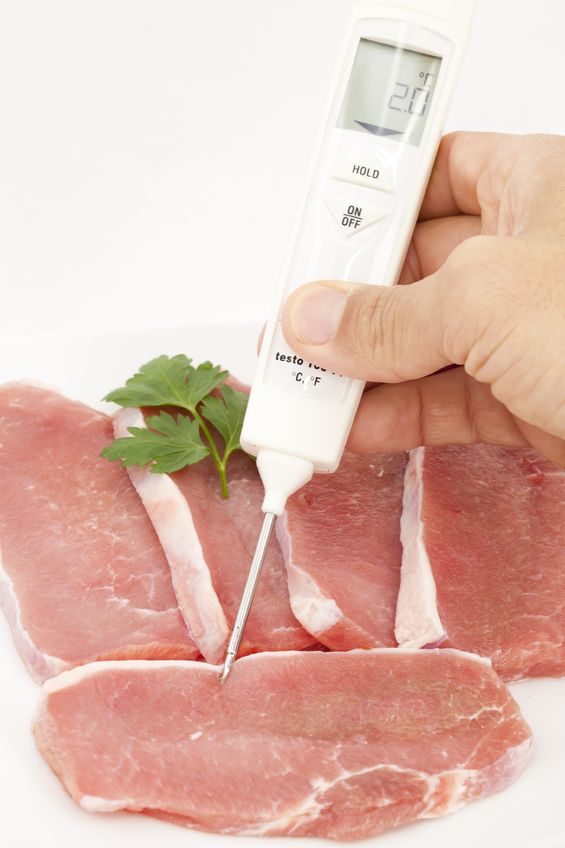
Image credit: 123rf.com by Eduardo Gonzalez Diaz

Types of Meat Probe Thermometers

Every commercial kitchen is required to have a thermometer to ensure proper temperature control, but there are several different types to choose from:

  • Instant-read dial probe thermometers
  • Digital instant-read probe thermometers
  • Digital forked thermometers
  • Thermocouple
  • Oven-safe probe thermometer

Due to their affordability, certified kitchen managers often choose to provide their staff with instant-read dial thermometers. While they are designated as “instant-read,” many dial thermometers take up to a full minute to produce an accurate reading. We don’t recommend this style of thermometer for checking the internal temperature of thin proteins such as burgers as the metal stem can pick up heat from cooking equipment or provide a lower reading when exposed. This style of thermometer must be calibrated and checked for accuracy fairly often as the dial can be off by a few degrees with constant use.

Digital thermometers cost a little more than dial thermometers but provide an easy-to-read interface to check the temperature of your cooked product. Depending on the brand, these thermometers can calibrate themselves when placed in ice water, allowing you to be confident with their results. Some of these have a forked prong which will give an accurate reading when checking roasts and larger cooked meat products.

The thermocouple is the most versatile probe thermometer. These work well for checking the internal temperature of both thin and thick products and produce a reading in seconds. These are rather costly, so many outlets prefer to keep a few on hand rather than purchase one for every staff member.

Oven-safe thermometers are a handy tool if you are slow cooking or smoking your product. These can remain in your roasts or large pans of food to monitor the internal temperature throughout the process. These come in two distinct styles, one has a dial at the end of a probe while the other has a probe attached to an oven safe cord which leads to a digital readout outside of the oven. This feature allows you to easily view internal temperatures without opening your oven.

What types of thermometers do you utilize in your facility?