Retaking the Food Safety Certification Exam

Retaking the Food Safety Certification Exam

At Safe Food Training, we pride ourselves on the high success rate our students have when taking their food safety certification exam, but there are times when we have a student who must take a second test in order to gain their food manager certification. This week, we’d like to offer tips and suggestions on what to do if you do not pass the test the first time.

Retaking the Food Safety Certification Exam
Image credit: Tim Niles

Food Safety Certification Exam Retake Tips

If you end up in a situation where you must retake your food safety certification exam, we recommend you prepare by following these steps:

  • Review the material as soon as possible
  • Plan on retaking the class before the exam
  • Schedule a retake as soon as you are able

Reviewing the material and retaking the exam shortly after the first test helps keep the information fresh in your mind. It will also reinforce the material that you may not have understood completely by allowing you to remember which sections of the exam that were a struggle.

When the day for your retake session arrives, come prepared. Be ready to take notes, engage with the instructor and ask questions when you are unsure about the discussion. We’ve found that students who ask questions and are active participants achieve better results on the test.

Finally, don’t dwell on your past results when the time comes to retake the exam. Remain calm and confident. If you’ve prepared properly, the second time should result in a much better outcome.

If you’ve recently taken the food safety certification exam, but the results did not go as planned, contact us for information about scheduling a retake.
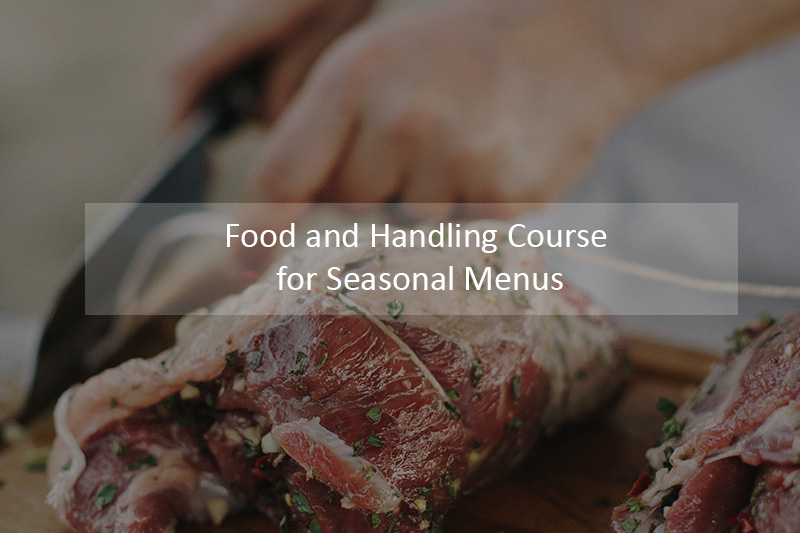

Food and Handling Course for Seasonal Menus

Food Handling Course for Seasonal Menus

As the chill of winter recedes, many restaurant managers rotate warm comfort foods off of their seasonal menus in pursuit of fresh ingredients. Rotating menus seasonally can be a great way to keep your loyal clientele returning to find new dishes available and bring out the best in your creative kitchen staff.

Seasonal Menu Food and Handling Course Guidelines

Food Handling Course for Seasonal Menus
Image Credit: mayushka

Each season brings its own food safety challenges and the upswing in fresh ingredients spring offers creates some cause to take extra precautions. We’ve isolated a few issues you may want to consider as you bring in the ingredients for your fresh new menu:

  • Proper storage of fresh proteins
  • Proper washing of fresh fruits and vegetables
  • Review of holding procedures for new hot and cold items

Most food and handling course protein storage guidelines tell you to store your product on shelves in descending order of final cooking temperature. For example, whole raw pork would be stored above ground meats and poultry products must always be placed on the lowest shelf. Most seafood products will have the lowest cooking temperature, but we recommend you find a separate storage location for fish and shellfish that is not on a shelf over any other product. Some of your guests may suffer from seafood allergies, so taking precautions to prevent cross-contamination is a must.

Spring also brings an abundance of fresh produce. Remember to wash all produce that will be cooked or served raw, even if you bring in organic ingredients. Washing produce removes residue left from pesticides, fertilizers or dirt that remains on fruits and vegetables.

Finally, review hot and cold cooking and holding temperatures with your staff. Raw seafood items are particularly popular in the spring and summer when fresh ingredients can be purchased. If you serve sashimi, sushi or seafood tartare, spend some extra time reviewing cold holding and cross-contamination prevention.

Do you choose to rotate your menus with the seasons or do you have other ideas for keeping the food you serve fresh and relevant?

Spanish Online Food Safety Certification Courses

Spanish Online Food Safety Certification Courses

For a great number of innovative restaurateurs, food service managers and employees that work in food production, English is not their first spoken language. This often leads to challenges when it comes time to become food safety certified. Many courses are led by a talented instructor who may have a rudimentary knowledge of the Spanish language, but might not be fully able to converse with a native Spanish speaker. If you have a Spanish speaking employee in need of certification, a Spanish online food safety certification course can help them gain the knowledge they need and take the test in a familiar language.

Spanish Online Food Safety Certification Courses

Copyright: ximagination / 123RF Stock Photo

Benefits of Online Food Safety Certification Courses for Spanish Speakers

Even if a student has a good grip on the English language, they may be more comfortable studying in the language that comes naturally to them. There are certain nuances in both English and Spanish that could cause a teacher to have trouble explaining a concept to a Spanish speaker and have the student misunderstand the information. This can be especially true for food service workers who recently immigrated to the United States.

An online food safety certification course will also help by placing a non-English speaker in a comfortable environment. Online classes can be taken from the student’s home at their own pace. After the student has finished their online training, all that will be left for them is to register for a testing date. Many times this test must be taken at a specific location away from home where they have the advantage of taking it in their own language.

At Safe Food Training, we can set up online courses in both English and Spanish, as well as provide any specialized training you may require.

Customized Food Handling Training Courses

Customized Food Handling Training Courses

The food service industry is unique in the fact that many different types of businesses fall under the food service umbrella. The training needs of a restaurant defer from the certification requirements of school cafeteria and food processing outlets may have specialized protocols for food handling training. Since many different types of facilities exist, why should the same food handling training be given to the employees of different types of food service businesses?

Customized Food Handling Training Courses
Image credit: Pixabay-PIRO4D

There are many benefits to providing customized food safety training for your employees.

  • Training can be tailored to your type of business
  • Training can occur on-site at your facility
  • The appropriate certification test for your facility can be given
  • Training can occur on your time

One of the greatest advantages to arranging a customized training session is that the food handling requirements of your staff’s day-to-day routine can be addressed. It’s even more advantageous when the training occurs at your facility so that your instructor can see exactly how food safety procedures will be implemented.

With customized training, you don’t have to wait for the next ServSafe, HACCP or any other certification class and exam. You can request specifically the certification that you require, and you can work with the instructor to perform the training at a time that works for you and your staff.

At Safe Food Training, we can gladly work with you to design a course that will meet your certification requirements and help keep your food safe. We also offer online and regularly schedule training classes and certification examinations. Would a customizable food training course work for your business?