Certified Food Managers and Vacation Time

The Certified Food Manager and Vacation Time

Certified food managers need time away from the kitchen every once in a while, but many skip vacations out of a sense of duty. Food service supervisors are not indestructible and tend to make mistakes when overworked, so we’d like to provide some encouragement for those who can’t seem to get away for more than a day or two.

Certified Food Managers and Vacation Time
Copyright: pixdesign123 / 123RF Stock Photo

The Benefits of Vacation Time for Certified Food Managers

Vacations can be a great way to take a step back and refresh mentally and physically. Food service is a fast paced and stressful environment, and some of the health risks that come from stress can be relieved by taking an extended break. Doctors claim that vacations can help moderate blood pressure, improve mental health and provide many other benefits for those who work in stressful environments.

Taking a break from the job also helps with creativity and productivity. If you do the same type of work non-stop for months at a time, chances are you’ll fall into a routine that may not incite new ideas. Removing yourself from food service for a week or two helps clear away your routine and could inspire new ideas to improve your operation. Stepping away from your duties also helps to get out of the rut of going through the motions. We know that certified food managers are passionate and driven, but even the best fall into the habit of stretching out and delaying tasks they do on a daily basis. Taking a trip away from work gives supervisors a new focus when they return.

Most professionals ignore their vacations because they feel that their operation would crumble without their oversight. Trust your staff and make sure that you put a plan in place that everyone can follow in your absence. You and your facility will be much better off with a rested and renewed certified food manager.

Food Safety Certified Professionals and Microwave Use

food safety certified professionals and microwave use

Many restaurants employ a secret weapon that some food safety certified professionals call their digital chef. The digital chef refers to a facility’s microwave, and while most restaurants and food producers prefer to cook everything as fresh as possible, instances occur when microwave cooking becomes unavoidable.

food safety certified professionals and microwave use
Image credit: 123rf – 12249118

Proper Microwave Use for Food Safety Certified Workers

All food cooked in a microwave needs to maintain an internal temperature of 165 degrees before being served. No food cooked any lower than well-done can be served if cooked in a microwave, and reheated precooked food must meet the 165-degree requirement. Once food reaches the temperature requirement, the Minnesota Food Code states that cooked product needs to stand for two minutes before serving in order to maintain temperature.

The method used for microwave cooking depends on what type of food your digital chef must prepare. The following guide shows specific rules that the food code requires you to adhere to.

  • Rotate all product must halfway through cooking
  • Stir liquid foods such as soup periodically to achieve an even temperature
  • Cover raw product to maintain moisture

When we discuss the thawing of raw proteins in ServeSafe training courses, we recommend that food safety certified professionals use a microwave as a last resort. Any frozen item thawed in a microwave needs to be cooked and served immediately. Product thawed in a microwave cannot be stored for later use.

Microwaves can sometimes be a lifesaver in the kitchen, but every food service worker should be aware of safe procedures to prevent food-borne illness as a result. Do you rely on your digital chef, or do you prefer to cook 100 percent of your product from scratch?

The Certified Food Manager and Springtime Promotions

The Certified Food Manager and Springtime Promotions

Many local businesses look to increase the number of guests visiting their establishment the weekend of Easter by providing activities that are fun for families. Whether you plan on having an Easter egg hunt or other spring related activity, we have a few tips for the certified food manager to create fun activities that will hopefully draw potential patrons.

The Certified Food Manager and Springtime Promotions
Image credit: 123RF – 7287966

Easter Promotions and the Certified Food Manager

Children and families love Easter egg hunts, especially if your business provides this activity without cost to your guests. This is a good opportunity to offer some promotional specials, such as discounted lunch or breakfast items, affordable beverages or grab-and-go snacks. You’ll often find that families who would not spend a few bucks on an Easter egg hunt will be more than willing to shell out spending money on small food items.

If you do attempt to have an egg hunt at your restaurant, we have a couple of suggestions that will make it fun for all.

  • Only use wrapped candies
  • Contain your hunt to a specific area of your facility
  • Limit the amount of prizes per participant
  • Provide a quiet zone for guests not participating in your activity

Remember that not every customer who comes to your establishment wishes to participate in your spring activities. If you have a popular restaurant that locals frequent, take the time to set up an area away from the activities so that your regulars have the opportunity for an enjoyable experience.

We recently saw an advertisement for an event that featured live animals. We’d like to remind you that if you operate a food service facility and plan on incorporating livestock into your event that live animals need to be separated from food production and service areas. It seems like a cute idea to have baby chicks, rabbits and goats roaming your restaurant, but they create a number of food born-illness hazards.

Springtime offers ample opportunity to draw new clientele to your restaurant. Do you have any events that you find brings customers to your door?

Certified Food Managers and Customer Rewards

Certified Food Managers and Customer Rewards

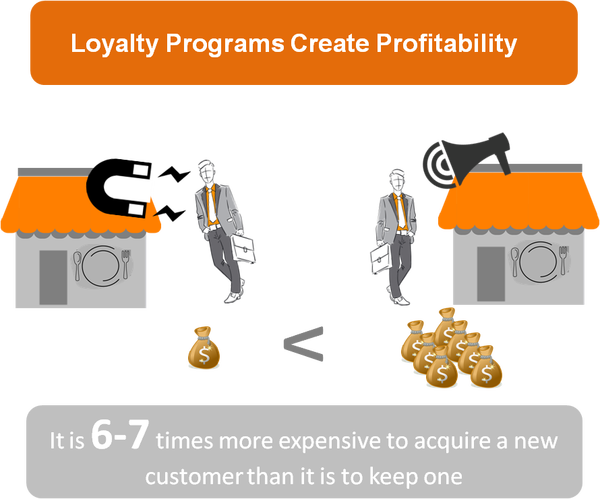
Repeat customers keep restaurants and other food producers in business. During a break at one of our certified food manager exam sessions, we engaged in an interesting conversation with the supervisor at a small restaurant about the challenges of utilizing a customer reward program similar to the ones that larger companies use.  We thought that it would be interesting to explore some options that smaller companies have to give their returning guests a little something extra.

Certified Food Managers and Customer Rewards


Certified Food Managers and Customer Loyalty Programs

There are definitely some difficulties involved when trying to compete with major franchises customer loyalty programs. The biggest obstacle being that big corporations have the infrastructure, the manpower and the finances to hire employees dedicated to the process of keeping customers returning to their stores and restaurants. Small business owners have no need to despair, however, there are numerous things that they can do to keep guests coming back.

A small business’ biggest advantage over large corporations is a familiarity factor. Many times regular guests and business owners know each other by name, and having a smaller staff allows your customers and employees to create a relationship based on seeing a familiar face each time they visit your restaurant. Training your employees to recognize returning guests and learn their names can go a long ways towards keeping them coming back as opposed to a loyalty card and the lack of being recognized when they visit large franchises.

Just because your guests know who you are and are greeted personally by staff each time they visit does not mean that you cannot give them something extra for frequenting your establishment.  We’ve come up with a few ideas that can reward your regular customers for their business:

  • Punch cards
  • Free item on birthdays and holidays
  • Coupons only available to members of an e-mail club
  • Discounts on certain menu items for frequent guests

These are just a few suggestions, and you can get as creative as possible to make it fun for guests to return. Customers spend their money in restaurants that treat them right, but with so many great restaurants in our state it sometimes takes something a little extra to draw them back time and time again. Do you have any special programs for your regular guests?