Get your MN kitchen compliant with our state-approved Certified Food Protection Manager Training. We’re offering headache-free 8-hour initial courses and 4-hour renewals.

delivery drones and nfsrp standards

Delivery Drones and NFSRP Standards

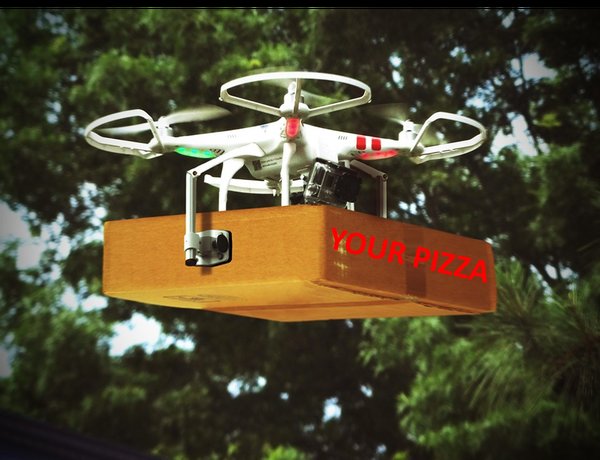
Chipotle restaurants recently announced that they will begin testing a drone delivery service at Virginia Tech, and earlier this year Domino’s began using robots to deliver pizza in New Zealand and Australia. We enjoy seeing creative innovations in the food industry, but we also feel the need to examine these achievements from a food safety perspective. With unmanned delivery drones and robots being tested, we grow curious to see if major food safety training standards such as NFSRP and ServSafe adjust their regulations with growing automation in the food service industry.

delivery drones and nfsrp standards

Image credit: pixabay.com

NFSRP and Automated Delivery Service

While researching the topic, we found that the biggest hurdle for automated delivery services lie with the authorities that govern transportation. The FAA and local jurisdictions can regulate the airspace used by commercial drone operators, and they have expressed concerns that the possibility exists that the risk of drone failures and crashes will increase in crowded airspaces as these services become more popular. We also see increasing studies into the hazards of driverless vehicles, and we would like to see whether or not a robot can successfully navigate busy city sidewalks and crosswalks without incident. So before we begin carpet bombing college campuses with foil wrapped burritos and calculating how big of a tip to give your favorite delivery robot, we must wait and see what types of regulations will be put in place.

One issue that we can address is the issue of food safety. Under the current food code, delivery drivers who do not prepare your food do not have to obtain any form of food safety certification, so we can probably assume that there is no rush to create droid level NSFRP training courses. One issue that concerns us, especially with prepared products such as burritos that contain highly sensitive beans and rice, is whether or not these prepared food items will spend a significant amount of time in the danger zone. Bacteria in beans, rice and many proteins thrive in lukewarm temperatures, and from what we have seen, delivery drones do not contain any warming equipment. The robots being tested in New Zealand seem to have an interior storage space that possibly contains a heating system, but from some of the test footage we have seen, burrito drones simply carry burritos from restaurant to customer. Given the potential for food-borne illness, we feel that this issue needs to be addressed.

These exciting innovations leave us wondering what is just over the horizon. If the old Jetson’s cartoons were any glimpse into our future, we hope that flying cars will be next. What futuristic innovations are you waiting to see revolutionize the food industry?

MN Certified Food Manager and a 15-Dollar Minimum Wage

The MN Certified Food Managers and a 15-Dollar Minimum Wage

During the course of providing HACCP training certification classes, we hear many MN certified food managers discussing how a rising minimum wage may impact their businesses. This issue potentially affects local companies, especially in light of recent attempts to place a 15 dollar minimum wage initiative on the upcoming November ballot in the city of Minneapolis. Recently, the Minnesota Supreme Court ruled that a minimum wage increase cannot pass by a voter initiative, but control over the issue remains with the city council. Even so, since the food service industry hires a high number of minimum wage workers, we felt it beneficial to briefly explore the issue.

MN Certified Food Managers and a 15-Dollar Minimum Wage

Image credit: Fibonacci Blue – www.flickr.com

The MN Certified Food Managers and a 15-Dollar Minimum Wage

We hear several concerns from MN certified food managers whenever the topic of a higher minimum wage arises:
• Profit margins will drop
• Labor costs will force them to reduce the workforce
• They will lose tipped employees if customers refuse to tip
• They may have to close or move outside of city limits

The top two concerns that food service managers voice directly involve finances. Anyone who controls the books in a restaurant knows that the margin between cost and profit is extremely tight. While fears of being able to operate a restaurant in a high minimum wage environment are valid, restaurant.org suggests that states such as California, where higher minimum wages exist in cities such as San Francisco, are forecasted to see record growth.

While a high minimum wage directly affects labor cost, one theory suggests that adding more money into the economy will bring more customers into local restaurants. Younger workers tend to benefit the most from a higher minimum wage, and some economists feel that if the younger workforce receives more money on their weekly paycheck, they are more apt to spring for luxuries such as dining out. This unproven theory makes sense, but many business owners hesitate to risk their livelihood on something that has yet to be studied.

Finally, many tipped employees worry they will earn less due to customers not tipping in high minimum wage cities. Some restaurateurs suggest that a guest will be less likely to tip if they know that their server is making 15 dollars an hour. This can take a big portion out of a server’s paycheck, and we have heard that many servers feel that a high minimum wage will reduce the amount of money they make if they choose to stay employed in restaurants in Minneapolis should they raise the minimum wage.

Both advocates and opponents of higher minimum wages passionately argue their sides of this issue. If any changes to our states minimum wage laws take place, we will cover the ramifications and new regulations in deeper detail.

C:\Users\Dave\Pictures\Pictures\Street Level Solutions\SFT\Blog photos\Dollar-Photo-Club\Food_Training_Certification_and_Reducing_Sugar.png

Food Training Certification and Reducing Sugar

Food training certification often overlooks the benefits of proper nutrition, but nutrition impacts many aspects of the food service industry. A recent report from the American Heart Association recommends children between the ages of two and 18 only consume 25 grams of sugar per day. We visit many different local restaurants, and we see that many kid’s menus contain options that potentially exceed the AMA’s guidelines.

Food Training Certification and Sugar Consumption in Children

Eating too much sugar will not create a food-borne illness risk for children, but certain health conditions such as hyperactivity, heart disease and obesity have been linked to sweetened foods and drinks. Should this concern kitchen managers and restaurant supervisors? Some feel that parents make choices for their children, so some feel that restaurants are not responsible for how much sugar their meals contain. That can be true to a certain extent, but with parents searching for health conscious choices for their children’s lunches and dinners it is advantageous to at least provide some low-sugar alternatives.

Finding a substitute for high-sugar ingredients can be a challenge, but replacing a few canned or prepackaged items with fresh ingredients will go a long way. Preservatives in canned items increase sugar content, especially in canned fruit that is a common side served to children. Providing fresh fruit or vegetables as a side offers a healthy and low sugar option.

Sauces also contain added sugars. Just by reading the label of readily available canned pasta sauce, you can learn that many of these sauces contain nearly half of the AMA’s recommended amount of sugar in as little as one serving. If you are considering reducing the amount of sugar you serve to children, we suggest you take the time to assess all of your prepackaged ingredient items and consider whether or not it would be beneficial to make these ingredients from scratch or find a fresh food alternative.

Finally, soda and other sweetened beverages contain plenty of sugar. We understand children love their soda and you cannot remove soda completely from your menus, but offering milk and fresh juices as an alternative will please parents looking for low sugar choices.

We love to explore health issues beyond food-borne illnesses and food training certification. If there is something that you would like to us explore that isn’t covered in an online food safety course, feel free to suggest a topic in the comment section below.

Minnesota Certified Food Managers Alert Regarding Restaurant Fire Hazards

Minnesota Certified Food Managers Alert: For Restaurant Fire Hazards

As Minnesota certified food managers we are trained to create a safe eating experience for our guests. But owners and food service managers must bear in mind more than just food safety to protect employees and customers. This is the fourth in a series of blogs that look specifically at the hazards that Scott Futrell, a local fire protection consultant, has provided to assist you in protecting your customers, business and employees.

What can Owners and Minnesota Certified Food Managers do to protect your investment or your facility?

The Minnesota State Fire Code requires you to maintain your fire protection equipment in working condition.  There are procedures you should establish for you and your staff in addition to hiring competent contractors to clean and inspect and test your systems and equipment.

Basically the Codes and Standards require you to inspect, test, and maintain your kitchen hood, duct, fan, and suppression systems in accordance with the manufacturer’s requirements.  Thus it is essential you obtain from the contractor the minimum requirements for inspection, testing, and maintenance and then understand your responsibilities and the very limited, or minimal, portions of these requirements that the contractor will actually perform.

Checklist for Kitchen Fire Safety

The owner’s responsibility for inspection and maintenance of wet chemical systems on a daily, weekly, and monthly basis should include the following at a minimum:

Minnesota Certified Food Managers Alert Regarding Restaurant Fire Hazards

It is very important to note that often the fusible links are wired shut during the cleaning process to prevent accidental activation preventing the system from operating automatically. It’s also possible that your system might have been disconnected, damaged, or has accumulated excessive deposits of grease causing your system to become inoperative, see Figure 1.


Minnesota Certified Food Managers Alert: For Restaurant Fire Hazards

Figure 1 – Post Grease
All Image credits: Futrell Fire Consult & Design, Inc

Both of these pictures were taken post-fire, where the suppression system did not operate because the expellant was disconnected.  Note that the grease cleaning was not performed thoroughly. The fire occurred the day after the cleaning!

The bottom line is this:

  • Contractors that you hire for inspection, testing and maintenance do not perform all of the safety checks that need to be done on your systems on a daily, weekly, or periodic basis;
  • your responsibilities include staff education as well as performing daily, weekly, and periodic inspections;
  • your responsibilities include observing the hoods, ducts, and fire protection devices after the contractor’s complete their work; and
  • schedule the fire suppression six-month inspection, test, and maintenance immediately after the hood, duct, and fan cleaning.

If you want more information or have any questions about fire safety in the food preparation environment that you would like Scott to discuss leave a comment.

ABOUT THE AUTHOR: Scott A. Futrell, PE, FSFPE, CFPS, SET, CFEI, is a fire protection consultant with Futrell Fire Consult & Design, Inc., in Osseo, Minnesota and has over 40 years’ experience designing, specifying, and investigating fire protection system related losses and can be reached by e-mail at: scottf@ffcdi.com, or visit www.ffcdi.com.