Creating An Easy “Stay Safe MN” Preparedness Plan For Food Managers

food managers creating stay safe mn preparedness plan

Towards the end of July, Governor Walz updated and released a new COVID-19 preparedness template that business owners are required to complete according to current reopening regulations. We know every business varies, so we’d like to take a closer look at what this Stay Safe MN preparedness plan means for food managers who run restaurants and other food-related businesses.
Stay Safe MN Preparedness Plan For Food Managers
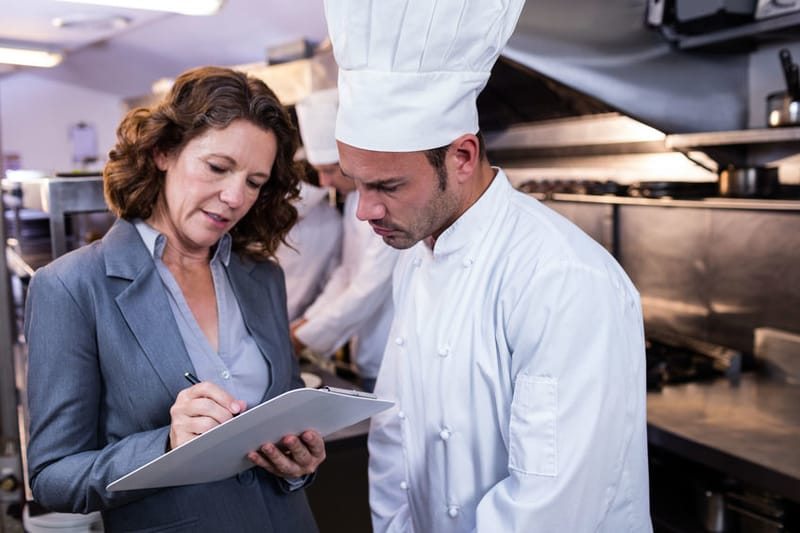
Image credit: Wavebreak Media Ltd via 123rf

How Minnesota Food Managers Should Build their COVID-19 “Stay Safe MN” Preparedness Plan

While we’ve already covered quite a number of the procedures required in the Stay Safe MN plan, it’s important to have your entire plan outlined in one single document for a couple of reasons. First, it’s required as part of Governor Walz’s guidance for reopening, but beyond that, safe reopening plans can tend to be convoluted, so it’s vital to have all of your facilities procedures in one easily accessible document. This will aid in training, enforcement and providing up-to-date information to guests and employees alike.

The benefit of having an official template is that you don’t have to take the time to create one yourself, and you don’t have to worry about overlooking certain protocols. Let’s take a quick look at some of the protocols Minnesota food managers are required to have outlined to stay compliant with Stay Safe MN:

It may seem like a mighty list and a daunting task, but filling out this template is a must for every business. The good news is that the template is fairly easy to follow, and it goes a long way towards tracking your adherence to current reopening procedures.

Have you filled out your COVID-19 reopening plan yet?

CFPM Working From Home

CFPM working from home

It may sound improbable, but food Certified Food Protection Managers ( CFPMs ) may want to consider the benefits of working from home, at least part-time. Before we get too carried away, you should realize that we’re not talking about food preparation from home. That might create an absurd scenario where your prep cook washes and chops lettuce, ships it to the cold-line cook who assembles a salad then mails it to the sous chef for final touches before sending it to a server via a private courier for delivery to the customer, and besides, food preparation in your home kitchen is still a violation of the Minnesota food code.

CFPM working from home
Image credit: Viacheslav Iakobchuk via 123rf

Working From Home and the CFPM

What we’re talking about here are tasks that CFPMs can take care of away from the restaurant such as:

  • Scheduling
  • Order processing
  • Creating training material
  • Menu design

With current restrictions on the number of customers and staff allowed on the premises in order to slow the spread of the Coronavirus, a certified food protection manager’s time is rather constricted when actually in the building. Under pre-COVID-19 regulations, the food safety manager could schedule more staff on days when there was office work to be done, relieving him of on-the-floor duties. Now, the food safety manager has to take an active role in food preparation, quality assurance and the oversight of the Stay Safe MN guidelines for Minnesota food production facilities.

With all of these roadblocks in the way of office work, we’d suggest that CFPMs schedule a few hours a week to take care of what office tasks they can from home. Staffing schedules, creating new menus and crafting training materials can easily be done from a home PC. Many POS systems even allow for remote access so you can track sales, and many foodservice suppliers have online ordering capabilities. We suggest you talk to your suppliers and the IT department of the company that supplies your POS software to discover what remote options you may have.

Do you find yourself taking care of more of your office duties as a CFPM at home rather than at your restaurant?

Food Safety Managers and Stay Safe MN Regulation Compliance

At Safe Food Training, our ultimate goal is to educate for food safety managers on current food safety regulations, and sometimes that includes discussing current restrictions put on foodservice businesses during these trying times. It’s not our goal to provide commentary on these rules and government actions, but it’s vital to discuss these issues to keep food businesses open and operating under current conditions. In response to outbreaks of Corona Virus linked to food establishments, Governor Tim Walz indicated that bars, restaurants and other food-related businesses would be shut down for failure to adhere to COVID-19 dining restrictions. This week, we’ll take a look at how food safety mangers can comply with Stay Safe MN regulations to avoid potential closure.

Food Safety Managers and Stay Safe MN Regulation Compliance
Image credit: pxfuel

How Food Safety Managers Keep Food Businesses Open During Stay Safe MN

The ability to track Covid-19 infections and outbreaks has greatly increased over the past few months, and one thing the data shows is that food establishments, bars and clubs, in particular, have the potential to be spreader locations for the disease. It’s not just an isolated incident at a few bars in Minneapolis or even in our own state. The governors of Texas and Florida have chosen to close bars completely and scale back restrictions on dining, and Arizona eating establishments are facing more restrictions due to the spread of the Corona Virus. Due to the range of rules in place and differing philosophies of the governing bodies of states showing an increase in infection rates, this may not be a trend based on any one initial response to the controlling the virus.

Since this seems to be a widespread response to the epidemic, how can food safety managers balance keeping their guests safe, generating revenue and remaining open?

The prudent thing to do to keep your doors open during these times is to adhere to regulations. An attitude of compliance throughout the food industry may give governing authorities the sense that the foodservice industry is dedicated to beating COVID-19 and they’ll come to tout food safety managers and eateries as allies rather than businesses that need further monitoring and enforcement. Whether closed due to further outbreaks or noncompliance, a shuttered establishment brings in no revenue, so we should do our part to keep food businesses open.

Our hope is that these Stay Safe MN rules and regulations are based on the best science available, and at this time we have to trust that these limitations will lead us to days where we can see our local foodservice industry flourish and be a vibrant part of Minnesota communities.https://minnesota.safefoodtraining.com/?p=2190

Illness Reporting Requirements for Certified Food Protection Managers

Illness reporting requirement for Certified Food Protection Managers

We all know that the health department tracks cases of foodborne illness reported to them by consumers who are sickened by food, but did you know that certified food protection managers are required to play an active role in the reporting of and tracking of illnesses of both guests and staff? This week, we’ll take a close look at the reporting duties of a certified food protection manager, and how tracking employee illnesses plays a vital role in keeping the public safe.

Illness reporting requirement for Certified Food Protection Managers

When are Certified Food Protection Managers Required to Report Illnesses?

Many certified food managers may be hesitant to inform the health department when one of their guests claims to have been sickened by the food they were served. They may think that this could instantly lead to an inspection, or even an unwarranted punishment inflicted on the establishment. Over the course of our years of food safety training, we’ve found local health inspectors are more interested in keeping the public safe and solving problems rather than punishing food production facilities. In fact, it could turn out that your establishment wasn’t responsible for poisoning a guest, but the information you provide could lead to a source in the supply chain where product may have become contaminated.

Even if it’s just one case, MN illness reporting requires certified food protection managers to contact the health department if a guest claims to have symptoms including vomiting and diarrhea. They are also required to report suspected cases of:

  • E.coli
  • Hepatitis A
  • Norovirus
  • Salmonella
  • Shigella
  • Parasitic Infections

Reporting these types of cases to the health department helps them establish whether or not there is a pattern or cause to look into a potential outbreak, be it in your restaurant or somewhere in the supply chain.

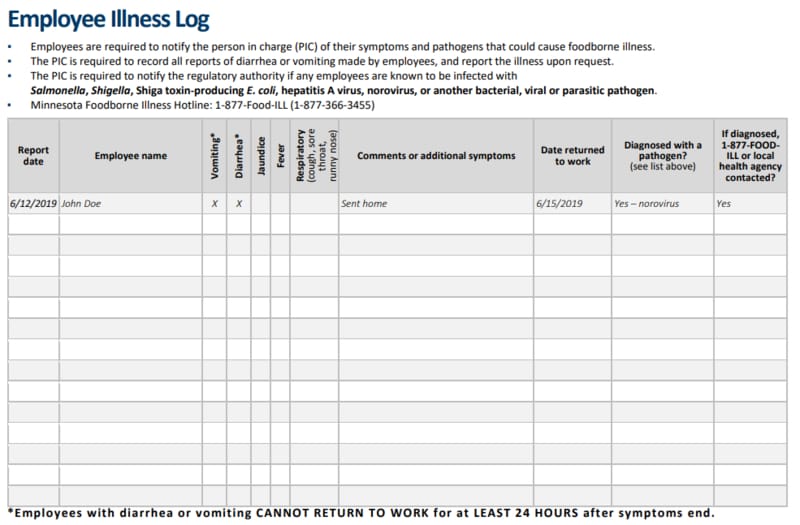
The same scenario is true when one of your staff becomes ill. Certified food protection manager training tells us that a record should be kept of staff illnesses. You should track which employees have called out sick with stomach ailments or who have been diagnosed with common foodborne illnesses. If a pattern emerges, there may be the need to take a look a food safety lapses that may be directly infecting your staff.

How do you handle reports of foodborne illness that may have originated at your business?