Food Safety Manager and Health Inspector Interactions

Food Safety Manager and Health Inspector Interactions

There are times when running food safety manager courses when we hear a student ask how to deal with their local health inspector. We find that there are many misconceptions about the health department’s roll and what their goals are when they come to inspect food production facilities.  Let’s about the food safety manager and health inspector shared interest.

Food Safety Manager and Minnesota Health Inspector Interactions
Image Credit: Carroll County Health Department, Maryland.gov

The Food Safety Manager and Health Inspector Goals

We’ve heard some kitchen managers speculate that the health inspector is out to get them, and that their main purpose is to find as many violations as possible in order to shut restaurants down. We’d like to counter that this is absolutely not the case. The food safety manager’s goals should correspond with your local health department’s objectives.

As a Minnesota certified food manager, you are under an obligation to make sure that the food you serve is safe. The health inspector’s job is not to punish you for not following the health code to the letter, but to help you keep your food safe.

When the time rolls around for your inspection, provide any information your inspector needs to complete their task. Keeping all of your certification records in an easily accessible location goes a long way towards letting them get on with the inspection process. The inspector will greatly appreciate if you allow them to go about their tasks with minimal interference. They may have a question or request from time to time, so make sure that you make time to assist them when necessary. We suggest even walking along with them as they do the inspection if possible.

If they arrive during a busy shift, you’ll find that they’ll normally be more than patient and courteous enough not to interfere with your regular routine.

Once the inspection is complete, make sure that you go over the report before they leave. This is the ideal time to ask questions, seek advice for tricky food safety scenarios and get an overall report as to how well your facility protects its guests from food-borne illness.

Remember, both you, as a food safety manager and health inspector are working to achieve the same objective… keeping the food you serve to guests safe. Coordinating with an experienced professional such as your local health inspector can help you see your operation from a different perspective and refine your procedures.

How do you deal with your inspector when they visit your facility? Do you take time out of your day to interact with them, or do you let them go about their inspection as quickly as possible?

Online Food Safety Course to Beating the Summer Heat

Food Safety Course to Beating the Summer Heat

The summer months can be brutal in the food production industry with hot, muggy air combining with the high temperatures of ovens and other cooking implements. Your kitchen staff will do anything necessary to maintain a remotely comfortable work environment, but there are a few things you have to look out for to make sure that your cooling techniques are not causing a food safety hazard. This week, we’d like to provide a brief online food safety course to keeping cool and keeping your food safe.

Food Safety Course to Beating the Summer Heat
Image Credit: PXhere

Food Safety Course on Cooling Guide for the Hot Summer Months

When temperatures rise, food service worked head immediately to storage and dig out whatever fans they can get their hands on and begin to strategically place them around the kitchen for maximum effect. While fans will circulate the air in your facility, they also circulate dust and other contaminates in the direction of your food. If you utilize fans to keep the air moving, take extra precautions that they are kept below the level where food is stored or prepared. Pointing a fan down onto your production line may pull in dust from the tops of equipment, areas that have not been cleaned properly and other locations where dust tends to build.

Propping open doors to the outside and using a fan to blow air in may also cause a food-borne illness hazard. Opening doors leads to the potential for flies and other contaminate-spreading insects to enter your facility, especially if the open door leads to an area where garbage is stored. It may be wise to look into cooling techniques that do not require an open exterior door

Cleaning your ventilation system regularly will help suck the hot air coming from your equipment out of your facility. Airborne grease and dust caked in ventilation filters greatly reduce efficiency and increase the temperature in your kitchen.

Do you have any sure-fire ways to keep your kitchen cool and prevent fans and ventilation from circulating contaminates around your facility?

Proposed Changes to the Minnesota Food Code and the Certified Food Manager

Changes to the Minnesota Food Code

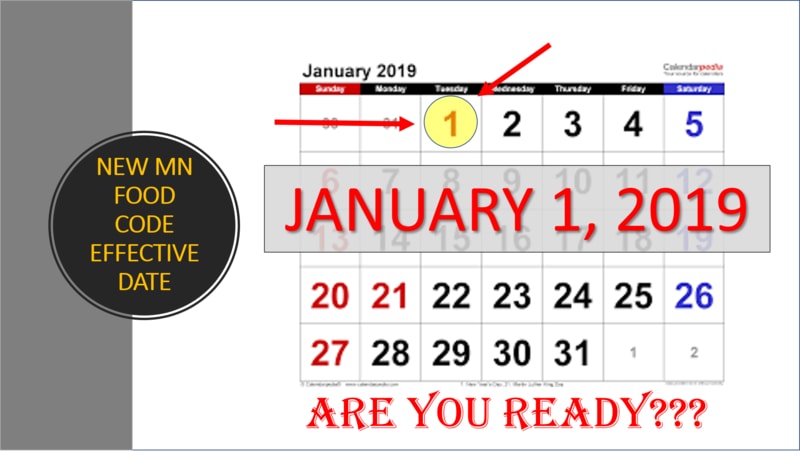
For the first time since 1998, the Minnesota Department of Health is proposing changes to the state’s food code. While some of these changes to the Minnesota food Code are merely an altering of the terminology used throughout, there are a few proposed changes that certified food managers need to pay attention to.

Changes to the Minnesota Food Code


Proposed Changes to the Minnesota Food Code

The Department of Health published a list of 20 proposed major changes to the Minnesota food code. Right off the bat, they explain that there will be many changes concerning the language of the actual text. For example, two of the biggest changes include altering the title of Certified Food Manager to Certified Food Production Manager and changing “potentially hazardous foods” to “time/temperature control for safety foods.” They are also removing “critical” and “non-critical” categories with different levels of priorities for food-safety risks.

This list of 20 items includes some procedures that change the way certified food managers handle day-to-day operations. We will go into more depth on specific items in future articles once these changes come closer to implementation, but some of the highlights that stand out to us include:

  • The addition and clarification of rules for serving a “highly-susceptible” population such as children and the elderly
  • Hot-holding temperatures lower to 135 degrees and the time certain foods can held under 70 degrees increases to 6 hours
  • Changes will establish a non-continuous cooking procedure (with approval) for raw foods that have been cooking for under 60 minutes
  • Fingernail brushes will no longer be required at employee hand-washing stations
  • Several hygiene procedures are addressed, such as creating vomit cleanup protocols, requiring handwashing procedure signage and restrictions concerning working with wounds

These are just a few changes that stood out to us, and we are currently awaiting word from the Department of Health to clarify many of the other changes in the code. We will be sure to cover anything we learn as soon as the information becomes available.

After reading the brief synopsis from the Department of Health, do you see any issues you’d like us to delve deeper into in the future?

Hepatitis A Vaccinations and the Food Safety Manager

Hepatitis A Vaccinations and the Food Safety Manager

In our daily research, we’re coming across more and more cases of Hepatitis A resulting from the consumption of items prepared by infected food service workers. Food safety manager must be on the lookout to prevent food-borne illness from every hazard, and preventing Hepatitis A infections creates some unique challenges.

Hepatitis A Vaccinations and the Food Safety Manager
Image credit: Public Health Image Library

Should Food Safety Managers Require Hepatitis A Vaccinations?

Symptoms of Hepatitis A may take up to two months to manifest making it difficult to know exactly when and where outbreaks initially begin. Some of the symptoms of this disease that affect the liver include:

  • Stomach pain
  • Nausea
  • Fatigue
  • Loss of appetite

Health officials recommend that anyone who comes into contact with the Hepatitis A virus be vaccinated within 14 days of exposure.

Two of the major hotspots for Hepatitis outbreaks in the United States include Kentucky and fellow Midwestern state Michigan. In fact, outbreaks in these two states have prompted officials in the state of Indiana to strongly urge residents to be vaccinated before visiting.

Being vaccinated whether or not you’ve come into contact with the virus can be an effective way to protect your product from contamination by a sick staff member. A few major chains, including McDonalds, are jumping on board with vaccination as prevention by voluntarily vaccinating their employees against the virus, specifically in hotbed states such as Michigan and Kentucky.

In a recent state-by-state survey of Hepatitis A cases this, Minnesota reports that cases are within traditional ranges so far in 2018, and none have been traced back to the food service industry. However, with cases in other states on the rise, food safety managers should still be aware of the risks of this virus.

Do you feel food service workers should receive a Hepatitis A vaccination, or should it be left to a case-by-case basis?