Get your MN kitchen compliant with our state-approved Certified Food Protection Manager Training. We’re offering headache-free 8-hour initial courses and 4-hour renewals.

The-Benefit-of-Taking-MN-Food-Manager-Recertification-Classes

The Benefit of Taking MN Food Manager Recertification Class

When the time comes for food service supervisors to renew their certifications, many opt simply to study and take the online course without enrolling in a full MN food manager recertification class. We think only positive things come out of taking the full course rather than skipping it during certification renewal.

The-Benefit-of-Taking-MN-Food-Manager-Recertification-Class

Image Credit: mayushka

Nothing beats interacting and engaging with an experienced food safety instructor and getting together with fellow food service professionals during training. MN food manager recertification classes sometimes bring up food safety issues you may have forgotten or may not be aware of. Interacting with fellow professionals and a trained teacher help brings solutions and answers questions about unclear topics.

There is a common misconception that a MN food manager recertification class will cost just as much as the initial food safety certification class and taking the course online can save money. Actually, the fees for instructor-led classes are the same as online recertification. With costs being similar, it makes sense to take advantage of an environment where you have the opportunity to ask questions and receive insights from a food safety expert.

Finally, taking the courses at home runs the risk of distraction. Taking the class in person keeps students focused and engaged in the material. Many students struggle to focus when given the opportunity to pause the training and become sidetracked by other tasks. Completing your recertification in one sitting during a scheduled class and testing session will reduce the chances you’ll lose focus while at home.

How do you prefer to handle recertification when you must renew? We offer both classroom and online instruction to meet all of our clients needs. We hope to see you when the time comes to renew your certification.

Food Handling Course for Seasonal Menus

Food and Handling Course for Seasonal Menus

As the chill of winter recedes, many restaurant managers rotate warm comfort foods off of their seasonal menus in pursuit of fresh ingredients. Rotating menus seasonally can be a great way to keep your loyal clientele returning to find new dishes available and bring out the best in your creative kitchen staff.

Seasonal Menu Food and Handling Course Guidelines

Food Handling Course for Seasonal Menus

Image Credit: mayushka

Each season brings its own food safety challenges and the upswing in fresh ingredients spring offers creates some cause to take extra precautions. We’ve isolated a few issues you may want to consider as you bring in the ingredients for your fresh new menu:

  • Proper storage of fresh proteins
  • Proper washing of fresh fruits and vegetables
  • Review of holding procedures for new hot and cold items

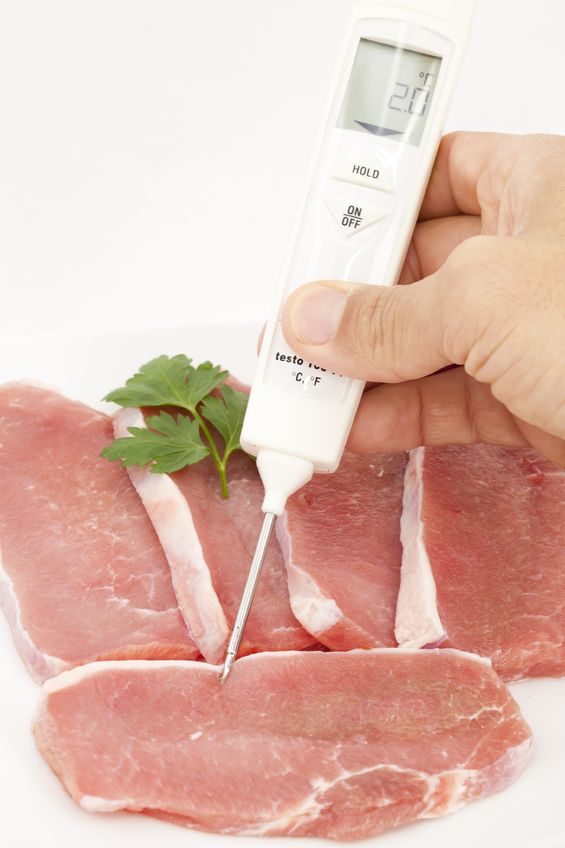
Most food and handling course protein storage guidelines tell you to store your product on shelves in descending order of final cooking temperature. For example, whole raw pork would be stored above ground meats and poultry products must always be placed on the lowest shelf. Most seafood products will have the lowest cooking temperature, but we recommend you find a separate storage location for fish and shellfish that is not on a shelf over any other product. Some of your guests may suffer from seafood allergies, so taking precautions to prevent cross-contamination is a must.

Spring also brings an abundance of fresh produce. Remember to wash all produce that will be cooked or served raw, even if you bring in organic ingredients. Washing produce removes residue left from pesticides, fertilizers or dirt that remains on fruits and vegetables.

Finally, review hot and cold cooking and holding temperatures with your staff. Raw seafood items are particularly popular in the spring and summer when fresh ingredients can be purchased. If you serve sashimi, sushi or seafood tartare, spend some extra time reviewing cold holding and cross-contamination prevention.

Do you choose to rotate your menus with the seasons or do you have other ideas for keeping the food you serve fresh and relevant?

Food Manager Training And When To Recall Products

Food Manager Training And When To Recall Products

Nothing completes a freshly toasted bagel like cream cheese, but in the month of January, Panera Bread customers had to settle for a substitute. After a sample from a single batch of one of their flavored cream cheeses tested positive for Listeria, Panera Bread made the decision to recall all cream cheese products in their restaurants, regardless of production date. This week, we’d like to explore Panera’s recent decision from a food manager training perspective. Bearing in mind their efforts to keep customers safe, especially considering the number of high-profile food-borne illness outbreaks we’ve seen over the past few years.

Food Manager Training And When To Recall Products

Recalls and Food Manager Training

Panera’s press release is very clear that only one batch of flavored cream cheese produced on a single date contained a tainted sample and that no cases of food poisoning have been reported. So was recalling product already shipped and produced on different dates really necessary?

When studying bacteria in food manager training classes, we learn that Listeria is a potentially deadly pathogen, especially to the elderly, children and those with weakened immune systems. Extreme caution should always be taken when there is even the remote possibility of releasing food tainted with Listeria into the food supply. In this current case, we support Panera Bread’s decision to exercise an abundance of caution. Even one unnecessary death from food poisoning is too many.

While only one batch tested positive, there is always the remote possibility that tainted product may have snuck its way into the restaurant chain’s distribution system. In a past blog, we explored the potential fiscal repercussions of ignoring food safety protocols. Taking aggressive steps when it comes to preventing food-borne illness not only makes a great deal of sense from a safety standpoint, but from a financial standpoint as well. While Panera may have decided to take a short term loss by disposing of more product than just the batch that had been confirmed contaminated, they may have saved themselves a massive loss in the long run with their caution.

We applaud Panera’s procedures in this case. Considering what you have learned during online food manager training courses and instructor led ServSafe classes, do you agree?

Spanish Online Food Safety Certification Courses

Spanish Online Food Safety Certification Courses

For a great number of innovative restaurateurs, food service managers and employees that work in food production, English is not their first spoken language. This often leads to challenges when it comes time to become food safety certified. Many courses are led by a talented instructor who may have a rudimentary knowledge of the Spanish language, but might not be fully able to converse with a native Spanish speaker. If you have a Spanish speaking employee in need of certification, a Spanish online food safety certification course can help them gain the knowledge they need and take the test in a familiar language.

Spanish Online Food Safety Certification Courses

Copyright: ximagination / 123RF Stock Photo

Benefits of Online Food Safety Certification Courses for Spanish Speakers

Even if a student has a good grip on the English language, they may be more comfortable studying in the language that comes naturally to them. There are certain nuances in both English and Spanish that could cause a teacher to have trouble explaining a concept to a Spanish speaker and have the student misunderstand the information. This can be especially true for food service workers who recently immigrated to the United States.

An online food safety certification course will also help by placing a non-English speaker in a comfortable environment. Online classes can be taken from the student’s home at their own pace. After the student has finished their online training, all that will be left for them is to register for a testing date. Many times this test must be taken at a specific location away from home where they have the advantage of taking it in their own language.

At Safe Food Training, we can set up online courses in both English and Spanish, as well as provide any specialized training you may require.