Get your MN kitchen compliant with our state-approved Certified Food Protection Manager Training. We’re offering headache-free 8-hour initial courses and 4-hour renewals.

MN Food Manager Certification Training and Menus

MN Food Manager Certification Training and Menus

Whether written in chalk on a sandwich board or displayed in elegant fonts in a leather bound folder, menus exist in nearly every restaurant around the world. They also play an important role in food safety and preventing the spread of food-borne illness. In a recent food manager certification training session we engaged in a discussion about what style of menu best promotes food safety, and this week we’d like to share our findings.

Food Manager Certification Training for Keeping Menus Safe

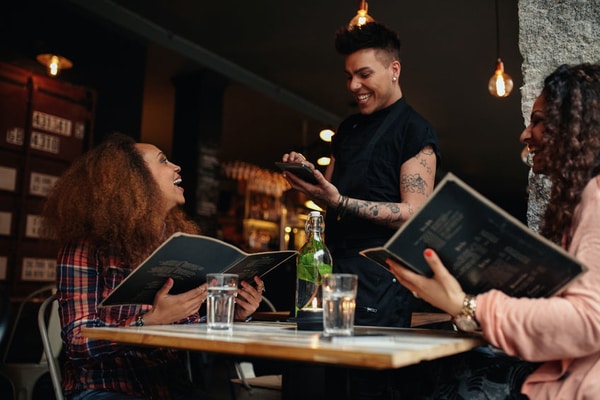
If a restaurant places menus on the table, guests inevitably pick it up. Sometimes food spills on menus and used eating utensils come into contact with the surface. Each of these things potentially transfer bacteria onto these menus that can cause food-borne illness. Different types pose different levels of risk, and some of the menu solutions we’ve looked at include:

  • Paper
  • Laminated
  • Overhead signs
  • Digital

Some food managers use disposable paper menus to prevent one guest from spreading an illness to the next. This is effective only if the menus are disposed of after each diner uses them. Paper menus come with the added cost of the regular purchase of paper goods and the time it takes to print them before, after and even during service if supply runs low.

Laminated menus last longer than paper menus, but an increased risk of spreading bacteria comes if cleaning is infrequent. We’ve visited restaurants where laminated menus feel slick and greasy and may not have been sanitized. Laminated menus beat paper as far as cost effectiveness goes, but sanitation should occur between guests.

From a food manager certification training perspective, an overhead sign poses no real food safety threat to guests. This or a sandwich board offers a good solution for establishments that take orders at a counter rather than provide table-side service.

Many restaurants experiment with the use of digital menus. These range from a tablet left by a server or a touch screen permanently resting on the table. Using a device as a menu may raise operating costs, but they give your customers a unique experience as games and videos give them extra entertainment while waiting for food to arrive. It helps speed up service during busy times as guests can place an order without a server’s assistance. The screens of these need cleaning often as guests will frequently touch them.

Do you consider the spread of food-borne illness when deciding what type of menu to use in your facility?
Online Food Safety Course Guide to Restaurant Grease Traps

Online Food Safety Course Guide to Restaurant Grease Traps

We learn in online food safety courses that grease causes health risks by attracting pests such as rodents, cockroaches and fruit flies, and greasy areas in your restaurant breed bacteria that potentially finds its way into prepared dishes. While wiping down counters and keeping grease traps empty in deep fryers and grills goes a long way towards reducing risk, there is an often overlooked part of grease control that must be taken care of.

Proper Maintenance of Restaurant Grease Traps

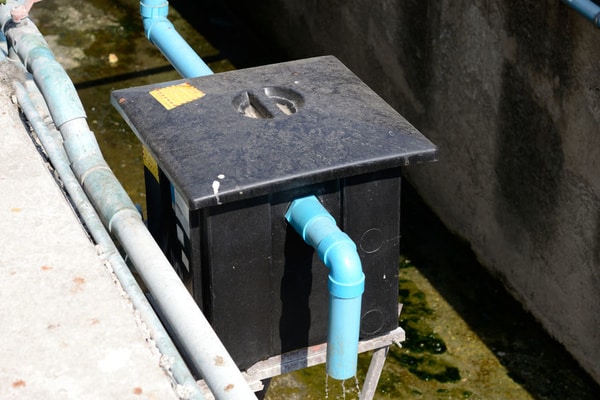
Many food production facilities have a grease trap located out of sight that prevents grease from entering the waste water system. It is important to make sure that it is properly cleaned and maintained. Ignoring this safety device can cause hazards such as:

  • Sewage backups
  • Slow drainage
  • Pest infestations

An improperly maintained grease trap eventually prevents wastewater from entering the sewage system. This causes your drain to run slowly, and could cause contaminated water to back up into your facility. A sewage backup digs into your profit margin as a plumber must be called in, product exposed to contaminated wastewater must be disposed of and you might be forced to close your doors while the problem is resolved.

Excess grease increases the risk that insects and other unsanitary pests find their way into your facility, and if your grease trap becomes clogged, fruit flies could propagate in your drainage system before you’re even aware of a problem.

We need to note that grease that collects in these traps must be disposed of properly. Many local sources offer grease collection services. They properly recycle collected grease for you, and some companies may even pay you for the grease you collect over time depending on the amount and quality of your grease.

Grease control is only one topic covered in an online food safety course. Are there any other topic that you’d like us to expand on in the future?

Allergy Action Plans and the ServSafe Food Manager

ServSafe Food Manager and Allergy Education

As a ServSafe Food Manager it’s important that the staff be familiar with your allergy action plan. While most food service workers know about food allergies and feel they can accommodate customers with allergies who visit their establishment, educational gaps occur in some facilities concerning how allergies work and what to do in an emergency situation. The CDC recently conducted a study seeking to find how much restaurant staff actually knew about the topic and came up with some interesting findings.

Allergy Action Plans and the ServSafe Food Manager

One illuminating fact this study shows is that allergies are more common than many ServSafe food managers realize. One in 13 children suffers from some form of food allergy, while one in 25 adults must avoid certain foods. The severity of reaction varies from person to person, but some react by coming into contact with allergens without even ingesting the ingredient.

Since some of these reactions cause severe distress, and possibly death if emergency help does not arrive in time, having a plan in place prepares your staff to deal with guests with allergies. Some things you should teach your employees include:

  • What common allergens exist in your facility
  • Some customers cannot consume even small amount of certain items
  • How to react if a guest has a reaction

Knowledge helps keep your guests safe. Some of your patrons will not be able to consume common items such as nuts, dairy or shellfish. Teaching your cooks and service staff how these ingredients are used can help steer guests away from certain dishes.

If a guest has a reaction, get help immediately. Some reactions happen from minor contact and should not be waited out to see if the guest recovers. Call 911, and if a guest wears an allergy alert bracelet relay that information so that emergency responders can be prepared.

Integrate allergy training to make sure your staff feels confident in serving diners with allergies. Some outlets nominate one or two employees, one of them their designated ServSafe food manager, to receive extra training and pass that knowledge on to staff members and personally handle guests questions about allergens on the menu.

Do you have an allergy action plan? If so, feel free to share in the comment section below.

C:\Users\Dave\Pictures\Pictures\Street Level Solutions\RoHa\ServSafe_Food_Safety_and_the_Dangers_of_Undercooked_Shellfish.png

ServSafe Food Safety and the Dangers of Undercooked Shellfish

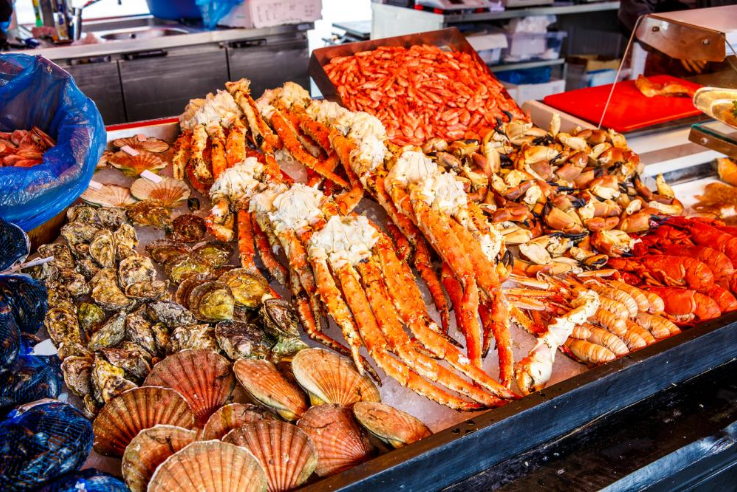
Shellfish selections tend to be plentiful on summer happy hour and appetizer menus for their versatility and fresh taste, but, with the heat of spring and summer warming the Gulf of Mexico, the Atlantic Coast and waters in Alaska and the Pacific Northwest, serving shellfish during the summer months creates a rise in the risk of spreading a food-borne illnesses due to Vibrio infections. This week, we’ll briefly discuss how to cook and store shellfish according to ServSafe food safety guidelines.

 ServSafe Food Safety and the Dangers of Undercooked Shellfish

ServSafe Food Safety and Vibrio Infections

Two closely related bacteria cause Vibrio infections. These bacteria thrive in shellfish from warmer waters and most frequently sickens people who consume contaminated raw and undercooked shellfish. The symptoms of infection include:

    • Vomiting
    • Diarrhea
    • Chills and fever
    • Skin rashes

While consuming undercooked shellfish increases the potential for spreading an infection, Vibrio bacterium also potentially spreads through contact with bare skin. These rare cases most commonly occur when raw shellfish comes into contact with a sore or open wound. Raw clams, oysters, scallops and mussels need to be handled in a hands-free manner.

When cooking shellfish, they must achieve an internal temperature of 145 degrees. Your cooked shellfish need to remain out of the danger zone after cooking, and we suggest that you serve them as soon as possible after they are prepared.

Proper storage also reduces the risk of spreading food-borne illness. ServeSafe food safety rules require shellfish to be stored below 41 degrees, and no two batches of shellfish should be stored in the same container. For example, scallops and clams cannot be stocked in the same containers prior to cooking. The same holds true with shellfish received on different dates. Combining two batches of shellfish increases the risk of spreading bacteria from one to the other.

The Minnesota Food Code also requires that tags from fresh shellfish be saved for 90 days. This requirement is in place to track down the source should an outbreak of Vibrio poisoning occur.

We love sampling shellfish from some of our talented local chefs. What are your favorite shellfish dishes?