Keep your Minnesota kitchen compliant. We track the latest food recalls and safety alerts so you can pull bad products fast and protect your customers.
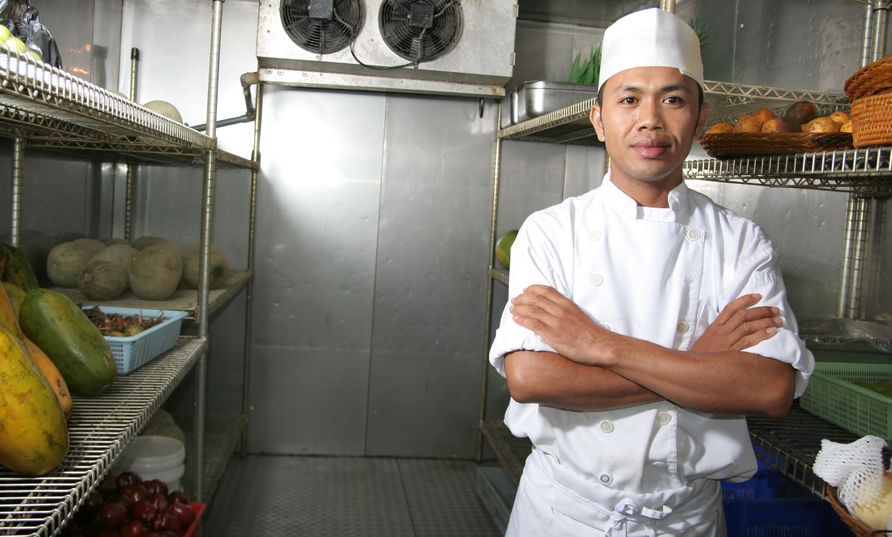
One of the main goals of a food service supervisor should be to make sure that their staff is fully trained and growing stronger as a unit. Oftentimes, employees complete their Minnesota food training, gain their certifications then just stop. They put off reviewing what they’ve learned until the time comes for renewal. September has been set aside as National Food Safety Month, and we think a food training checkup goes along with the spirit of the month.
There are many resources available to bring attention to important food safety procedures during this month. ServSafe has developed a questionnaire to gauge how food service workers view the training that occurs at their place of employment. Using this as a guide could help you assess how your staff views food safety.
Along with this questionnaire, you may want to ask some questions tailored to your operation. Supervisors sometimes assume their staff understands food handling procedures and neglect certain aspects of their training. This lack of education can lead to an unhealthy situation for your customer base.
Whether it’s during cooling procedures, storage of product or cross contamination prevention, the slightest misstep could create a situation where your products sickens a guest. When you engage in a food training checkup activity, don’t overlook the small things. Familiarize each member on staff with proper procedures. It may help to discuss the risks that occur when they ignore food handling rules. Teaching your staff the problems that consuming tainted food causes will hopefully help them keep food safety as their top priority.
Once you’ve completed your checkup, you may find the need to consult a professional to run a training session. At Safe Food Training, we can help you with this process.
Do you engage in any kind of food safety checkup with your crew? If you have any great ideas to help your fellow certified food managers accomplish this task, leave your suggestions in the comments section below.
https://minnesota.safefoodtraining.com/wp-content/uploads/2017/09/MN-Food-Training-Checkup.jpg565848Christine Dantzhttps://minnesota.safefoodtraining.com/wp-content/uploads/2025/06/Remove-background-project-1024x614.pngChristine Dantz2017-09-26 06:35:412026-05-24 14:12:39Giving Your Staff a MN Food Training Checkup
It’s September, and we’re in the midst of National Food Safety Month. National Food Safety Month gives us the opportunity to look at some of the most important rules that keep our food safe. It also gives restaurateurs and food service supervisors the chance to pass on the knowledge they’ve learned during food safe training to their customers.
Before we talk about ways to introduce food safe cooking practices to your guests, it’s important to quickly review proper temperature control procedures. All food must spend as little time in the danger zone as possible. This means all hot foods must remain over 140 degrees and all chilled foods must remain below 41 degrees. Raw proteins and reheated foods must be fully cooked before serving.
Reheated cooked product: 165 degrees
Raw poultry: 165 degrees
Ground meats and pork: 155 degrees
Eggs that will be held: 155 degrees
Eggs for immediate service: 145 degrees
Beef, fish and game: 145 degrees
When we talk to people who have never worked in the food industry, we find some interesting misconceptions about how temperature affects food safety. Many people know the common pathogens that cause food-borne illness due to media coverage of outbreaks, but they don’t consider how their cooking habits at home can have the same consequences on a smaller scale. While food business operators are not responsible for how their patrons handle food at home, Food Safety Month offers a way to share food safe training practices with their guests.
Including an insert in your menu that explains what Food Safety Month is about is an easy way to pass on food safe training practices. Educating your patrons on proper cooking temperatures for proteins can give them an at home guide to doing it themselves. The Minnesota Food Code provides fact sheets that can be easily adapted to produce a simple instruction guide to enlighten your guests on this key food safety issue.
We think it’s a great idea to pass on food safety tips to those not in the industry. Do you have any ways that you educate your guests?
https://minnesota.safefoodtraining.com/wp-content/uploads/2017/09/Temperature-Control-and-Food-Safe-Training.jpg537892Christine Dantzhttps://minnesota.safefoodtraining.com/wp-content/uploads/2025/06/Remove-background-project-1024x614.pngChristine Dantz2017-09-12 15:20:032026-05-24 14:12:40Food Safety Training Review of Proper Temperature Control
As food safety professionals, we often play Monday morning quarterback whenever we read a news story about a major food-borne illness outbreak. We wonder what NFSRP standards were violated or if the certified food manager neglected some aspect of safe food training when bringing on new staff. Fortunately, the CDC tracks the vital statistics of an outbreak to bring a clearer picture of how they get started.
Image credit: Wikimedia Commons
Food Training Guide to the Source of Food-Borne-Illness Outbreaks
One glaring statistic in the CDC’s collection of data that drew our attention is that 88-percent of outbreaks begin at a restaurant rather than a food packaging facility. This means that restaurant supervisors must implement quality food training methods that will enforce the importance of diligence in sanitation, prevention of cross contamination and proper temperature control. There is a very slim margin of error when it comes to keeping food safe, and in the fast paced atmosphere of a restaurant kitchen, the consequences multiply when food handling mistakes occur.
A second statistic that jumps out at us is the method of contamination. The top factors for food becoming contaminated are attributed to an employee handling food in some manner while infected with an illness. We think that this speaks volumes as to what a restaurant’s policy should be about working sick. Employees must not handle food while infectious.
The last statistic we’d like to point out is that over 45-percent of food poisoning outbreaks come from multi-ingredient dishes. Second and third place weren’t even close with vine vegetables at eight-percent and fish at seven-percent. There is no real trend to point to one protein or vegetable that is more likely to cause an outbreak than another. This means that all food needs to be handled with care, no matter what type of cuisine in on your menu.
If you’re a restaurateur, do these statistics surprise you? Let us know in the comments section.
https://minnesota.safefoodtraining.com/wp-content/uploads/2017/08/Safe-Food-Training-and-Tracking-a-Food-Borne-Illness-Outbreak.png452600Christine Dantzhttps://minnesota.safefoodtraining.com/wp-content/uploads/2025/06/Remove-background-project-1024x614.pngChristine Dantz2017-09-05 08:58:412026-06-03 20:40:26Food Training and Tracking a Food-Borne Illness Outbreak
Every Certified food manager focuses on keeping the food they serve safe all year long, but the month of September has been set aside as National Food Safety Month in an effort to promote food safety beyond the walls of professional food service outlets. Since we aim to reduce the risk of food-borne illness, we fully support this idea of bringing attention to food safety and passing on the knowledge of our online food certification classes to those not in the food service industry.
How the Certified Food Manager Can Promote Food Safety to Patrons
Standards are already in place to teach your restaurant goers some safe food handling procedures. The current food code requires that you alert your guests to the dangers of consuming undercooked meat and eggs. This warning should exist somewhere on your menu if you serve dishes with these ingredients. But is there more that certified food managers can do to promote food safety outside of their establishments?
Most patrons don’t expect an exposé on bacteria or the side-effects of consuming tainted food before they eat, but there are simpler food-safety procedures that are easy to pass on to your guests, the easiest being the concept of proper handwashing.
We’re not suggesting that your host or server gives each customer a lecture about how to wash their hands before eating, there are subtler ways to get your diners in the habit of washing before they eat. If your staff simply lets each party know where your washroom is located, that should put the idea in your guests’ heads that they may wish to wash their hands.
Once in the washroom, a procedure chart for proper handwashing should be placed in a visible location. Make sure your chart states how effective handwashing prevents the spread of food-borne illness and how to properly wash after using the restroom.
Other ways to promote food-safety among your guests could be to have a list of the sanitation procedures that occur at each table visible somewhere in the dining room. This shows your customers the importance of cleaning eating areas regularly, and they might bring those habits home with them.
Certified food managers focus on keeping the food they serve safe all year long, but the month of September has been set aside as National Food Safety Month in an effort to promote food safety beyond the walls of professional food service outlets. Since we aim to reduce the risk of food-borne illness, we fully support this idea of bringing attention to food safety and passing on the knowledge of our online food certification classes to those not in the food service industry.
How the Certified Food Manager Can Promote Safe Food Safety to Patrons
Standards are already in place to teach your restaurant goers some safe food handling procedures. The current food code requires that you alert your guests to the dangers of consuming undercooked meat and eggs. This warning should exist somewhere on your menu if you serve dishes with these ingredients. But is there more that certified food managers can do to promote food safety outside of their establishments?
Most patrons don’t expect an exposé on bacteria or the side-effects of consuming tainted food before they eat, but there are simpler food-safety procedures that are easy to pass on to your guests, the easiest being the concept of proper handwashing.
We’re not suggesting that your host or server gives each customer a lecture about how to wash their hands before eating, there are subtler ways to get your diners in the habit of washing before they eat. If your staff simply lets each party know where your washroom is located, that should put the idea in your guests’ heads that they may wish to wash their hands.
Once in the washroom, a procedure chart for proper handwashing should be placed in a visible location. Make sure your chart states how effective handwashing prevents the spread of food-borne illness and how to properly wash after using the restroom.
Other ways to promote food-safety among your guests could be to have a list of the sanitation procedures that occur at each table visible somewhere in the dining room. This shows your customers the importance of cleaning eating areas regularly, and they might bring those habits home with them.
Does your establishment do anything special to enlighten your visitors on the importance of safe food handling practices?
https://minnesota.safefoodtraining.com/wp-content/uploads/2017/08/Food-Safety-Month-and-the-Certified-Food-Manager.jpg627600Christine Dantzhttps://minnesota.safefoodtraining.com/wp-content/uploads/2025/06/Remove-background-project-1024x614.pngChristine Dantz2017-08-22 11:48:592026-05-24 14:12:40Food Safety Month and the Certified Food Manager