Keep your MN kitchen running smoothly. We’re sharing real-world ServSafe & NEHA Best Practices to help you train staff and ace your next health inspection.

GMO Effect on Servsave MN

ServSafe MN Training and the New GMO Labeling Bill

GMO- Lableing Effect on ServSafe MN Training

How will new GMO -Labeling Law Effect ServSafe MN Training?

Recently, the President signed a bill that calls for the labeling of all products that contain genetically modified ingredients. This is a hotly debated topic among consumers, produce suppliers and food industry professionals, and we feel that it’s an important issue and worthy of at least some discussion.

ServSafe MN Training and GMO Labeling

As current ServSafe MN training and Minnesota Food Code regulations stand, there is nothing that is mandated in regards to using GMO-modified ingredients in the local food service industry. As far as food safety and food-borne illnesses are concerned, the state does not feel that GMO’s pose any significant health risk.

There is, however, a growing trend among consumers to purchase food items that are certified organic or clearly labeled as non-GMO. This current bill appears to provide transparency as to where the ingredients in prepared items come from and will allow the consumers to make their purchasing decisions based on whether a product is GMO free or not.

GMO-Labeling Effects on the Food-Service Industry and ServSafe MN Training

This new bill forces us to consider how new regulations will impact local businesses.
Quite honestly, we do not have enough information at this time to fully address the long-term effects of this bill. The United States Department of Agriculture has stated that it may take up to two years for them to put any regulations in place.

While we know that these rules will play a role in how food is packaged on our grocery shelves, it may also have repercussions for our restaurants and smaller businesses. Most food-service managers will tell you that proteins and fresh produce often come from different suppliers depending upon availability. A lot of these ingredients are shipped in bulk and many times are only labeled with their farm or place of origin. In these cases, it is our view that the suppliers themselves will be responsible for clearly labeling these ingredients before they reach your facility. If you produce any item packaged for sale using ingredients previously labeled as genetically modified, you will probably be required to label your product accordingly.

One sector of the industry that does not seem to have been addressed in the early stages of this process is the restaurant industry. At this point we cannot tell you whether restaurants will have to include any form of disclaimer on their menus. If this does become the case, you can rest assured that Safe Food Training will cover it in an upcoming blog.

Supplement to ServSafe MN Classes Post-Fire Solid Fuel Appliance

Supplement to ServSafe MN Classes: Restaurant Fire Hazards

In our ServSafe MN classes we spend half a day discussing how to safely prepare and serve food to customers. But owners and food service managers must consider more than just food safety to protect employees and customers.

This is the third in a series of blogs that look specifically at one of the hazards that Scott Futrell, a local fire protection consultant, has provided to assist you in protecting your customers, employees and business.

Supplement to ServSafe MN Classes Post-Fire Solid Fuel Appliance

Figure 1 – Post-Fire Solid Fuel Appliance
Image credits: Futrell Fire Consult & Design, Inc.

Fire safety in your restaurant kitchen with solid-fuel burning appliances

(This is NOT covered in ServSafe MN classes or the certification exam)

Solid fuel burning appliances create grease-laden creosote. The flash point and autoignition temperatures of wood tar creosote is surprisingly low. All it takes to ignite creosote in hoods, filters, and ducts is a spark, burning ember, or flame. Unfortunately all of these igniters are present in the solid-fuel cooking that raises the creosote temperature to 165°F. Creosote’s autoignition point is the same as paper. This temperature is significantly lower than the auto-ignition temperature of the grease that increases the potential hazard. Even worse the combination of creosote and grease in exhaust hood plenums and ducts can be easier to ignite than grease alone, and can burn hotter.

Cooking of any type has inherent risks. Solid fuel appliances dial up the threat with the addition of highly combustible materials. Restaurants that use these methods generate a large amount of heat and grease, especially when cooking meat. Grease accumulation will make for a dangerous environment, if ductwork isn’t properly installed or maintained.

Some restaurants don’t fully extinguish the fires in solid fuel appliances to minimize reheating. Wood fire pizza ovens operate between 500 and 600°F. Restaurants often keep these appliances smoldering through the night in order to keep the stone warm when not in use. Leaving a fire in the appliance while unattended overnight dramatically increases the risk for businesses.

Carbon-monoxide dangers associated with solid-fuel burning appliances

(This material is informational only- NOT part of ServSafe MN classes or certification exam)

Solid fuel appliances also create the potential for increased carbon monoxide levels within the restaurant. The building’s ventilation system must deliver make-up or replacement air from the outside to resupply oxygen used by solid fuel appliances. Make-up air is also important in ensuring that smoke and exhaust drafts up the chimney, not out into the kitchen and dining areas.

Many restaurant owners do not understand the additional venting considerations or active maintenance requirements it takes to safely install and use solid fuel appliances. This puts their employees, customers and business at risk.

What can you do to protect your customers, employees and your facility investment?

(These recommendations are NOT part of ServSafe MN classes or certification exam)

  • Check the design and installation of the exhaust systems for solid fuel appliances to be sure they are in compliance with codes and standards. More on this in a future edition.
  • Remove ash once per day and spray it with water before storing it in a covered metal container (container should not exceed 20 gallons in capacity). Regularly remove ash from the building and place in a dumpster or container located at least 10 feet away from the building.

Supplement to ServSafe MN Classes-Cleaning Creoste & Grease

If you have any questions about fire safety in the food preparation environment that you would like Scott to discuss leave a comment.

ABOUT THE AUTHOR: Scott A. Futrell, PE, FSFPE, CFPS, SET, CFEI, is a fire protection consultant with Futrell Fire Consult & Design, Inc., in Osseo, Minnesota. He can be reached by e-mail at: scottf@ffcdi.com, or visit www.ffcdi.com.

Bacteria Controlling Additives and Food Safety Certification MN

Bacteria Controlling Additives and Food Safety Certification MN

The prevention of food-borne illness due to harmful bacteria is one of the major topics that we cover in our food safety certification MN training sessions. Bacteria can be removed from foods through washing of raw fruits and vegetables, proper handling of animal proteins and adhering to cooking temperature guidelines. For some time, major food processors have taken an extra precaution to prevent bacteria such as Listeria from contaminating their manufactured product by adding chemically based compounds that slow or kill the growth of harmful bacteria. According to research conducted at the University of Guleph in Canada, these additives can also kill the good bacteria that aid digestion, but they feel that they may have discovered a natural, soy-based product that effectively controls the growth of bad bacteria in manufactured food product.

Bacteria Controlling Additives and Food Safety Certification MN
Image credit: www.flickr.com


Food Safety Certification MN and Controlling Bacteria in Manufactured Products


We understand that this subject is a little out of our food safety certification MN jurisdiction, but we feel that since it does affect the safety of our food supply, it’s one that needs to be talked about. If you read the ingredients of most pre-packaged foods, you’ll see a long list of chemical compounds with nearly unpronounceable names. While all of these additives have been approved by the FDA, there is more and more research emerging linking health risks to these preservatives and chemically-based bacteria killers in the food supply.


The study conducted at the University of Guleph claims that a byproduct of certain strains of soybeans can be just as effective at preventing the growth of bad bacteria without killing the good bacteria that our digestive system needs. If this research is in fact accurate, it may be a promising development.


A few concerns do arise, however, since we are talking about a soy based additive. There are people who are severely allergic to soy and soy-based byproducts. How will adding more soy-based additives into the food supply affect those who have a sensitivity to these types of foods?


The research claims that the method used to extract the necessary elements from the soy bean prevents any of the compounds that cause allergic reactions from entering the food supply. With this study still in the early stages, we’ll remain skeptical, but optimistic, until more case studies have been done and thorough data on this issue have been released.


Additives have been a hot-button issue for some time, and we like to keep an eye out for innovations that may improve the way our food is produced. Feel free to leave your thoughts on this issue in the comment section below.


Alfalfa Sprouts and the MN Certified Food Manager

Alfalfa Sprouts and the MN Certified Food Manager

Alfalfa Sprouts and the MN Certified Food Manager

Photo credit: commons.wikimedia.org

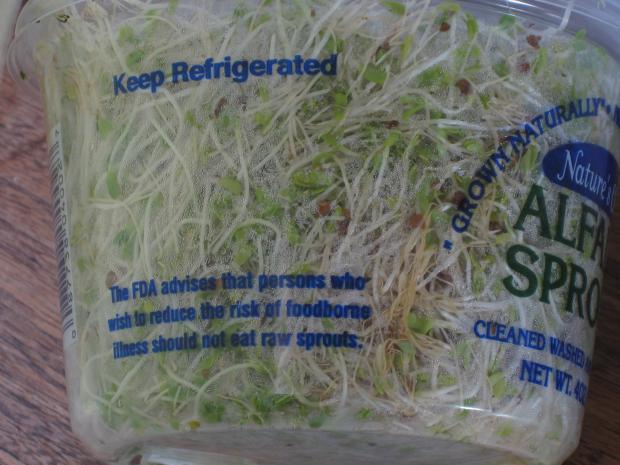
In the month of February, an E. coli outbreak linked to fresh sprouts struck the states of Minnesota and Wisconsin. Fresh alfalfa sprouts have been linked to several food-borne illness cases over the past several years, so we’d like to take the time to review how MN certified food managers can keep their customers from consuming tainted sprouts and other sensitive raw produce items.

Sensitive Produce Items and the MN Certified Food Manager

The recent E. coli outbreak in our state wasn’t merely an isolated incident. In a completely unrelated outbreak this year, sprouts grown in Kansas have been found to be the cause of illnesses as far away as Pennsylvania. When something like this happens, we like to take the time to have a discussion on how food service professionals can prevent these types of incidents from affecting their guests.

It is never safe to assume that raw sprouts, or any other raw produce items, are safe to consume right out of its packaging. All produce should be thoroughly rinsed and dried before it is made available to your customers.

Secondly, you should always throw away or return recalled produce items to your supplier. In this most recent case, the health department has warned that there may still be recalled alfalfa sprouts on retail store shelves or in food preparation facilities. On our blog page, we’ve incorporated a widget that will help you stay current on any recall information, and we suggest you check it regularly to make sure that you do not have recalled items in your inventory.

Finally, you should never serve raw sprouts of any kind if your regular customer base includes individuals that are susceptible to food-borne illness. The FDA recommends that alfalfa sprouts never be served to the elderly, children or those who have depleted immune systems. If you are in charge of food service for a school, assisted living home or medical facility, we strongly urge you to keep raw sprouts off of the menu.

At Safe Food Training, we like to hear how our readers deal with these types of situations. Do you serve raw alfalfa sprouts in your facility, or would you rather not take the risk and keep them off of your menu entirely?