Keep your MN kitchen running smoothly. We’re sharing real-world ServSafe & NEHA Best Practices to help you train staff and ace your next health inspection.

food safety certified professionals and microwave use

Food Safety Certified Professionals and Microwave Use

Many restaurants employ a secret weapon that some food safety certified professionals call their digital chef. The digital chef refers to a facility’s microwave, and while most restaurants and food producers prefer to cook everything as fresh as possible, instances occur when microwave cooking becomes unavoidable.

food safety certified professionals and microwave use

Image credit: 123rf – 12249118

Proper Microwave Use for Food Safety Certified Workers

All food cooked in a microwave needs to maintain an internal temperature of 165 degrees before being served. No food cooked any lower than well-done can be served if cooked in a microwave, and reheated precooked food must meet the 165-degree requirement. Once food reaches the temperature requirement, the Minnesota Food Code states that cooked product needs to stand for two minutes before serving in order to maintain temperature.

The method used for microwave cooking depends on what type of food your digital chef must prepare. The following guide shows specific rules that the food code requires you to adhere to.

  • Rotate all product must halfway through cooking
  • Stir liquid foods such as soup periodically to achieve an even temperature
  • Cover raw product to maintain moisture

When we discuss the thawing of raw proteins in ServeSafe training courses, we recommend that food safety certified professionals use a microwave as a last resort. Any frozen item thawed in a microwave needs to be cooked and served immediately. Product thawed in a microwave cannot be stored for later use.

Microwaves can sometimes be a lifesaver in the kitchen, but every food service worker should be aware of safe procedures to prevent food-borne illness as a result. Do you rely on your digital chef, or do you prefer to cook 100 percent of your product from scratch?
Discard or Salvage: A ServSafe Class Guide

ServSafe Class Guide to Decide When to Salvage or Discard

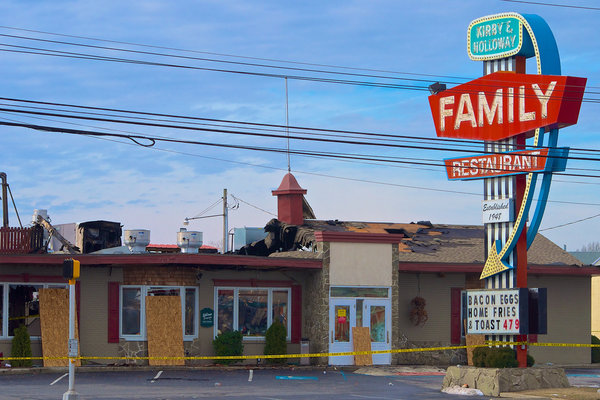
Although we always hope that disaster never strikes, occasions may happen over the course of a food manager’s career when they have to deal with a fire, a burst water pipe or another event that damages their facility. Occasionally, the topic comes up in a ServSafe class, and a student inevitably asks if there is any way to save product in these situations.

Discard or Salvage: A ServSafe Class Guide

Image credit: -Jeffrey- via Flickr

Discard or Salvage: A ServSafe Class Guide

There are a few different situations that can cause harm to food products. A fire can cause heat or smoke damage, water line leaks can create rust and sewage back-ups can infect food product, but does that mean that whenever there an incident occurs you must discard your entire inventory?

The following list clarifies unsalvageable items:

  • Fresh produce, proteins and dairy that comes in contact with water, smoke or sewage
  • Food in soft packaging such as cardboard
  • Dry goods such as flour and spices
  • Charred, rusted, swollen or leaking canned goods
  • Single service items such as plates and utensils

If the incident has occurred in your refrigerator, discard all items that have stayed at temperatures above 41 degrees for four hours. If any item has an unusual smell, texture or color, play it safe and throw it out. You also cannot salvage any previously frozen item that has thawed for two or more hours.

If you have any doubts whatsoever, don’t take any chances and discard items that may have come into contact with smoke or sewage.

The damage from a fire or sewage backup may not necessarily cause a total loss. A few items are salvageable under certain conditions. You can save sealed frozen foods that haven’t fallen below 41 degrees. Undamaged cans and bottles that have not suffered any damage due to heat require sanitation after the incident. In this instance, remove all paper labels and relabel the goods in permanent marker. If you have product in an area unaffected by the incident, inspect it for damage before deciding whether to save it or throw it away.

If a fire or sewage leak occurs in your facility, seek the advice of the local health department. They will easily clarify salvage rules, and they will provide on-site assistance to help you keep your existing product safe.

Fire, water and sewage catastrophes happen more often that we would like. Are there any unique disaster scenarios you’d like to see us cover in an upcoming article?

Extreme Weather Closure Tips for Certified Food Managers

Extreme Weather Closure Tips for Certified Food Managers

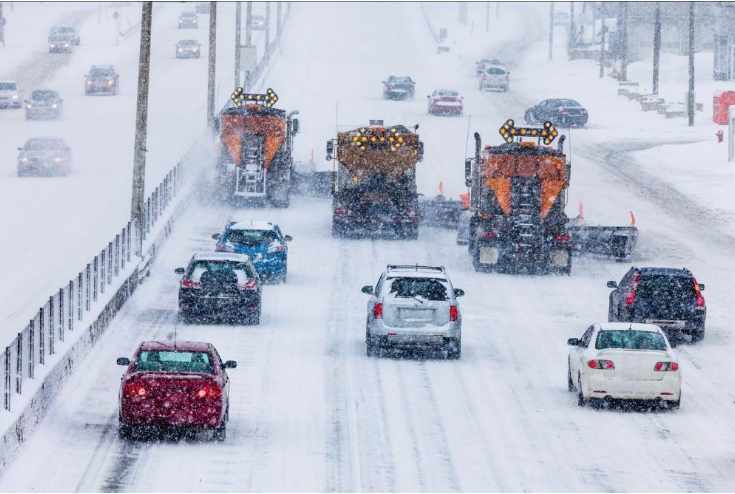
The winter months bring colder temperatures and the potential for incredible amounts of snow. Sometimes the winter conditions in our state create a scenario where roads are treacherous until they can be cleared and hazardous travel conditions dissipate. While every business strives to stay open and be available to provide services to a loyal customer base, circumstances inevitably arise where a certified food manager has to make the call to close up shop for the day.

Certified Food Managers and Snow Closures

If serious weather occurs, having a plan helps keep your staff and customers informed. If there is an active warning or alert, the certified food manager should monitor it closely. Employees on shift during a predicted storm should be notified ahead of time, and if you plan on opening but wish to adjust for lower business volume due to weather, cutting a staff member or two’s shift may help save on labor cost if guests stay home.

You need to communicate with potential guests if you plan on closing for the day or shutting down a few hours earlier than normal. In the past this used to be a major challenge, but we live in the age of the internet. Many consumers turn to social media outlets like Twitter and Facebook during winter storms to verify if a restaurant is open, so keeping your guests updated via these outlets will pass the message along to a majority of your potential customers.

Once you reopen, check to see if entryways are safe for guests to enter and leave. Clearing icy surfaces such as sidewalks and stairs can prevent slips and falls and create an inviting appeal to your restaurant. Oftentimes employee entrances can be overlooked in bad weather scenarios, so make sure that your staff has a clear and safe way to access your facility.

Finally, enjoy the weather. Food management is a stressful and time-consuming profession. Build a snowman or drink your favorite warm beverage and relax in front of the fire.

We want to know your extreme weather strategies. Do you feel obliged to open your doors no matter what conditions may be, do you play it safe or is your winter weather plan somewhere in the middle? Leave your thoughts for us in the comment section below.

ServSafe Training Guide to Salmonella

ServSafe Training Guide to Salmonella

Last month we discussed the dangers of Listeria poisoning that has been linked to numerous recalls and food-borne illness outbreaks. This month we’d like to take a closer look into what ServSafe training says about another major contributor to product recalls and illnesses linked to contaminated food products.

ServSafe Training Guide to Salmonella

Image credit: Pixabay

ServSafe Training and Salmonella

Salmonella can be a tricky contaminant to control because there are misconceptions as to how many food products can be affected by the bacterium. We all know that serving raw chicken or eggs causes illnesses due to Salmonella, but many food service professionals do not know that Salmonella also exists in:

• Melons
• Alfalfa sprouts
• Raw nuts
• Unpasteurized cheese

The connection between Salmonella and melons exists on its exterior and not in the meat of the melon. Melons can become contaminated from the bacterium that occurs in the soil that it is grown in, and many fertilizers contain chicken manure in which trace amounts of the bacterium are found if it hasn’t been sterilized properly. Before serving melons, it is important to wash the outsides carefully before slicing. The contamination of the meat of the melon occurs when a knife comes into contact with the Salmonella on the surface and infects the melon as the knife passes through. While all melons potentially contain Salmonella, the ridged surface of the cantaloupe can cause crevices for the bacterium to hide. Alfalfa sprouts are also contaminated by the same process, so extra care should be taken to wash them thoroughly.

While many restaurants do not serve raw nuts, certain prepared product manufacturers utilize them as an ingredient in their product. If you process any type of raw nut, be very careful to sanitize any surface they come into contact with in order to prevent cross contamination with your finished product.

Last month we discussed the connection between raw dairy and Listeria. Raw dairy and unpasteurized cheeses also potentially contain Salmonella, so we advise against serving raw dairy products to your guests.

Finally, while it is unpleasant to think about, it is important to recognize the symptoms of a guest who has eaten food tainted with Salmonella. Salmonella symptoms can occur as soon as 12 hours after consuming tainted product and can take as long as 72 hours to manifest. Symptoms include:

• Abdominal cramps
• Fever
• Vomiting
• Diarrhea

We hope that our discussions concerning the common causes of food poisoning has been helpful in allowing you to keep your food as safe as possible. Next month we’ll continue our series with a discussion on STEC toxins and e-Coli.