
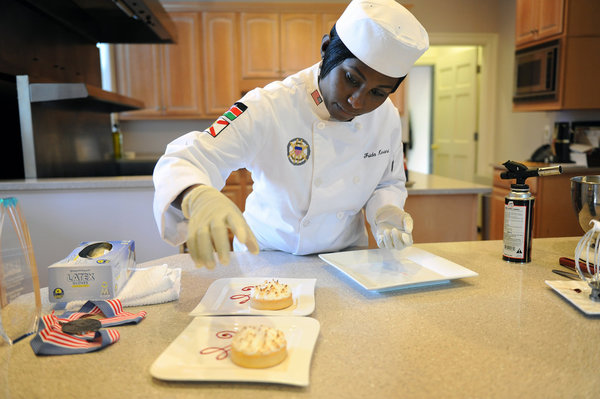
When we offer MN certified food manager training, we teach students from every sector of the industry. In one of our recent sessions, we had a student whose goal was to become a private chef and offer catering services and culinary classes to individuals and small groups in their own homes. One question that was asked was if there were any special regulations that applied to private chefs that differ from the standard rules that apply to institutions, food producers and restaurants. We thought this was an interesting discussion, so we felt it beneficial to share some information that we have learned.
Image credit: Flickr
While conducting our research, we found that there are a few different regulations that vary by county or metro area, but there are four licenses or certifications that most jurisdictions will require:
If you’re considering becoming a personal chef, we suggest that you contact your local government office to find out which licenses you need in your particular jurisdiction. If you need your MN certified food manager training, we would be happy to tailor a course designed specifically for your catering venture.
There are a few other aspects of being a personal chef that differ from regular catering services. While in many cases it is acceptable to prepare food for clients at their home or other location, you should be aware that most jurisdictions will require you to have a preparation and storage facility that can be inspected by the health department. This presents a unique challenge for many personal chefs whose clientele consists of a small number of people.
We have been asked if private chefs are allowed to use their own personal home kitchens to prepare food before transporting it to a client’s location. Unfortunately, this is not an acceptable solution according the health inspector we discussed this scenario with. Many private chefs solve this problem by leasing space from other caterers with industrial kitchens or local restaurants who are willing to allow them access to their kitchen before they begin their service for the day.
Personal chefs are not the only unique part of the food industry. If you’re considering any food based business that doesn’t quite conform to industry standards, please leave your ideas in the comments section and we’ll do our best to cover it in a future article.

Last month we discussed the dangers of Listeria poisoning that has been linked to numerous recalls and food-borne illness outbreaks. This month we’d like to take a closer look into what ServSafe training says about another major contributor to product recalls and illnesses linked to contaminated food products.
Image credit: Pixabay
Salmonella can be a tricky contaminant to control because there are misconceptions as to how many food products can be affected by the bacterium. We all know that serving raw chicken or eggs causes illnesses due to Salmonella, but many food service professionals do not know that Salmonella also exists in:
• Melons
• Alfalfa sprouts
• Raw nuts
• Unpasteurized cheese
The connection between Salmonella and melons exists on its exterior and not in the meat of the melon. Melons can become contaminated from the bacterium that occurs in the soil that it is grown in, and many fertilizers contain chicken manure in which trace amounts of the bacterium are found if it hasn’t been sterilized properly. Before serving melons, it is important to wash the outsides carefully before slicing. The contamination of the meat of the melon occurs when a knife comes into contact with the Salmonella on the surface and infects the melon as the knife passes through. While all melons potentially contain Salmonella, the ridged surface of the cantaloupe can cause crevices for the bacterium to hide. Alfalfa sprouts are also contaminated by the same process, so extra care should be taken to wash them thoroughly.
While many restaurants do not serve raw nuts, certain prepared product manufacturers utilize them as an ingredient in their product. If you process any type of raw nut, be very careful to sanitize any surface they come into contact with in order to prevent cross contamination with your finished product.
Last month we discussed the connection between raw dairy and Listeria. Raw dairy and unpasteurized cheeses also potentially contain Salmonella, so we advise against serving raw dairy products to your guests.
Finally, while it is unpleasant to think about, it is important to recognize the symptoms of a guest who has eaten food tainted with Salmonella. Salmonella symptoms can occur as soon as 12 hours after consuming tainted product and can take as long as 72 hours to manifest. Symptoms include:
• Abdominal cramps
• Fever
• Vomiting
• Diarrhea
We hope that our discussions concerning the common causes of food poisoning has been helpful in allowing you to keep your food as safe as possible. Next month we’ll continue our series with a discussion on STEC toxins and e-Coli.

November has arrived once again, and that means that we take a few days off from coordinating online food safety training and administering certified food manager exams to celebrate Thanksgiving with our families and loved ones. But before we sit down to our turkey and stuffing, our sweet potatoes with marshmallows, our cranberry sauce and our pumpkin pie, we thought it would be fun to take a look at the feast the Pilgrims celebrated back in 1621.
Image credit: Jennie Augusta Brownscombe via Wikipedia
The menu for our traditional Thanksgiving has been passed down from generation to generation without fail, but many of us would be surprised as to just how different the menu was on that very first Thanksgiving Day. In fact, our current Thanksgiving menu differs greatly with the food consumed by the Pilgrims and the local Wampanoag tribe during their harvest celebration.
While wild turkeys were plentiful in 1600’s New England, the only proteins mentioned in the writings of the Pilgrim’s chronicler are five deer that were gifted to the settlers by their Wampanoag guests. According to historians, some of the other proteins the Pilgrims may have consumed included:
• Wild birds such as geese and swans
• Mussels and clams
• Eel and other native fish
• Lobsters
In fact, some experts claim that the settlers subsisted on a diet high in the easily harvested mussels and other shellfish that could be obtained without expending the excess energy and resources that game hunting would require.
If turkey wasn’t the main course of the first Thanksgiving, can we still count on them serving stuffing, cranberry sauce and pumpkin pie on the side? At this point of the Pilgrims adventure, they had yet had the time to plant and harvest grain, and they had been too long out of England for any flour to remain to make stuffing or even pie crusts for traditional pumpkin pies. Cranberries were plentiful in the region, but without a source of sugar they were hardly consumed due to the incredibly tart taste. Squash such as pumpkins were available, but they were more than likely roasted over the coals of a fire and eaten with nuts and local berries.
Whether you serve the traditional turkey and pumpkin pie, or roasted eel and baked mussels, we’d like to wish you and yours the best this Thanksgiving season. Do you serve any dishes that defy Thanksgiving traditions? We’d like to hear about your experiences in the comments section below.