Keep your MN kitchen running smoothly. We’re sharing real-world ServSafe & NEHA Best Practices to help you train staff and ace your next health inspection.

Temperature Control For Food Safety Certification Boiling Water Method

The Truth About Temperature Control For Food Safety Certification MN

Temperature Control and Food Safety Certification MN

In order to obtain Food Safety Certification in MN, one key is to understand how to control the temperature of cooked foods, and the proper cooking temperatures for raw foods. Grasping these concepts is not only necessary in order to gain your food manager certification, but also to prevent foodborne illness and ensure quality.

Proper Temperature Checking Technique

Simply inserting your probe thermometer into a cooked meat item will not always give you an accurate temperature result. There are certain things that you should be aware of to ensure proper control when checking the temperature of prepared food items:

  • To check the temperature of beef, lamb, and pork roasts, you need to check the thickest portion.
  • Avoid contact between your probe thermometer and any bones
  • To check the chicken, probe on the thickest part of the breast.
  • It is recommended that thin food be checked with a thermocouple-style thermometer
  • Stir hot and cold soups, sauces, and other liquids before checking them.

Food Safety Certification Tips For Calibrating Your Probe Thermometer

No matter how often you check the temperature of your temperature-controlled items, you will not receive accurate results if you are using a probe thermometer that is not properly calibrated. Health inspectors will calibrate their thermometers before every inspection. Likewise, food safety certification-aware kitchen staff should also recalibrate often to assure accurate temperature control. Thermometers should be calibrated before their first use after they have been dropped, or after they have gone from one temperature extreme to the other. There are two methods to properly calibrate a probe thermometer.

Boiling method

  • Bring water to a boil
  • Once your water has reached a boil, insert your thermometer
  • Adjust your probe to read 32 degrees Fahrenheit.
  • Ice-water method
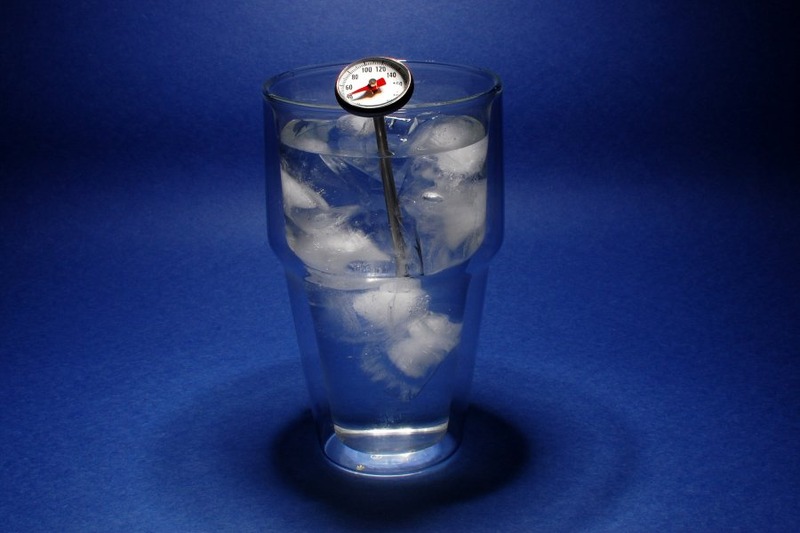
  • Fill a container with crushed ice and then add water
  • Wait five minutes in order for your ice water’s temperature to stabilize
  • Insert your thermometer into the center of your ice water, making sure the probe does not touch the side or bottom of your container
  • Adjust the probe to read 32 degrees Fahrenheit.

Ice Water Method

Temperature Control For Food Safety Certification Ice Water Method
Image credit: Flickr
  • Ice-water method
  • Fill a container with crushed ice and then add water
  • Wait five minutes in order for your ice water’s temperature to stabilize
  • Insert your thermometer into the center of your ice water, making sure the probe does not touch the side or bottom of your container
  • Adjust the probe to read 32 degrees Fahrenheit

    The ice-water method is the safest and most accurate method.  The Food Safety Certification MN training should cover these tips and other temperature control information in depth to ensure understanding.

    Why MN Food Code Requires Raw Eggs to be Refrigerated

    WHY MN FOOD CODE REQUIRES RAW EGGS TO BE REFRIGERATED?

    In every restaurant and nearly every home in the United States, raw eggs are stored under refrigeration at 40 degrees Fahrenheit or lower. According to the MN food code and food safety training courses, refrigerating raw eggs prevents Salmonella. Salmonella is a food-borne gastrointestinal illness that affects a reported 42,000 Americans each year. This number is certainly higher due to many mild cases which go unreported. Businesses that sell or cook eggs for public consumption must refrigerate them in an effort to prevent outbreaks of this type of foodborne illness.

    Why MN Food Code Requires Raw Eggs to be Refrigerated
    Image credit: enginakyurt via 123rf

    Why The United Kingdom Does Not Refrigerate Raw Eggs

    Many travelers to the United Kingdom, and many other parts of the world, often notice that people do not refrigerate raw eggs and store them at room temperature most often. This has puzzled many individuals who were taught that eggs should always be refrigerated. The answer to this question lies in a brief explanation of the differences in egg production and distribution between the United States and Great Britain.

    The different philosophy of egg storage between the two countries is due to the difference in production standards. In the United States, farmers wash and sanitize eggs post-harvest. Correspondingly, Great Britain’s regulations dictate that eggs must remain dry throughout production and distribution. Rinsing eggs destroys the thin natural protective layer, known as the cuticle, which can prevent contaminants from entering the egg.

    In the United Kingdom, a majority of egg producers vaccinate their egg-laying hens in an effort to prevent disease. Here in the United States, we use this process minimally.

    According to an article written for www.foodsafetynews.com, these practices have “reduced the incidence of Salmonella illnesses in Britain from 14,771 reported cases in 1997 to 581 cases in 2009.” The entire foodsafeteynews.com article can be found here.

    MN Food Code Approach To Serving Raw Eggs

    In order to complete food manager certification in MN, knowledge of preventing food-borne illness is a must. Salmonella is a common food-borne illness that can potentially be deadly but is also easily preventable. There are a few MN food code statutes to keep in mind when dealing with raw eggs that can prevent the spread of this illness.

    • Refrigerate eggs using temperatures below 40 degrees Fahrenheit,
    • Throw away broken eggs to avoid contamination easily
    • Clean dirty eggs before use
    • When you need a large quantity, use pasteurized liquid eggs instead of raw shell eggs

    The two MN food code statutes that pertain to eggs appear:

    Hints For Food Managers Considering A Special Bar Menu

    Hints For Food Managers Considering A Special Bar Menu

    In our food manager certification courses, experienced restaurant pros often exchange ideas and discuss strategies. During a recent session, some students debated creating a bar or lounge menu for casual diners with low food costs. We decided to contribute our insights, which food managers might find useful for special menus in bar, lounge, or patio dining areas.

    Hints For Food Managers Considering A Special Bar Menu
    Image credit: sofiiashunkina via rf123

    The Ideal Bar Menu for Food Mangers Considering Something Different

    Visiting local restaurants, we often notice a mismatch between the bar menu and dining floor dishes. Crafting a bar menu for regular patrons with your establishment’s theme offers many benefits for food managers.

    • Ingredients should already be in your inventory
    • Eases the stress on the kitchen staff
    • Offers an alternative dining option for guests on busy nights

    Food managers designing your bar menu with ingredients from your regular menu can cut food costs. This approach leads to less waste and a lower risk of food spoilage. However, don’t merely serve smaller portions of your dinner menu. For instance, a steak house can offer steak sliders made from steak trimmings or other casual dishes, using available ingredients. Be creative while maintaining the same ambiance for returning guests who dined in the main area previously.

    This streamlined concept also aids production during service. Line cooks get frustrated when one or two menu items differ significantly from the rest. This issue slows down service and consumes valuable line storage space. Simplifying and maintaining familiarity helps the kitchen staff serve food to guests promptly.

    Offer Options To Retain Customers

    Finally, a well-designed bar menu attracts guests unwilling to wait for a full-tabled restaurant. Informing guests of unique lounge or patio options can save them from long waits or trying competitor venues.

    What strategies do you use for bar menu planning? Is it necessary to offer special lounge selections, or are regular offerings enough?

    Food Safety Certification MN and Providing Delivery Services

    A New Look At Delivery Drivers and Food Safety – Part 2

    Last month we investigated how food delivery apps work and whether or not they were monitored by your local health department. Following that article, we thought that it would be helpful to provide some food safety information and tips for restaurant outlets that provide their own delivery service to their loyal customers.

    Food Safety Certification MN and Providing Delivery Services
    Photo credit: www.flickr.com

    Food Safety Hints For Providing Delivery Services

    This biggest issue with food delivery is that there is a high risk that the food’s temperature will fall into the danger zone. If your product falls between 140 and 40 degrees during delivery, there is a risk of bacteria growth. Many chain restaurants employ the use of insulated containers to keep their food hot during delivery. We strongly urge you to talk to your local culinary supply store about obtaining several of these containers. Before you begin providing delivery to your customers. We also suggest that you consider limiting your delivery range. A smaller delivery area means you can deliver hot food product to your customers in a timely manner.

    The rules for keeping cold foods safe for consumption after delivery is more straightforward than those for hot foods. Refrigerated items may go without refrigeration for up to two hours according to the Minnesota Health Code. This means that your salads and sandwiches and other cold items kept in sanitary containers should be safe for delivery. Be aware that raw animal protein items such as sushi are much more sensitive than other cold products. If you are planning on delivering any raw or undercooked proteins. You may wish to consult with your local health inspector.

    Non-Food Safety Considerations for Delivery Services

    There are other aspects besides food safety that you should plan for if you are considering offering delivery service. Keep in mind that you will need to have additional staff available to provide this service. Be sure to get the right balance of staff to handle the new service. You want to avoid a negative impact on your current services or long waits for delivery. Neither scenario is good for building a satisfied customer base or increasing employee morale on busy evenings. Having an extra hand available on weekends and during peak times will be a key element in helping you offer delivery services to your clientele.

    Finally, make sure that your delivery drivers have received food safety training from a certified food protection manager. They are vital members of your team and will be essential in seeing that your product arrives to your customers in a safe-to-eat state.

    Are you extending your food services to clients who wish to have their meals delivered? At Safe Food Training, we’d like to know your thoughts on how you plan to keep your meals safe during delivery.