
Keep your MN kitchen running smoothly. We’re sharing real-world ServSafe & NEHA Best Practices to help you train staff and ace your next health inspection.

How Certified Food Managers can Deal with Supply Shortages

How Certified Food Managers Can Deal with Supply Shortages

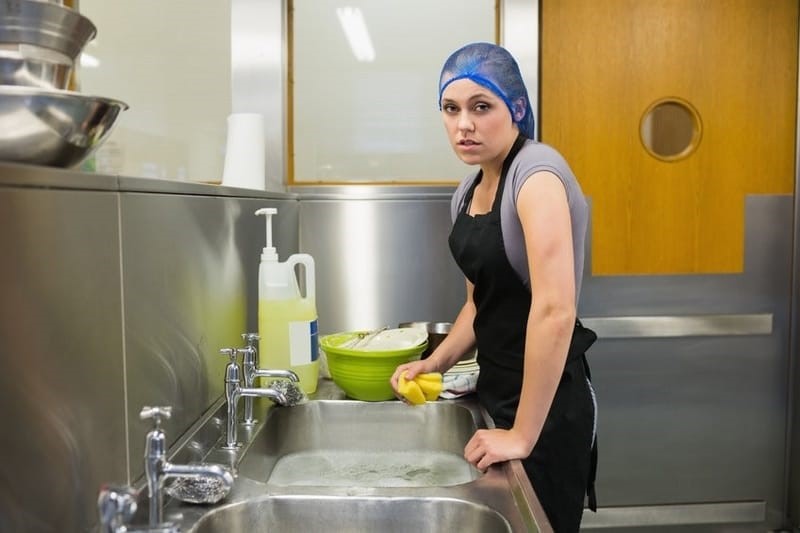
During certified food manager training, we have time to discuss general food service issues beyond food safety, and we’re hearing a lot of students vent their frustrations with supply chain issues. It seems that many suppliers are having a hard time getting certain ingredients, cleaning supplies and other essentials to restaurants and other food service businesses that need them. What should certified food managers do in the wake of our recent supply shortages?

How Certified Food Managers can Deal with Supply Shortages
Image credit: pxhere

Solutions for Supply Chain Shortages for Certified Food Managers

Supply shortages resulting in not receiving all the ingredients necessary in order to produce every item on your menu disappoints not only certified food managers, but your loyal customers who attempt to order a menu item only to be told that it is unavailable or will be altered in some way that doesn’t quite resemble their expectations. In order to prevent customer frustration, it might be wise to:

  • Inform guests of substituted or unavailable items when seated
  • Include a printed list of unavailable ingredients in menu
  • Design specials out of items in stock to create more choices
  • Reduce menu size to compensate for commonly out of stock ingredients

Most of our patrons have been to the grocery store and been unable to find certain food items they commonly use at home, so they’ll usually be pretty understanding if they are aware of the situation ahead of time. Frustrations will start to arise when they place their order only to find they have to make another selection. It even gets worse when they’ve already ordered and a server informs them their dish is unavailable after time has passed, so make sure all of your staff is up to date on shortages in the kitchen.

When it comes to cleaning supply shortages, it’s vital that certified food managers have everything you need in order to sanitize, stock handwashing stations and clean your facilities. While you may be able to 86 mozzarella sticks or braised sea bass, you cannot 86 hand soap or sanitizer solutions. If your supplier is unable to provide essential cleaning supplies, a certified food manager should do their due diligence by searching warehouse clubs, other restaurant suppliers or even grocery stores in order to ensure your facility can still produce food safely without risk of contamination from bacteria, viruses or raw protein products.

Have you been affected by recent supply shortages?

Deck the Halls with protocols

Deck The Halls With Protocols

By Tim Niles, Safe Food Training Lead Trainer and Poet Laureate

It’s late in December
Santa is loading his slay
But he is still concerned
COVID will ruin the day

This crazy year
Has come with a twist
Santa had to create
A much different list

Image credit: lacheev via 123rf

Daily COVID testing
For both Santa and elves
Has disrupted the supply chain
For stocking the shelves

The reindeer are practicing
Takeoffs and landings
But they are all wearing masks
And it has proved quite demanding

If we run into fog
While pulling the sleigh
A mask covered Rudolph
Will not save the day

Image credit: tom19275 via 123rf

And entering countries
Is getting quite hard
Some want a negative test
And a vaccination card

All of the rituals
Are getting too weird
You try to eat cookies
Through a mask covered beard

How about the mistletoe
A cherished tradition…
It’s just not quite the same
With a plastic partition

Being dressed up in a mall
With a child in my lap
Has been replaced with a Zoom call
Where I look like crap

With the polar ice cap
That is currently cracking
I should skip the whole thing
And get started packing

But just when you think
That Santa might quit
Mrs. Claus rescues the day
By throwing a fit

Think of the kids
And all they’ve been through
They all had to adapt
And be flexible too

So eat a big dinner
And get on the suit
Or else your behind
Will find my foot with a boot

Santa came to his senses
Put a smile on his face
And let his kindness make the world
A much better place

The presents are coming
So no need to fret
But with backorders everywhere
You’ll get what you get

So enjoy all you can
With no more complaining
Happy Holiday to you all
From Safe Food Training

Food recall procedures that servsafe managers need to know

Expert Food Recall Procedures ServSafe Managers Need To Know

Recently, Green Giant announced a voluntary recall on yellow and white onions. Minnesota ServSafe managers should pay close attention to this recall since many of the delivery locations are in the state of Minnesota. This may be a good time to check your inventory for white and yellow onions to make sure that you don’t have any sitting in storage. It’s also prudent to review procedures Minnesota ServSafe managers should use to handle major food recall notices.

Green Giant Onion Recall Procedures ServSafe Managers need to know
Image credit: PPD via Pixnio

Procedures for Responding to the Onion Recall for ServSafe Food Managers

Some recalls affect the food industry more than others, and this onion recall impacts nearly every food business in areas where the recall is in effect. Onions are a staple ingredient in every food business, so what procedures should ServSafe food managers do when impacted by a recall of this scale?

Discarding recalled ingredients and prepared product which includes tainted ingredients should be the first step. Your guests’ safety must be a top priority, replacing these ingredients should come second.

Finding an alternative for necessities should only occur after you’ve cleared your storage of recalled products. Bringing in untainted ingredients while you still have recalled produce in storage could lead to a mix-up between tainted and untainted ingredients. You may want to order a replacement product as soon as you hear of a recall, but don’t stall on clearing health hazards before receiving a new shipment.

Most foodservice suppliers should have checked UPC codes and other information concerning a recall before sending you a replacement, but ServSafe managers should do their due diligence and verify their new product has not been affected. You may also have to consider going without due to scarcity during a recall. In that instance, informing your guests that onions, or any recalled ingredient, are being removed from the menu for their health and safety will keep them informed as to why some menu items may look different than normal.

Have your Servsafe food managers documented a recall procedure? Have you ever had to take steps to alter your menu during a recall?

Staying Home when Sick

A Lesson in Norovirus Control for Certified Food Protection Managers

The norovirus made the news in a big way in the month of September thanks to a massive outbreak at Georgetown University. While the investigation into the outbreak has yet to locate the initial source, norovirus outbreaks often begin in food service, so certified food protection managers take notice that this outbreak has sickened nearly 150 people and take precautions to prevent a similar incident from happening at their food business or facility.

A Lesson in Norovirus Control for Certified Food Protection Managers
Image credit:: belchonock via 123rf

Certified Food Protection Managers And Norovirus Defense in High-Volume Facilities

Many norovirus cases fall under the radar when only a few individuals are sickened, but the case at Georgetown University shows what can happen in when the pathogen infects a large population. Officially, there is no link to food service in this Norovirus case, but certified food protection managers at university cafeterias, local school, hospitals and other facilities that serve a large amount of people every day have a great impact on preventing an outbreak such as this from even getting started. By taking a few simple precautions norovirus outbreaks can be stopped before they even begin by:

These three very easy steps will greatly reduce the risk of spreading the norovirus whether you serve thousands of guests a day or under 10. In fact, these three tools not only prevent the spread of the norovirus, but can help stop many other common illness that begin in food service from spreading.

Have you taken the time to review these basic food safety techniques with your staff to reduce the chances of spreading the norovirus?